




India-China trade hits record $155.6 billion in 2025 as ties show signs of improvement
- In Reports
- 05:52 PM, Feb 04, 2026
- Myind Staff
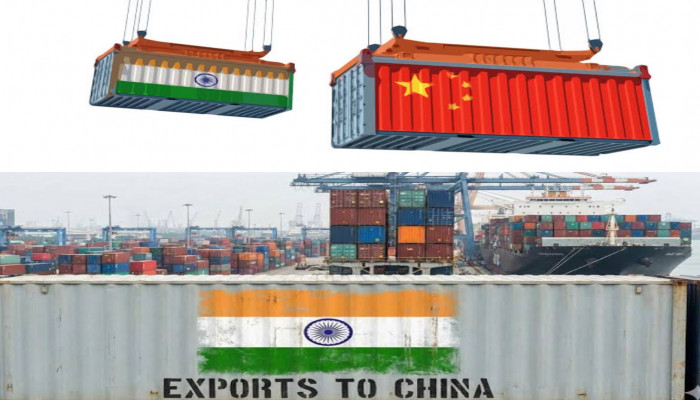
Trade between India and China touched a new all-time high of $155.6 billion in 2025, reflecting a strong rise in economic engagement even as geopolitical concerns remain. The figure marks a 12 per cent year-on-year increase, showing that commercial ties between the two Asian giants continue to grow despite past tensions.
The announcement was made by Chinese Ambassador to India Xu Feihong during a Chinese New Year reception in New Delhi on Tuesday, held at the beginning of the ‘Year of the Horse’. Speaking at the event, the ambassador said that bilateral relations have moved beyond earlier improvements and that ties have risen to a better stage.
Xu stated that the relationship has progressed from a simple "reset" to a "new level of improvement". He credited this progress to an important meeting held in August in Tianjin, where Prime Minister Narendra Modi met Chinese President Xi Jinping.
Along with the growth in overall trade, India’s exports to China also saw an increase. Xu said Indian exports grew by 9.7 per cent during the same period. He highlighted that this rise shows that both countries still have major potential to expand trade further, especially in key sectors such as pharmaceuticals, agricultural goods, and minerals.
However, even with increased exports, India continues to face a major trade imbalance with China. The ambassador noted that India’s trade deficit with China remains high, standing at around $85 billion.
During his address, Xu also spoke about China’s domestic economic performance. He said China’s GDP has crossed 140 trillion yuan, which is roughly equal to $20 trillion. According to him, the Chinese economy has recorded five per cent growth, and this growth accounted for more than 30 per cent of global economic growth, reinforcing China’s role as a major economic force in the world.
Apart from economic ties, the ambassador said that cultural and people-to-people relations between the two countries have also seen major improvement. He mentioned that China has restarted the pilgrimage for Indian devotees to Mount Kailash and Lake Mansarovar, located in the Xizang Autonomous Region. He said nearly 20,000 people participated in the pilgrimage last year, reflecting a strong revival in religious and cultural exchanges.
On the other side, India has also resumed issuing tourist visas to Chinese citizens. The ambassador said direct flights between the Chinese mainland and India are now operating smoothly, adding that travel and exchanges are gradually returning to normal.
Xu also drew philosophical comparisons between the two civilisations. He said China’s idea of "a world of great harmony" is similar to India’s ancient concept of Vasudhaiva Kutumbakam, meaning the world is one family. He further compared Beijing’s focus on self-reliance with India’s Atmanirbhar Bharat programme, suggesting that both countries share similar intellectual traditions and national visions.
Adding a personal cultural touch, the ambassador spoke about his visits to India’s historic and spiritual locations. He said that travelling to the Ajanta and Ellora Caves, and visiting Rabindranath Tagore’s Santiniketan, helped him understand the deep historical and cultural links between the two nations.
Looking ahead, Xu said the coming year could bring stronger cooperation. He expressed China’s support for India’s upcoming role as the BRICS rotating chair in 2026, and said both sides should coordinate more closely. He stated that such cooperation could help promote the interests of the Global South and strengthen genuine multilateralism.
The ambassador repeated that Beijing wants to view India as a partner, and not as an opponent. He said China remains committed to seeing India as a partner for cooperation and mutual development, and encouraged both nations to draw wisdom from their traditional values.
The reception was held around the time of Lichun, a Chinese seasonal event that marks the arrival of spring. The event was attended by diplomats, members of the Chinese diaspora, and representatives from various sectors, and it reflected an optimistic mood for the lunar year ahead.
The renewed diplomatic warmth comes after several years of strained relations. Tensions had increased after the 2020 Galwan Valley clash, where lives were lost on both sides and military build-ups intensified along the Line of Actual Control (LAC). However, recent disengagement agreements in eastern Ladakh have helped open the door for more diplomatic and economic engagement.
Trade has remained strong despite political challenges. Chinese exports to India are mainly dominated by electronics, machinery, and chemicals, while India’s exports to China include iron ore, seafood, and cotton. Although both countries have been making efforts to diversify supply chains, economic interdependence continues.
India’s push for self-reliance has led to increased domestic manufacturing. This has helped reduce dependence on Chinese components in areas such as mobile phones and renewable energy. Still, Xu’s positive statements suggest that both sides may prefer practical cooperation over direct confrontation.
BRICS cooperation may also play an important role in the future. India may use its chairmanship to raise issues such as debt sustainability and technology transfers, which are important for developing nations. China’s support could indicate strategic coordination on global platforms, especially as emerging economies look for alternatives to Western-led forums.
Cultural diplomacy is also being seen as an important tool in rebuilding goodwill. The reopening of pilgrimages, tourist visas, and travel links may help counter the rivalry narrative. Xu’s repeated references to shared history and civilisation appear aimed at humanising a relationship that has often been defined by border disputes and strategic competition.
The $155.6 billion trade figure has crossed pre-pandemic highs, driven by post-COVID recovery and stabilising supply chains. Further growth may be possible if infrastructure and digital trade barriers are reduced.
However, challenges remain, including India’s stricter scrutiny of Chinese investments and demands for fairer trade practices. Beijing’s outreach could test India’s effort to balance economic cooperation with security concerns.
The reception, held on the eve of Lichun, carried a symbolic message of renewal, reflecting cautious optimism for the future of Sino-Indian ties.



 Loading...please wait
Comments