




India-China plan no-patrolling zone in Gogra Hot Springs
- In Reports
- 04:45 PM, Aug 04, 2021
- Myind Staff
According to a report by Times of India, India and China both have now planned to establish a no-patrolling or buffer zone at one of the friction points in the Gogra Hot Springs Kongka La sector.
On Saturday, the 12th round of military talks between corps commander-ranked officers of the Indian Army and the Chinese People’s Liberation Army (PLA) began at 10.30am at Moldo on the Chinese side of the Line of Actual Control (LAC).
In the previous round of military talks between the two sides on April 9, the Indian Army told the PLA that disengagement at all friction points on the disputed border was crucial for the de-escalation of the conflict.
According to the sources, forward movement can be expected on disengaging from two friction points - Gogra and Hot Springs. Once the disengagement from all friction areas is complete, the de-escalation of the massive troop build- up along the Line of Actual Control (LAC) in Eastern Ladakh would be discussed, after which both sides will work out new guidelines for patrolling in these areas.
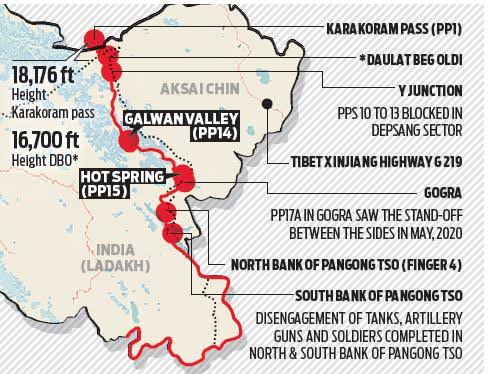
However, no clearance is made when it comes to disengaging at the crucial Depsang. A joint statement without going into specifics said that both sides have agreed to resolve the remaining issues in an expeditious manner in accordance with the existing agreements and protocols.
According to the statement, the military dialogue that lasted nine hours was constructive, which further enhanced military understanding. There was a candid and in-depth exchange of views on the resolution of the remaining areas related to disengagement along the Line of Actual Control in eastern Ladakh.
It further said that both sides agreed to keep the momentum of the dialogue and negotiations and will continue with effective efforts to ensure stability along the LAC and jointly maintaining peace and tranquillity in the interim.
The military talks took place over two weeks after External Affairs Minister S Jaishankar firmly conveyed to his Chinese counterpart Wang Yi that the prolongation of the existing situation in eastern Ladakh was visibly impacting the bilateral ties in a “negative manner". In his meeting with Wang Yi on July 14, on the sidelines of the Shanghai Cooperation Organisation’s foreign ministers’ meet, S Jaishankar said any unilateral change in the status quo along the LAC was “not acceptable" to India and that the overall ties can only develop after full restoration of peace.
Image source- Drishti IAS and Times Now



 Loading...please wait
Comments