




India, China agrees on further disengagement, troop withdrawal at four locations in Ladakh
- In Reports
- 11:03 AM, Sep 14, 2024
- Myind Staff
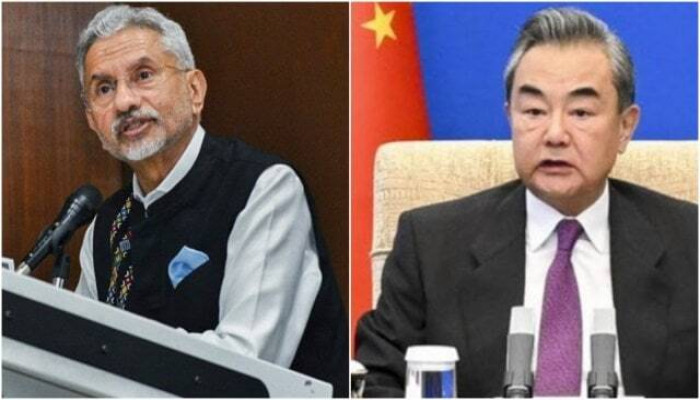
A day after External Affairs Minister S. Jaishankar stated that 75% of disengagement issues between India and China have been resolved, China confirmed that troops have disengaged at four locations in Eastern Ladakh, including the Galwan Valley. The Chinese Foreign Ministry also noted that both nations have agreed to work together to improve bilateral relations.
This announcement follows talks between National Security Advisor Ajit Doval and Chinese Foreign Minister Wang Yi on the sidelines of a BRICS security meeting in St. Petersburg, Russia. Both Doval and Wang serve as the Special Representatives for the India-China border talks mechanism.
Earlier, during an interaction in Geneva, Jaishankar highlighted that the June 2020 Galwan Valley clashes had severely impacted India-China relations, and he acknowledged that ongoing dialogue had helped resolve most disengagement issues. He noted that about 75% of the problems related to disengagement have been sorted out.
Addressing whether the two countries are close to a breakthrough in reviving frozen ties, Chinese Foreign Ministry spokesperson Mao Ning said that the border situation between India and China is generally stable and under control.
In a statement following the Doval-Wang meeting, the Chinese Foreign Ministry said both sides agreed that the stability of China-India relations serves the fundamental and long-term interests of both nations and contributes to regional peace and development. The two countries expressed their commitment to implement the consensus reached by their leaders, enhance mutual trust, and maintain continuous communication to improve bilateral ties.
Wang Yi, a member of the Political Bureau of the Communist Party of China Central Committee, emphasized that China and India, as two ancient civilisations and emerging powers, should choose cooperation over conflict and avoid consuming each other. He stressed the importance of handling differences pragmatically to push relations back on a path of healthy, stable, and sustainable development, according to China’s state-run Xinhua news agency.
During their meeting on Thursday, Wang and Doval reviewed the progress made in recent border consultations. Both sides reaffirmed their commitment to enhance mutual understanding and create conditions for improved bilateral relations. According to a statement from Mao Ning, both leaders agreed to maintain open communication to achieve these goals.
India’s Ministry of External Affairs (MEA) also issued a press release following the talks, stating that both countries agreed to work urgently and intensify efforts to achieve complete disengagement at the remaining friction points in Eastern Ladakh. Doval reiterated to Wang that peace and stability along the border and respect for the Line of Actual Control (LAC) are essential for restoring normalcy in India-China relations.
This meeting took place just two weeks after diplomatic talks between the two countries, during which they committed to increasing contacts through both diplomatic and military channels to resolve the outstanding issues. While both sides have disengaged from several friction points, the full resolution of the border dispute, which began in May 2020, remains elusive.
The bilateral relationship between India and China has deteriorated significantly since the violent clash in the Galwan Valley in June 2020, which marked the most serious military conflict between the two nations in decades. India maintains that normal ties cannot be restored until peace is achieved in the border areas.
Thus far, India and China have held 21 rounds of Corps Commander-level talks to address the standoff.
Image source: Indian Express



 Loading...please wait
Comments