



India broadens import base to strengthen energy security: Inter-Ministerial Briefing
- In Reports
- 05:43 PM, Mar 12, 2026
- Myind Staff
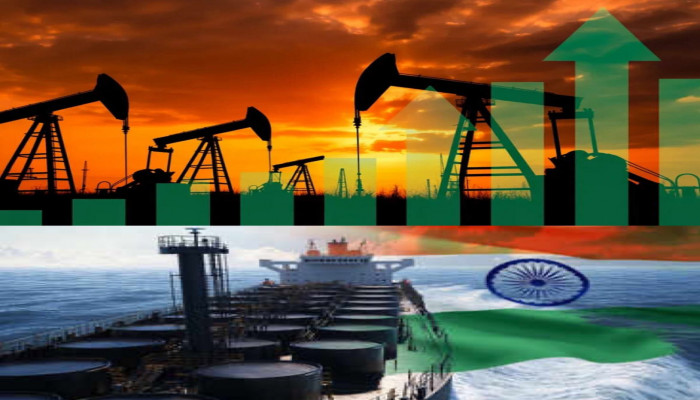
India has made notable progress in strengthening its energy security by reducing its dependence on oil shipments passing through the strategically sensitive Strait of Hormuz. According to officials from the Ministry of Petroleum and Natural Gas, nearly 70 per cent of the country’s crude oil imports now arrive through routes that bypass this crucial chokepoint. This shift has helped ensure a stable energy supply even as geopolitical tensions in West Asia continue to raise concerns about disruptions to global energy markets.
Speaking during an inter-ministerial briefing in New Delhi on recent developments in West Asia, Sujata Sharma, Joint Secretary in the ministry, highlighted that India’s oil supply situation remains strong and reliable. She explained that the country has been actively expanding its network of oil suppliers and transportation routes to reduce the risks associated with relying heavily on a single maritime passage.
Sharma noted that the quantity of crude oil currently being procured by India is greater than the volume that would normally pass through the Strait of Hormuz. This means that even if there were disruptions in that region, the country would still have sufficient supply arrangements in place. She explained that India has successfully broadened its import base and is now sourcing crude oil from around 40 different countries. This diversification strategy has been a major factor in ensuring energy stability.
Oil marketing companies have also played a key role in this process. By purchasing crude cargoes from multiple suppliers across different regions, these companies have reduced the risks linked to traditional supply routes. Officials said that this approach helps protect India from sudden supply shocks that could arise from geopolitical tensions or conflicts affecting major shipping lanes.
Along with crude oil imports, India has also taken steps to strengthen its natural gas supply. Gas companies in the country have secured additional liquefied natural gas (LNG) cargoes from new international suppliers. According to Sharma, two LNG shipments are currently on their way to India. These deliveries will help strengthen the country’s gas reserves and provide an additional buffer during a time of uncertainty in the region.
During the briefing, officials also discussed the safety and welfare of Indian citizens living and working in the Gulf Cooperation Council (GCC) and other West Asian nations. Randhir Jaiswal, spokesperson for the Ministry of External Affairs, said the government is closely monitoring the situation and remains committed to protecting Indian nationals in the region.
Jaiswal stated that Indian embassies and missions in these countries are in regular contact with members of the Indian community. Through continuous communication, officials are providing updates and assistance whenever needed. The government has been keeping a close watch on developments in the region to ensure that Indian citizens receive timely support.
However, the situation has also brought unfortunate news. Jaiswal confirmed that two Indian nationals have lost their lives in attacks targeting merchant vessels operating in the region. In addition, one Indian citizen is currently reported missing. Several other Indians who were injured during incidents in the GCC region are receiving medical treatment. Consulates and diplomatic missions are actively coordinating with local authorities and hospitals to ensure that those injured receive proper care.
Maritime operations involving Indian vessels were also reviewed during the briefing. Rajesh Kumar Sinha, Special Secretary in the Ministry of Ports, Shipping, and Waterways, shared details about Indian ships currently operating in the region. He said that 28 Indian-flagged vessels are presently sailing in the Persian Gulf, carrying a total of 778 Indian seafarers.
Authorities are closely monitoring the movement and safety of these vessels and their crews. Government agencies are working together with ship management companies, recruitment agencies, Indian embassies, and local authorities to maintain communication and provide assistance when required. This coordinated effort aims to ensure the safety and well-being of Indian seafarers working in potentially risky waters.
Sinha also reassured that port operations across India continue to run smoothly. According to him, there have been no major disruptions in the country’s port activities despite the tensions in the region. Officials have directed ports to extend full support to exporters so that international trade can continue without major difficulties.
Ports have been asked to provide assistance wherever required to help exporters and maintain the steady flow of goods through India’s export-import trade system. These measures are intended to prevent delays and reduce the impact of global uncertainties on Indian businesses.
Overall, the steps taken by the government reflect a broader strategy aimed at protecting India’s energy supply and maritime interests during a period of geopolitical uncertainty in West Asia. By diversifying oil imports, securing additional LNG cargoes, and closely monitoring maritime activities, India is working to ensure stability in both its energy sector and international trade operations.



 Loading...please wait
Comments