



India, Brazil to deepen energy partnership in refining and crude oil exploration
- In Reports
- 06:25 PM, Mar 28, 2026
- Myind Staff
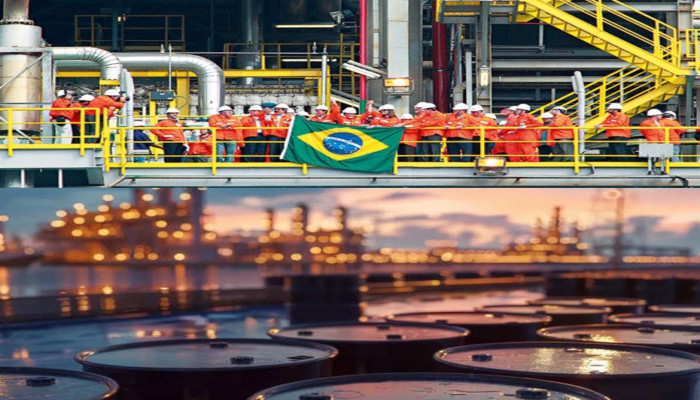
Brazil is looking to deepen its energy partnership with India by offering more crude oil and seeking Indian expertise in refining. The proposal comes at a time when India is actively trying to diversify its energy sources and secure long-term oil and gas supplies from reliable partners. Brazil, which is the largest oil producer in South America, sees India as a strong collaborator due to its advanced refining capabilities and growing energy needs.
In an interview, Brazilian ambassador to India, Kenneth Félix Haczynski da Nóbrega, highlighted the complementary nature of the two economies in the energy sector. He said Brazil can help meet India’s crude oil requirements while also increasing imports of diesel from India. India is currently the world’s fourth-largest oil refiner, and its expertise can play a key role in addressing Brazil’s refining gap. He also spoke about the possibility of joint ventures between Indian and Brazilian companies to set up refineries in Brazil, which still depend on imports of petroleum products, especially diesel.
These discussions are taking place against the backdrop of global geopolitical tensions, including the ongoing US–Israel–Iran conflict, which has forced energy-importing countries like India to secure stable supply chains. India has been focusing on reducing its dependence on limited suppliers and expanding partnerships with countries like Brazil, which is the world’s seventh-largest crude oil producer and exporter.
As part of this growing cooperation, Bharat Petroleum Corporation Limited (BPCL) signed a long-term agreement in January with Petrobras to import 12 million barrels of crude oil in 2026–27. This deal builds on a similar agreement signed in 2025 and reflects a steady increase in energy trade between the two nations.
Despite being self-sufficient in crude oil production, Brazil faces challenges in refining capacity. Nóbrega pointed this out clearly, saying, “One vulnerability is that we are self-sufficient in crude oil production, but we are not self-sufficient in refined oil,” he said, adding that diesel is required for a bulk of the freight transport in the country by road and rail. This gap creates an opportunity for India, which has a strong refining sector and already exports refined products like diesel to Brazil. He further added, “India also could install refineries in Brazil because you are one of the largest countries in terms of oil refining,” highlighting the potential for deeper industrial collaboration.
India’s refining strength is significant, with a total capacity of about 258 million tonnes per year. Indian companies have also contributed to refinery development in countries such as Nigeria and Mongolia. Recently, Reliance Industries Limited, which operates the world’s largest integrated refining complex in Jamnagar, Gujarat, announced plans to partner with a US-based entity to develop a refinery in the United States. This shows India’s growing global footprint in the energy sector.
Nóbrega emphasised that India–Brazil relations are built on mutual strengths and shared goals. He noted that current geopolitical shifts are likely to strengthen these ties further as countries look for dependable partners.
Supporting this view, Gaurav Moda from EY-Parthenon India explained the economic advantages of importing Brazilian crude. He said, "Brazilian crude is heavy and sour, and Indian refineries have sufficient expertise to process it. Given the nature of this crude, they are also cheaper compared to other variants. So, importing more Brazilian crude would be beneficial for India. Secondly, Brazil would also be a good market for diesel produced in India, as we already are a major exporter of petroleum products."
Beyond refining and trade, there is also scope for collaboration in oil exploration. While Brazil has extensive offshore and deepwater oil reserves, India is trying to expand its capabilities in these areas. Indian companies currently lack advanced expertise in deepwater exploration, making Brazil an important partner for knowledge sharing and joint development projects.
Trade relations between the two countries have been growing steadily. According to India’s Ministry of External Affairs, bilateral trade reached $15.21 billion in 2025. As per UN Comtrade, India imported crude oil worth $1.94 billion from Brazil in 2024 and exported $800 million in refined petroleum products. This reflects a balanced and expanding trade relationship.
India is already involved in Brazil’s upstream oil sector. ONGC Videsh Limited and Bharat Petro Resources Limited have jointly invested about $3.5 billion in offshore oil assets in Brazil. These investments show India’s long-term commitment to securing energy resources abroad.
The broader relationship between the two countries is also expanding beyond energy. During Brazilian President Luiz Inácio Lula da Silva's visit to India in February 2026, both nations signed several agreements to boost cooperation in areas such as critical minerals, pharmaceutical regulations, micro, small and medium enterprises, and postal services. This reflects a wider strategic partnership.
In addition, Indian businesses are exploring opportunities in Brazil across sectors. The Adani Group, led by Gautam Adani, recently partnered with Embraer S.A. to establish a small jet manufacturing facility in India. This highlights how economic ties between the two countries are diversifying beyond traditional sectors.
Overall, the growing collaboration between India and Brazil in energy and beyond shows a strong alignment of interests. With India’s refining strength and Brazil’s crude oil resources, both countries stand to benefit from deeper cooperation. As global uncertainties continue, such partnerships are becoming increasingly important for ensuring energy security and economic stability.



 Loading...please wait
Comments