




India, Belgium to double bilateral trade in five years
- In Reports
- 06:41 PM, Sep 03, 2026
- Myind Staff
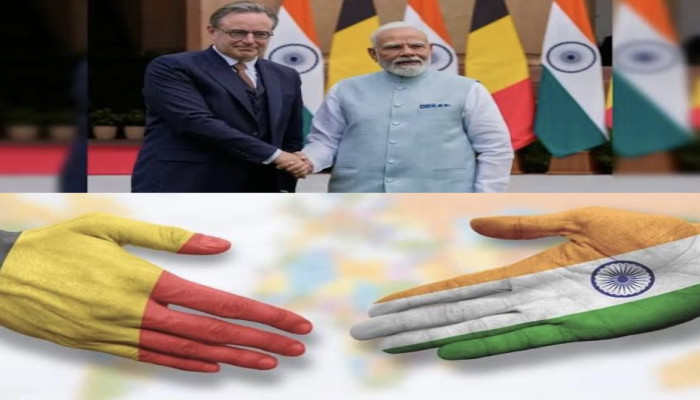
India and Belgium have set an ambitious target to double bilateral trade over the next five years as the two countries look to expand their economic partnership beyond diamonds. Prime Minister Narendra Modi announced the target on Thursday after holding talks with Belgian Prime Minister Bart De Wever at Hyderabad House in New Delhi. The two sides also agreed to improve investment facilitation and strengthen business-to-business engagement.
“We have put in place a fast-track mechanism in India for Belgian companies,” Modi said during the joint press interaction. He said the two countries would work towards doubling bilateral trade over the next five years. India and Belgium recorded bilateral trade of around $13.01 billion in 2025-26. Belgian investment in India stood at about $4.2 billion between April 2000 and December 2025, according to Indian government data. If the trade target is achieved, annual bilateral commerce will cross $26 billion.
India and Belgium have traditionally shared strong economic ties through the diamond industry. Antwerp remains one of the world's major diamond centres and has close links with India's diamond-cutting and polishing sector. The two countries now want to widen their partnership into strategic and high-technology areas such as defence, clean energy, critical minerals and semiconductors.
Defence and clean energy have emerged as key areas of cooperation between the two countries. Modi said India and Belgium were working together on modern defence equipment, including the Zorawar light tank. Belgian Defence and Foreign Trade Minister Theo Francken, who accompanied De Wever during the visit, also held talks with Defence Minister Rajnath Singh on Thursday. Defence-industrial cooperation was among the issues discussed during their meeting.
Critical minerals are another area where India and Belgium plan to increase cooperation. The two countries are looking at opportunities in the processing and recycling of these minerals. Critical minerals play an important role in batteries, electric vehicles, electronics, renewable-energy equipment and other advanced technologies. Greater cooperation in this sector could support both countries as they seek secure supply chains for future industries.
India is also seeking to use Belgium's expertise in semiconductor research. Modi said India and Belgium would work towards connecting Belgium's Interuniversity Microelectronics Centre, known as imec, with India's growing semiconductor ecosystem. The cooperation could support research, innovation, skill development and work on advanced semiconductor technologies. Belgium has strong capabilities in semiconductor research and nanoelectronics. India offers a large market, a growing electronics industry and an expanding domestic semiconductor programme.
Modi said the two countries have complementary strengths. Belgium brings technological expertise while India provides scale and market opportunities. The partnership could help both sides expand cooperation in advanced technologies and strengthen links between their respective industries.
Clean energy is another sector expected to drive stronger economic ties. Modi highlighted cooperation in renewable energy and referred to a major green ammonia project in Kakinada, Andhra Pradesh. Belgian engineering company John Cockerill has been involved in India's green hydrogen sector, including electrolyser manufacturing. The Kakinada region is also developing into an important centre for green ammonia production.
The Asian Development Bank has described the AM Green Kakinada project as one of the world's largest green ammonia developments. The project plans to produce around 1.09 million tonnes of green ammonia annually in two phases. India and Belgium also signed a memorandum of understanding on renewable energy during the visit. Modi said the agreement would give fresh momentum to cooperation in the sector.
The two governments also want stronger investment flows to support their trade ambitions. Modi said India had created an Investment Fast-Track Mechanism for Belgian companies. The India-Belgium Business Forum will also be upgraded into a regular platform to strengthen direct engagement between businesses from both countries. India and Belgium will further work to improve coordination between their financial, fintech and regulatory institutions.
The focus on investment is important for achieving the trade target. Higher trade will need increased production, new projects and stronger business connections. Greater investment can help create these links and provide a stronger base for long-term economic growth between the two countries.
The India-Belgium push also comes as India expands its economic engagement with the European Union. Modi said the conclusion of the India-EU trade agreement would create new opportunities for economic relations between India and Belgium. The wider European framework could improve market access and strengthen trade and investment ties after completing the required approval and implementation processes.
Modi also spoke about India's economic performance amid global uncertainty. He said the world was going through a period of “great upheaval”, with conflicts and disruptions affecting food, fuel and supply chains. He pointed to India's 7.8 per cent real GDP growth in the first quarter of 2026-27 as a sign of the country's economic momentum.
“Today, India's growth story is becoming a source of confidence and new opportunities for the world,” Modi said.
De Wever said India had changed significantly over the past two decades and stressed its growing importance to Belgium. He is the first Belgian prime minister to visit India in 20 years, according to his remarks during the joint interaction. His visit comes after the first India-Belgium Ministerial-level Strategic Dialogue, which took place in Brussels in July.
The latest talks reflect a broader shift in India-Belgium relations. While diamonds remain an important part of the partnership, both countries are now seeking deeper cooperation in defence, semiconductors, critical minerals, renewable energy and investment. The push to double bilateral trade to more than $26 billion over the next five years is expected to give this expanding relationship a new economic focus.



 Loading...please wait
Comments