




India begins campaign for UNSC non-permanent seat for 2028-29 term
- In Reports
- 12:18 PM, Jul 14, 2026
- Myind Staff
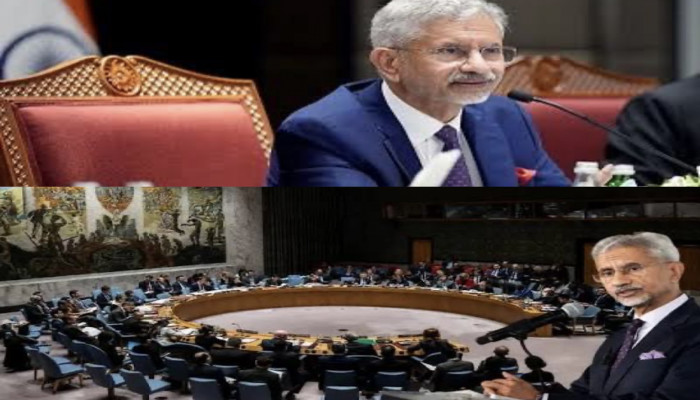
India on Monday officially launched its campaign for a non-permanent seat on the United Nations Security Council (UNSC) for the 2028-29 term. External Affairs Minister S. Jaishankar unveiled the campaign, titled 'Shanti: India for the United Nations Security Council 2028-29. Norms, Trust, Integrity,' during a special event at the UN headquarters in New York. The event was attended by UN ambassadors, diplomats and senior officials.
India said its engagement with the United Nations is guided by the theme 'SHANTI: Securing Holistic Advancement through Norms, Trust, Integrity.' The campaign reflects the country's vision of strengthening global cooperation through trust, international norms and integrity. India last served as a non-permanent member of the Security Council during the 2021-22 term.
The election for the 2028-29 term will take place in June next year. India will compete with Tajikistan for the only available seat in the Asia-Pacific Group category. If elected, India will return to the 15-member Security Council for another two-year term.
During his visit to New York, Jaishankar is also scheduled to meet UN Secretary-General Antonio Guterres. His visit follows an official tour of Qatar, Bahrain, Kuwait and Oman from July 5 to July 10. After completing his engagements in New York, he will travel to Brussels to attend the third India-European Union Trade and Technology Council meeting on July 14 and 15. He will also hold discussions with his counterparts from the European Union and Belgium.
The upcoming UNSC election comes at a time of major global challenges. The international community continues to deal with the Ukraine war, the conflict in Gaza and the US-Israel war against Iran. These developments have once again highlighted the role of the Security Council in addressing international peace and security.
Prime Minister Narendra Modi recently renewed India's demand for reforms in the Security Council during his address to the Parliament of Indonesia. He said the changing global order requires greater participation from developing countries in international decision-making. He stated, "Developing countries like ours are seeking equal participation and a greater role in global affairs. In this evolving global landscape, India firmly believes that reforms in the United Nations Security Council can no longer be delayed."
India has consistently pushed for reforms in the Security Council over the past several years. The country has argued that the current 15-member body, established in 1945, no longer reflects present-day geopolitical realities. New Delhi has maintained that the existing structure is not suitable for the needs of the 21st century and must become more representative of today's world.
India has also continued to assert that it deserves a permanent seat on the Security Council. It has repeatedly called for expanding both the permanent and non-permanent categories of membership. According to India, increasing only the number of non-permanent members will not bring meaningful change to the Council's functioning. The country has warned that such a step would leave the decision-making authority concentrated in the hands of the five permanent members and would not address the imbalance in the system.
The demand for Security Council reform has moved slowly for decades. India has expressed concern over the lack of progress in negotiations. It argues that the widely used principle of "nothing is agreed until everything is agreed" should not become a reason to delay reforms indefinitely.
India's Permanent Representative to the United Nations, Ambassador Harish Parvathaneni, had also raised this issue last month. He said, "Status-quoists have tried to use this argument in their favour and thereby entrench the existing inequities in the Security Council," highlighting India's view that the current approach has allowed long-standing inequalities within the Council to continue.
Through its latest campaign, India aims to strengthen support for its candidature while continuing to push for wider reforms of the UN Security Council. The country has maintained that a more inclusive and representative Council is necessary to address modern global challenges and ensure fair participation for developing nations in international governance.



 Loading...please wait
Comments