




India backs South China Sea tribunal ruling, rejects China’s broad claims
- In Reports
- 12:42 PM, Jul 15, 2026
- Myind Staff
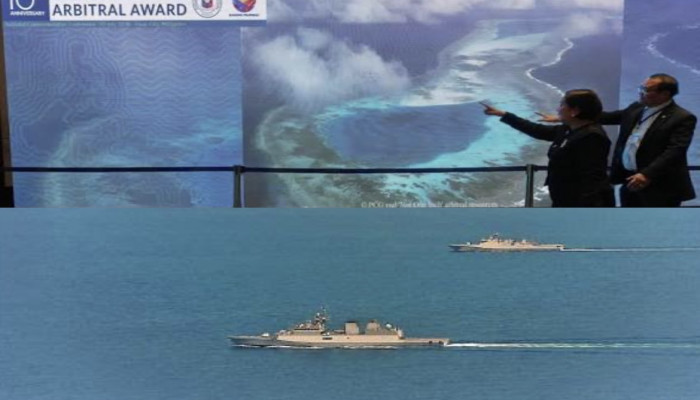
India has once again backed the 2016 international tribunal ruling that rejected China's broad claims over the South China Sea. The Ministry of External Affairs (MEA) reaffirmed New Delhi's stand on Tuesday. It stressed that maritime disputes should be settled peacefully under international law. India also highlighted the importance of protecting freedom of navigation and ensuring uninterrupted trade in the region.
The statement came during the MEA's regular media briefing. Spokesperson Randhir Jaiswal responded to questions about a joint statement released on Sunday by the Philippines, the United States and 12 other countries. The statement marked the 10th anniversary of the landmark ruling by the Permanent Court of Arbitration. The tribunal had ruled that China's sweeping claims in the South China Sea have no legal basis under international law.
The arbitration case was brought by the Philippines in 2016. The Permanent Court of Arbitration ruled in Manila's favour. It said China's claims of sovereignty over large parts of the South China Sea do not have legal support under the United Nations Convention on the Law of the Sea (UNCLOS). China has consistently rejected the ruling. On Sunday, Beijing again dismissed the tribunal's decision and called it "nothing but a worthless piece of paper".
Speaking on India's position, Jaiswal said, “We reaffirm that maritime disputes must be resolved peacefully and in accordance with UNCLOS (United Nations Convention on the Law of the Sea) and reiterate that the award rendered 10 years ago by the arbitral tribunal is a significant milestone and the basis for peacefully resolving disputes between the parties.”
Jaiswal added that India's position on the South China Sea has remained consistent over the years. He said, “We emphasised the importance of freedom of navigation and overflight and other lawful uses of the sea, and unimpeded commerce consistent with international law, as reflected in UNCLOS.”
India's latest remarks are unlikely to receive a positive response from Beijing. China had already expressed strong opposition to the joint statement issued by 14 countries over the weekend. The statement supported the tribunal's ruling and called for a rules-based order in the Indo-Pacific region.
India has strengthened its strategic and security ties with several countries that have territorial disputes with China in the South China Sea. These include the Philippines and Vietnam. Both countries have signed agreements with India to purchase the BrahMos cruise missile. India has also increased its naval presence in the region. Indian Navy warships regularly visit ports in the South China Sea. They also take part in joint exercises and coordinated patrols with the maritime forces of the Philippines, Vietnam, Singapore and Malaysia.
The joint statement issued by the United States, Australia, Britain, Canada, Estonia, Germany, Italy, Japan, Latvia, Lithuania, New Zealand, the Philippines, Romania and Slovenia reaffirmed their commitment to a free, open and rules-based Indo-Pacific. The countries said they support peace, stability and respect for international law in the region.
The statement said, “We reaffirm that maritime disputes must be resolved peacefully and in accordance with UNCLOS. We reaffirm that the Award rendered ten years ago by the Arbitral Tribunal is a significant milestone and is final, legally binding, and definitive between China and the Philippines with respect to the maritime entitlements and claims addressed by the Arbitral Tribunal.”
The participating countries also repeated the tribunal's conclusion that there is “no legal basis for China’s expansive maritime claims in the South China Sea”, including claims based on “historic rights”. The statement underlined the importance of following international law while resolving disputes in the region.
China responded with a separate statement from its foreign ministry. It argued that the arbitration process violated key principles of international law and went against UNCLOS. The ministry said, “The so-called ‘award’ is nothing but a worthless piece of paper that is illegal, null and void, and has no binding force. China does not accept or recognise the ‘award’ and opposes and does not accept any claim or action based on it.”
India's latest remarks reaffirm its long-standing support for a rules-based maritime order. New Delhi continues to stress that international law and peaceful dialogue should guide the resolution of disputes in the South China Sea. At the same time, India has expanded its defence and strategic partnerships with countries in the region. These developments reflect its growing role in supporting stability, secure sea routes and lawful maritime cooperation across the Indo-Pacific.



 Loading...please wait
Comments