




India, Australia deepen strategic partnership with nuclear, defence agreements; Canberra returns three antiquities
- In Reports
- 05:37 PM, Jul 09, 2026
- Myind Staff
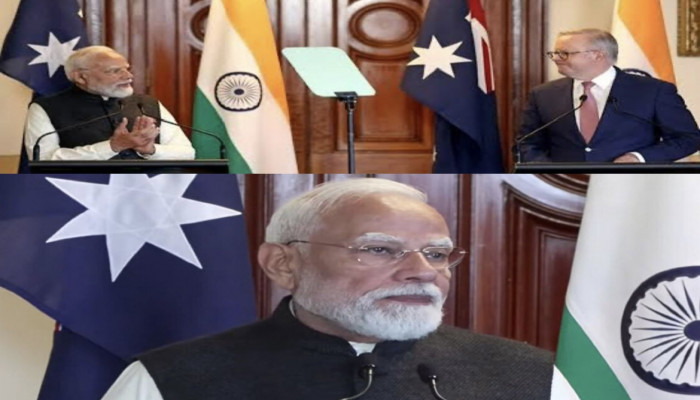
India and Australia signed a series of major agreements on Thursday to strengthen cooperation in civil nuclear energy, defence, maritime security, critical minerals and advanced technologies. Prime Minister Narendra Modi and Australian Prime Minister Anthony Albanese held wide-ranging talks and reaffirmed their commitment to building a stronger partnership. The two leaders also highlighted the importance of working together to maintain peace, stability and security across the Indo-Pacific region.
The two countries released a Joint Declaration on Defence and Security Cooperation, a Joint Statement on Energy Cooperation and a roadmap for collaboration in cyber security, critical technologies and supply chains. These agreements reflect the growing strategic partnership between India and Australia and their shared focus on expanding cooperation in several key sectors.
One of the most significant developments was the signing of the civil nuclear energy agreement. The pact will allow Australia to supply uranium to India for civil nuclear plants. The agreement is expected to support India's clean energy goals by helping expand its non-fossil fuel power capacity.
The two sides also agreed to speed up discussions on the proposed Comprehensive Economic Cooperation Agreement (CEPA) and a bilateral investment protection pact. Both leaders expressed their intention to strengthen economic ties while increasing cooperation in defence, shipbuilding and the critical minerals sector.
Prime Minister Modi met Albanese a day after arriving in Australia from Indonesia during the second leg of his three-nation visit. The tour focuses on expanding trade and defence partnerships at a time when the global geopolitical environment continues to face growing uncertainty.
Speaking after the talks, Modi said, "Today, we have signed an important agreement in the field of nuclear energy. This will open the way for uranium supplies from Australia to India and give new impetus to our clean energy objectives."
He also highlighted the importance of cooperation in critical minerals and emerging technologies. Modi said, "Our cooperation in critical minerals is vital to our strategic security and clean energy transition. With this in mind, today we have launched the Australia-India Partnership on Cyber, Critical Technologies, and Supply Chains." He added that both countries would also work together to establish a critical minerals corridor.
The discussions also focused on expanding defence cooperation. Modi stressed the need to maintain a free, open and stable Indo-Pacific. The new initiatives come at a time when concerns continue to grow over China's increasing military activities in the region.
Addressing the strategic importance of the region, Modi said, "The Indo-Pacific is not just the confluence of two oceans. It also symbolises the shared aspirations of like-minded democracies like India and Australia."
He further announced stronger defence collaboration between the two nations. Modi said, "Today, we have issued an important Joint Declaration to enhance cooperation in defence and security. Through the India-Australia Defence Innovation Corridor, we will work to connect defence startups and industries," he said.
Modi also spoke about maritime cooperation and said the India-Australia Maritime Security Collaboration Roadmap would strengthen joint efforts in the Indo-Pacific. He added, "We will also move forward together in shipbuilding, ship repair, and maintenance." The roadmap aims to increase cooperation in maritime security while improving capabilities in naval infrastructure and maintenance.
The Indian Prime Minister also underlined the importance of working together against terrorism. He said India and Australia share the view that terrorism remains a serious threat across the world. Modi said, "Therefore, our fight against terrorism is shared, our resolve unwavering, and our cooperation continues to strengthen."
He also called for peaceful solutions to global conflicts through dialogue and diplomacy. Modi said, "We also believe that the tensions and conflicts raging in many parts of the world can only be resolved through dialogue and diplomacy. Together, we will further strengthen peace, stability, freedom of navigation, and a rules-based order throughout the Indo-Pacific region."
Australian Prime Minister Anthony Albanese described the relationship with India as one of Australia's most important strategic partnerships. He said cooperation between the two countries has reached a new level and continues to expand across several sectors.
Speaking about the civil nuclear energy agreement, Albanese said the pact would support Australia's uranium exports for peaceful purposes. He said, "The arrangement facilitates Australian uranium exports to India to help increase the share of non-fossil fuel power capacity, providing an additional market for the Australian resources sector."
Albanese noted that six years after both countries elevated their relationship to a strategic partnership, bilateral ties had continued to grow stronger. He said, "Today, we have done exactly that across the breadth of our relationship. With new landmark agreements, we are expanding our relationship across defence and security education, science and technology and energy security and critical minerals."
He also welcomed the Joint Declaration on Defence and Security Cooperation and described India as one of Australia's leading security partners. Albanese said, "Australia values India as a top-tier security partner and the declaration reflects our shared commitment to a peaceful, stable and prosperous Indo-Pacific region."
He added that both countries would increase defence coordination and improve cooperation between their armed forces. Albanese said, "We will boost strategic coordination, increase the complexity of our defence exercises and further build interoperability between our defence forces."
The latest agreements mark another major step in the growing India-Australia partnership. The two countries have expanded cooperation across energy, trade, technology, maritime security and defence. Their latest initiatives also strengthen efforts to build resilient supply chains, promote clean energy, encourage innovation and support a secure and rules-based Indo-Pacific.
Apart from expanding cooperation in defence, energy and technology, Prime Minister Narendra Modi's visit to Australia also strengthened cultural ties between the two countries. Australia announced that it will return three ancient Indian antiquities believed to have originated from Tamil Nadu. The decision marks another important step in India's ongoing efforts to bring back its stolen cultural heritage.
One of the artefacts is a granite sculpture of Nandi, the sacred bull and vehicle of Bhagwan Shiva. Historians believe the sculpture dates back to the 11th or 12th century and originally came from Tamil Nadu. Nandi holds a special place in Shiva temples across India and symbolises devotion, strength and faith.
Australia will also return an 11th-century bronze Trident with Bhadrakali from Tamil Nadu. Bhadrakali is a respected form of Goddess Kali and represents protection and strength. Artists from that period created bronze sculptures with remarkable skill, making them important examples of India's rich artistic and religious heritage.
The third artefact is a 12th-century basalt sculpture of the six-headed Skanda, also known as Karttikeya or Murugan. The sculpture is believed to have originated from Tamil Nadu. Skanda is the Hindu god of war and is widely worshipped across southern India. His six-headed form represents divine power and carries deep spiritual significance.
The return of these three ancient artefacts adds another important dimension to the growing partnership between India and Australia. Along with stronger cooperation in defence, trade, energy and technology, the move reflects a shared commitment to preserving cultural heritage and strengthening people-to-people ties.



 Loading...please wait
Comments