




India approves first dengue vaccine Qdenga
- In Reports
- 06:37 PM, Jul 21, 2026
- Myind Staff
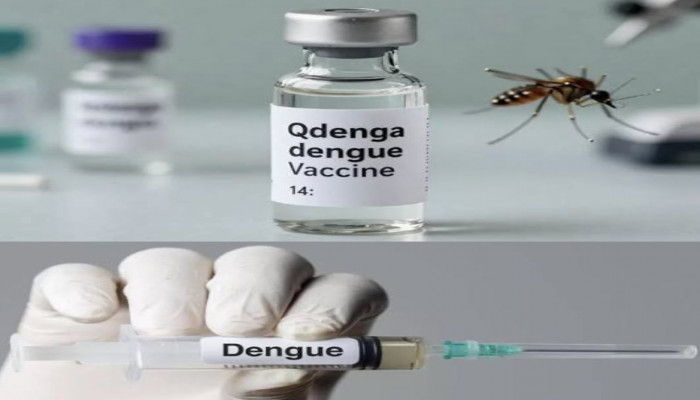
India has approved its first dengue vaccine, marking a major step in the country's fight against one of its most common mosquito-borne diseases. The Drugs Controller General of India (DCGI) has granted market authorisation to Qdenga, a tetravalent dengue vaccine developed by Japanese pharmaceutical company Takeda. Takeda Biopharmaceuticals India announced the approval on Monday.
The approval allows doctors to use the vaccine for people aged four to 60 years, whether they have had dengue in the past or not. Takeda said Qdenga is likely to become available in India during the first half of 2027 through private healthcare facilities. The company has also partnered with Hyderabad-based Biological E since 2024 to increase vaccine production.
The approval comes ahead of the annual monsoon season, when dengue cases usually rise across India and many other parts of South and Southeast Asia. According to the National Centre for Vector-Borne Diseases Control (NCVBDC), India recorded 6,927 dengue cases and 10 deaths until February this year. The World Health Organisation (WHO) reported 232,425 dengue cases and 233 deaths in India during 2024. Globally, dengue reached a record 14.4 million cases and 11,201 deaths that year. Takeda said India accounts for nearly one-third of the world's dengue burden, while reported cases have increased 11-fold over the last two decades.
Qdenga, also known as TAK-003, is a live-attenuated tetravalent vaccine. It contains weakened but live dengue viruses that cannot cause the disease. Similar technology is already used in vaccines for measles, mumps, rubella, yellow fever and oral polio. The vaccine protects against all four dengue virus serotypes — DENV-1, DENV-2, DENV-3 and DENV-4.
The European Medicines Agency (EMA), which approved Qdenga in 2022, said the vaccine uses the DENV-2 serotype as its genetic backbone. Scientists then replaced specific genes with those from the other three dengue serotypes. This design helps the immune system recognise all four virus types and produce protective antibodies.
Developing a dengue vaccine has remained difficult for years. A person who recovers from one dengue serotype gains lifelong protection only against that specific type. A later infection from another serotype can lead to antibody-dependent enhancement, a condition that can make the illness more severe. Qdenga aims to create balanced immunity against all four serotypes through one vaccination course. However, studies showed stronger protection against DENV-1 and DENV-2 among people who had never been infected with dengue. Evidence for DENV-3 and DENV-4 remained less certain in those individuals.
The vaccine is given as two 0.5 ml injections under the skin, with a gap of three months between doses. The WHO advises people not to shorten this interval. If someone misses the second dose, they can simply take it later without restarting the schedule.
India approved Qdenga after reviewing results from Takeda's global clinical development programme and a separate Phase 3 study conducted in India. The international TIDES trial involved more than 20,000 participants from eight countries across Asia and Latin America. Although India was not part of that study, several participating Asian countries have dengue patterns similar to India's.
According to Takeda, the vaccine showed an overall efficacy of 80.2% against confirmed dengue infection one year after the second dose. It achieved 90.4% efficacy against dengue-related hospitalisation after 18 months. Even after 4.5 years, the vaccine continued to provide 84.1% protection against hospitalisation. Studies have also shown sustained safety and effectiveness for up to seven years. The findings appeared in journals including The Lancet and The Lancet Global Health.
The Indian Phase 3 trial found the vaccine to be safe, well tolerated and capable of producing a strong immune response in children, adolescents and adults aged four to 60 years.
"The latest seven-year data for QDENGA show continued protection against dengue infection and hospitalisation across all four serotypes; an important milestone for communities and health systems," said Mahender Nayak, head of intercontinental markets at Takeda, in a statement.
The EMA said the most common side effects include pain and redness at the injection site, headache, muscle pain, weakness and general discomfort. Some people may also develop fever. These reactions are usually mild, last only a few days and occur less often after the second dose.
The WHO also reviewed post-market safety data from Brazil, where 16 cases of anaphylaxis were reported after the vaccine's rollout in 2023. The organisation noted that no such cases appeared during the main clinical trial involving over 20,000 participants. The vaccine's product information now includes precautions related to anaphylaxis.
The vaccine should not be given to pregnant women, women planning pregnancy within one month of vaccination, breastfeeding mothers, people with weakened immune systems, those receiving immunosuppressive treatment, people with symptomatic HIV or impaired immune function, and anyone who has experienced a severe allergic reaction to an earlier dose.
Qdenga has now received approval in 43 countries since its launch in 2022. More than 32 million doses have already been distributed worldwide. It received marketing approval in the European Union in December 2022 and WHO prequalification in May 2024. Takeda plans to expand its manufacturing capacity to 100 million doses each year by 2030.
Dengvaxia, developed by Sanofi Pasteur, was the world's first dengue vaccine. It received approval in 2015 but later raised safety concerns among people who had never been infected with dengue. The WHO now recommends it only for individuals with confirmed past dengue infection. It has not received approval in India. Divya KS, an infectious diseases specialist at Apollo Hospitals, told Reuters that regulators may have required additional post-marketing safety data before approving it.
Brazil also approved the single-dose Butantan-DV vaccine in 2025. However, authorities temporarily suspended its use after two deaths and one serious illness were reported. "There is not enough data to establish a cause-and-effect link between the vaccine and these three serious cases, but it is a warning signal," Brazil's health minister Alexandre Padilha had said at a press conference. Padilha described the events as "absolutely unexpected" given trial data showed 91.6% efficacy against severe dengue among 16,000 volunteers across 14 Brazilian states.
India is also developing its own dengue vaccine. The Indian Council of Medical Research (ICMR) and Panacea Biotec are conducting Phase 3 trials of DengiAll with more than 10,000 participants across the country. Hyderabad-based Indian Immunologicals Ltd is also preparing to begin mid-stage clinical trials of another dengue vaccine candidate.
Health experts continue to stress that vaccination alone cannot eliminate dengue. "Qdenga can help reduce disease severity and hospitalisations, but it is unlikely to prevent outbreaks as long as the mosquito vector continues to circulate," Divya KS of Apollo Hospitals told Reuters. The WHO also says dengue vaccination should remain part of a broader strategy that includes mosquito control, community awareness and public participation to reduce the spread of the disease.



 Loading...please wait
Comments