




India approves $8.7 billion Israeli precision strike weapons package to strengthen air power
- In Reports
- 04:07 PM, Feb 17, 2026
- Myind Staff
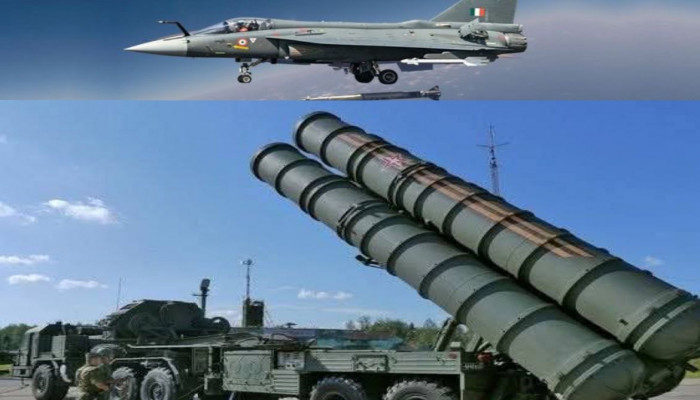
India has approved a major defence purchase worth around $8.7 billion from Israel, strengthening Israel’s role as one of India’s most important defence suppliers after France. According to reports cited by Forbes India, this package includes advanced precision-strike weapons, missiles, drones, radars, and surveillance systems that will significantly improve India’s military capabilities.
This large deal focuses mainly on improving the Indian Air Force’s ability to carry out long-range, accurate strikes, especially along sensitive borders where tensions remain high. The weapons included are designed to hit targets with high accuracy while keeping Indian aircraft at a safe distance from enemy air defence systems.
A key part of the package is the purchase of 1,000 SPICE-1000 precision guidance bombs, developed by Rafael Advanced Defence Systems of Israel. Each bomb carries a warhead weighing about 500 kilograms. The SPICE system is well-known for its advanced guidance technology that does not depend entirely on GPS. Instead, it uses electro-optical homing and image recognition to identify targets.
The system works by comparing real-time images with pre-loaded target images stored in its software. This allows it to strike with very high accuracy, reportedly within three metres of the target. Because it does not rely fully on GPS signals, it is also harder to disrupt through jamming. These bombs can be launched from a distance of up to 100 kilometres, giving Indian fighter jets the ability to hit targets without entering dangerous zones. The technology behind SPICE has even won Israel’s Defence Prize, highlighting its importance and effectiveness.
Another important weapon in the package is the Rampage air-to-surface missile, made by Elbit Systems. This missile has a range of around 150 to 250 kilometres. The Indian Air Force has already started using Rampage missiles on aircraft like the Sukhoi Su-30MKI and MiG-29, making them more effective in long-range attacks.
Rampage is designed to destroy high-value targets while keeping aircraft away from enemy radar and air defence systems. This is especially important because Pakistan has deployed Chinese-made air defence systems that could threaten Indian jets during operations. With Rampage, Indian aircraft can strike from a distance beyond the reach of many air defence systems, reducing the risk of being shot down.
A major highlight of the deal is the inclusion of the Air-LORA air-launched ballistic missile, developed by Israel Aerospace Industries (IAI). This missile is much more powerful and has a longer reach compared to many other weapons. It has a range of around 400 kilometres and weighs about 1,600 kilograms.
Air-LORA is designed to hit targets deep inside enemy territory without requiring aircraft to cross the border or enter contested airspace. It operates on a “fire-and-forget” system and uses jam-resistant satellite navigation. It can carry different types of warheads, meaning it can be used against both soft targets and hardened bunkers. Its accuracy is also very high, with reports stating a circular error probable (CEP) of about ten metres. This makes it a serious threat to important enemy locations such as military bases, command centres, missile storage sites, and other strategic infrastructure.
The package also includes the Ice Breaker missile system, along with more unmanned aerial vehicles (UAVs), advanced radars, and surveillance equipment. These additions will strengthen India’s intelligence and monitoring abilities, helping the armed forces track threats in real time and respond quickly. This is especially useful in situations where border tensions can rise suddenly.
Although the deal is commonly described as worth $8.7 billion, some sources mention slightly different figures, such as $8.6 billion, but the overall scale remains the same. This agreement represents a major increase in defence cooperation between India and Israel.
According to data from the Stockholm International Peace Research Institute (SIPRI), India accounted for about 34% of Israel’s arms exports between 2020 and 2024. Israel’s defence export body, SIBAT, has estimated that total defence sales to India during that period reached around $20.5 billion, showing how strong the partnership has become.
India’s growing interest in Israeli defence systems also matches its broader strategy of combining foreign technology with local manufacturing under the Atmanirbhar Bharat (self-reliant India) initiative. Many Israeli systems can be integrated with Indian defence platforms, including aircraft made by Hindustan Aeronautics Limited (HAL) and systems developed by DRDO.
These new acquisitions are also seen as a response to weaknesses that became visible during earlier military operations, such as the 2019 Balakot airstrike. Weapons like SPICE and Rampage will improve the strike power of aircraft like the Su-30MKI, while Air-LORA adds a strong long-range strike option.
Since the Indian Air Force is currently facing shortages in fighter squadrons, these advanced weapons can greatly increase the effectiveness of the aircraft already in service. There is also a possibility that these weapons could later be integrated with India’s indigenous fighter aircraft, like the Tejas, which would further boost operational strength.
Israel’s experience in modern warfare and precision strikes has made its defence technology highly valuable for India, especially in regions like the Line of Control (LoC) and the Line of Actual Control (LAC). Past cooperation projects, such as the joint development of the Barak-8 missile system, have already created a strong base for future defence partnerships.
However, some critics have warned that India should avoid becoming too dependent on foreign suppliers. They argue that DRDO should speed up the development of Indian alternatives like the Smart Anti-Airfield Weapon (SAAW) and similar precision missile systems. Still, supporters of the deal point out that these Israeli systems can be delivered within two years, offering India immediate military benefits.
With China improving its air power using platforms like the J-20 stealth fighter and Pakistan upgrading to systems like the JF-17 Block-III, India’s decision to expand its precision strike arsenal is seen as a major step to maintain balance and deterrence in the region.
Overall, this deal is not just about buying weapons. It reflects a deep and long-term defence relationship between India and Israel that is likely to shape security planning in South Asia for many years.



 Loading...please wait
Comments