




India announces phased ban on import of 405 defence items
- In Reports
- 01:21 PM, Aug 19, 2026
- Myind Staff
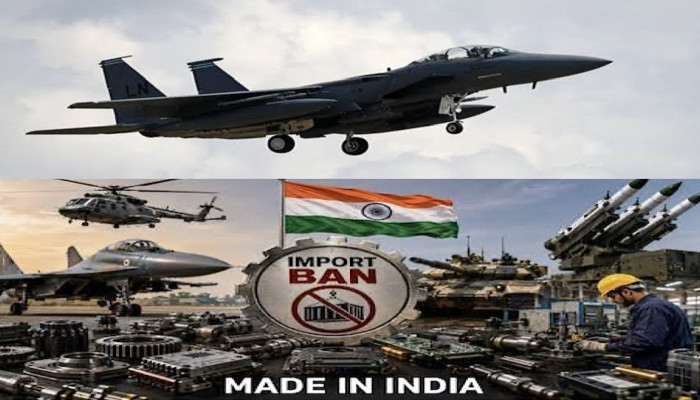
India has announced a phased ban on the import of 405 defence items as part of its push to increase domestic production and reduce dependence on foreign suppliers. The new list covers critical components, spares and other equipment used in fighter jets, helicopters, warships, tanks, infantry combat vehicles and missile systems. The Defence Ministry said the move could create a domestic business opportunity worth ₹3,070 crore.
The items form part of the government’s sixth positive indigenisation list. The Department of Defence Production notified the list on Tuesday. It covers a wide range of platforms and systems used by the armed forces. These include the Advanced Light Helicopter, Light Utility Helicopter, Su-30MKI, Light Combat Aircraft and AL-31FP Engine. It also covers armoured platforms such as the T-72, T-90 and BMP-II.
The list also includes items used in warships and missile systems such as Konkurs-M, Invar and MRSAM, or medium-range surface-to-air missiles. Several items are linked to defence electronics and other critical military equipment. These include components for radars, sonars, fire control systems and satellite communication systems. High-explosive anti-tank ammunition and other important defence equipment are also covered.
India has adopted a two-pronged approach to reduce defence imports. The first part focuses on complete weapons platforms. These include fighter aircraft, warships, helicopters and artillery guns. The government has placed such equipment under five separate positive indigenisation lists. The second part focuses on smaller but essential items. These include line-replaceable units, sub-systems, spares, components and raw materials. Tuesday’s list falls under this second category.
The government has assigned an indicative timeline for the indigenisation of every item on the new list. These timelines range from December 2026 to December 2029. Once Indian companies successfully develop the items, the defence sector will procure them from domestic manufacturers. The Defence Ministry said, “Each item has an indicative timeline (December 2026 to December 2029) for indigenisation. Upon successful indigenous development, these items will be procured from the Indian industry”.
The ministry added, “This sixth list marks another step in the government’s efforts to promote self-reliance in defence manufacturing under the Atmanirbhar Bharat initiative. It is expected to further expand opportunities for the Indian industry, strengthen the domestic defence manufacturing ecosystem, promote investment and innovation, and contribute to reducing dependence on imports”.
Of the 405 items on the latest list, 389 are currently imported by defence public sector undertakings and the remaining 16 by the Indian Coast Guard. The previous five lists in this category covered 5,012 items. Many of those items have already been indigenised, allowing Indian manufacturers to supply them to the defence sector.
The government has also placed major weapons and platforms under import bans through five separate lists since 2020. These include futuristic infantry combat vehicles, shipborne unmanned aerial systems, medium-range precision kill systems, maritime surveillance planes and light-weight tanks. The lists also cover naval utility helicopters, artillery guns, missiles, destroyers and shipborne cruise missiles. Light Combat Aircraft, Light Transport Aircraft, long-range land-attack cruise missiles, basic trainer aircraft, airborne early warning and control systems and multi-barrel rocket launchers are also among the items covered. The total number of major defence items placed under import restrictions since 2020 has reached 509.
India has introduced several measures in recent years to strengthen self-reliance in defence manufacturing. These include phased import bans on weapons, systems, ammunition, critical sub-systems and components. The government has also created a separate budget for the purchase of military equipment made in India. It increased the foreign direct investment limit in the defence sector from 49% to 74% and has taken steps to improve the ease of doing business.
Despite these measures, India continues to rely heavily on imports for military equipment. The country’s arms imports fell by 4% between 2016-20 and 2021-25. However, India remained the world’s second-largest importer of military hardware and accounted for 8.2% of global weapon imports, according to a Stockholm International Peace Research Institute (SIPRI) report published in March.
The government has set an ambitious target for the defence manufacturing sector. It aims to achieve defence production worth ₹3 lakh crore by 2029-30. It has also set a target of ₹50,000 crore in defence exports during the same period. The latest import restrictions are expected to give Indian manufacturers greater opportunities to develop components and systems for the armed forces while helping the country reduce its dependence on overseas suppliers.



 Loading...please wait
Comments