




India and Germany close to finalising $8 billion submarine deal
- In Reports
- 06:27 PM, Jan 08, 2026
- Myind Staff
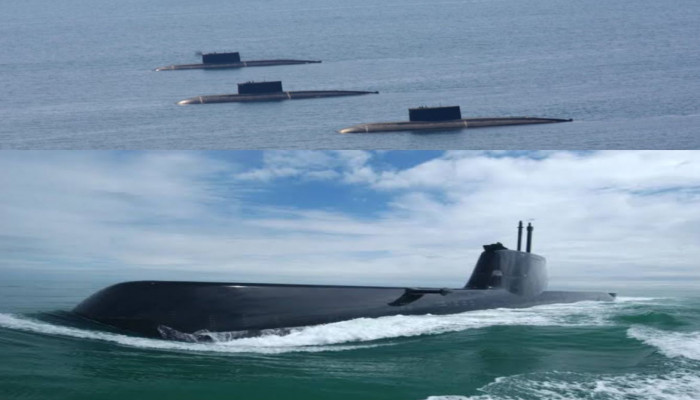
India and Germany are close to finalising a major defence deal that could be worth at least $8 billion, making it the largest defence agreement ever for India, according to officials who have direct knowledge of the talks.
The two countries have been hammering out the details of the deal, which focuses on the joint manufacturing of submarines. This agreement is being negotiated ahead of the upcoming visit by German Chancellor Friedrich Merz to India next week.
For the first time in India’s history, the deal is expected to include technology transfer for submarine production. This means that India would receive the technology and know-how to build advanced submarines within the country itself, instead of just buying them fully built from abroad.
Officials who spoke about the agreement asked not to be named due to the confidential nature of the discussions. They said the pact will help India greatly strengthen its naval capabilities, especially as its existing fleet of submarines grows older.
Currently, India’s navy operates about a dozen ageing Russian submarines along with six newer submarines made in France. If this deal goes ahead, the plan to buy three additional French submarines would likely be dropped.
Under the agreement, Germany’s Thyssenkrupp Marine Systems GmbH — a major German submarine maker — will work with India’s state-owned Mazagon Dock Shipbuilders Ltd. (MDL) to build the submarines. The officials confirmed that both companies will collaborate on manufacturing the vessels.
Chancellor Merz’s visit to India will be his first official trip to the country. While in India, he will meet Prime Minister Narendra Modi for talks in the western state of Gujarat. After those discussions, Merz is expected to travel to Bengaluru, a major technology hub, to meet leaders of German companies operating in India. A spokesman for the German government confirmed these plans.
Officials also said that beyond defence, the two countries are likely to expand cooperation in the pharmaceutical sector as well. Merz is expected to use his meetings with India’s leaders to move forward with broader negotiations between the European Union and India on a free-trade agreement.
This submarine deal will mark Merz’s first trip abroad with a large delegation of German CEOs. After visiting India, Merz is also expected to visit China with another business delegation, although exact dates for that trip have not yet been finalised.
The submarines that India is planning to build under this agreement will be equipped with air-independent propulsion (AIP) systems. AIP systems help submarines to stay underwater for longer periods without needing to surface as often as traditional diesel-electric submarines. That makes them more effective and capable in long-duration missions.
According to officials, these new submarines will significantly increase India’s ability to monitor and secure the vast waters of the Indian Ocean region, particularly at a time when China is increasing its presence in this region.
When asked to comment on the deal, a spokesperson for Thyssenkrupp Marine Systems declined to comment. Officials from India’s Ministry of Defence and Ministry of External Affairs also did not immediately respond to requests for comments when contacted.
Analysts say the potential deal shows a deepening of defence ties between India and Germany. It also reflects India’s long-standing policy of encouraging foreign defence companies to partner with Indian firms and share technology. This approach is meant to help India increase domestic weapons manufacturing as part of its broader goal of defence self-reliance.
In recent years, the Indian government has taken steps to reduce the import of foreign defence platforms, including fighter jets, helicopters, artillery, and warships, to push global weapons makers to set up production in India instead. However, India still remains one of the world’s largest importers of military equipment, with much of its hardware currently sourced from Russia.
Germany’s defence industry has grown rapidly since the Russian invasion of Ukraine. Berlin’s decision to share its submarine technology with India is also seen as part of a broader effort to reduce India’s dependence on Russia for defence equipment.
In summary, the India-Germany submarine deal is on the verge of being finalised and is seen as a major milestone in defence cooperation. It includes joint manufacturing, technology transfer, and increased collaboration between the two countries, all timed around Chancellor Merz’s important visit to India.



 Loading...please wait
Comments