




India among top five global military spenders in 2025: SIPRI
- In Reports
- 11:15 AM, Apr 28, 2026
- Myind Staff
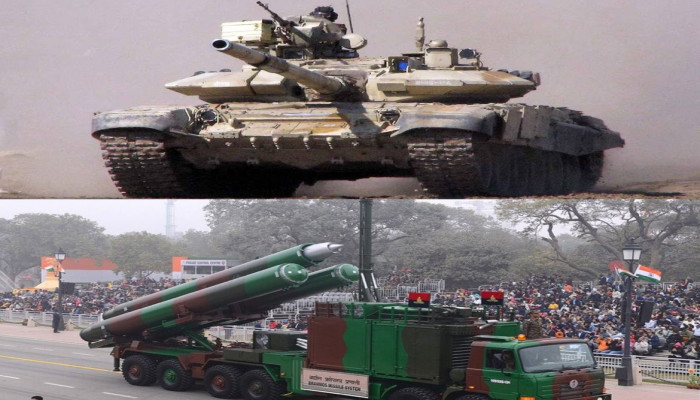
India ranked as the fifth-largest global military spender in 2025, according to a report released by the Stockholm International Peace Research Institute (SIPRI). The country spent $92.1 billion on defence, marking an 8.9% increase compared to the previous year. This placed India behind the United States, China, Russia and Germany in global rankings. India accounted for 3.2% of the total global military expenditure.
The rise in spending comes in the backdrop of strategic and security concerns, including tensions with neighbouring countries. During Operation Sindoor against Pakistan last year, India’s armed forces undertook several emergency procurements to maintain operational readiness. These measures contributed to the overall increase in defence expenditure.
The SIPRI report also highlighted that India is not alone in increasing military spending. China, which remains the second-largest military spender globally, raised its defence budget by 7.4%, reaching $336 billion. Pakistan also recorded a notable rise, increasing its military spending by 11% to $11.9 billion. Despite this growth, Pakistan ranked 31st among the 40 countries listed in the report.
At the global level, military expenditure reached $2,887 billion in 2025. The report noted that the top three spenders—the United States, China and Russia—together accounted for $1,480 billion, which is 51% of the global total. A major factor behind the overall increase was rising defence budgets in Europe. The report stated, “The main contributor to the global increase in military spending in 2025 was a 14% rise in Europe to $864 billion. Spending by Russia and Ukraine continued to grow in the fourth year of the war in Ukraine, while ongoing rearmament efforts by European NATO members led to the sharpest annual growth in spending in Central and Western Europe since the end of the Cold War.”
Alongside rising expenditure, India has seen a decline in arms imports in recent years. Another SIPRI report, published in March, showed that India’s arms imports fell by 4% when comparing the periods 2016–20 and 2021–25. Despite this drop, India remains the world’s second-largest importer of military equipment, accounting for 8.2% of global imports.
The report on “Trends in International Arms Transfers” explained that India’s demand for arms imports continues to be influenced by its security challenges with China and Pakistan. Over the past decade, the country has also shifted its sourcing strategy. While Russia continues to be a major supplier, India is gradually diversifying its defence partnerships with Western countries.
Russia accounted for 40% of India’s arms imports during 2021–25. This is a significant decline compared to earlier years, when Russia’s share stood at 51% during 2016–20 and 70% during 2011–15. The report highlighted that India is increasingly sourcing military equipment from countries like France, Israel and the United States. These three nations, along with Russia, are currently the top suppliers of defence hardware to India.
The trend reflects India’s broader effort to modernise its armed forces and reduce dependency on a single supplier. By engaging with multiple countries, India aims to strengthen its defence capabilities and ensure access to advanced technology.
In line with this approach, the Indian government has further increased defence spending in the latest budget. On February 1, the government allocated ₹7.85 lakh crore to the defence sector for the financial year 2026–27. This marked an increase of more than 15% compared to the previous budget. A significant portion of this, ₹2.19 lakh crore, has been set aside as capital outlay.
This capital investment will be used to enhance the capabilities of the armed forces through the procurement of new weapons and systems. These include fighter aircraft, transport planes, helicopters, warships, submarines, artillery guns, missiles, rockets and various unmanned systems. The focus is on strengthening both conventional and modern warfare capabilities.
Overall, the SIPRI findings underline India’s growing focus on defence preparedness amid a changing global security environment. While the country continues to spend more on military needs, it is also working to diversify its sources of defence equipment and reduce long-term dependence on imports.



 Loading...please wait
Comments