




In a first, Ashmolean Museum returns 16th-century bronze idol to Tamil Nadu temple
- In Reports
- 05:36 PM, Mar 04, 2026
- Myind Staff
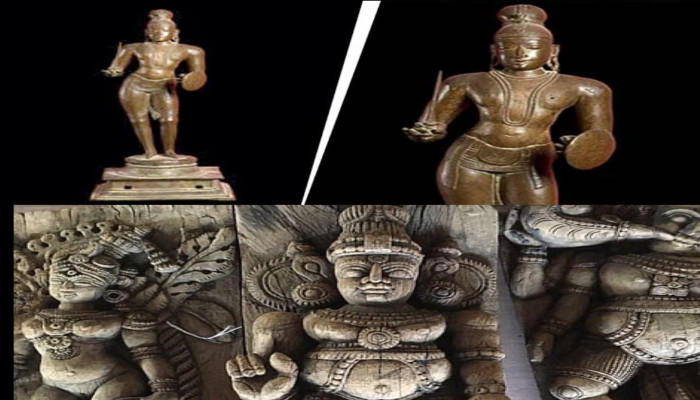
In a significant development, the Ashmolean Museum in the United Kingdom has returned a stolen 16th-century bronze idol of Saint Thirumankai Alvar to India. The sacred idol will now begin its journey back to the temple in Tamil Nadu where it was originally worshipped.
The museum, which is part of the University of Oxford, described this as a major step. The bronze idol of Saint Thirumankai Alvar had been acquired by the museum at a Sotheby's auction in 1967. However, in November 2019, an independent researcher alerted the museum that the idol had originally belonged to the Shri Soundararaja Perumal temple in Thadikombu, Tamil Nadu.
The researcher informed the museum that the bronze had been photographed earlier at the temple. Once this evidence came to light, the museum began discussions with the High Commission of India in London to confirm the idol’s provenance. After several years of verification and formalities, the process concluded with a handover ceremony held at India House on Tuesday evening.
Dr Xa Sturgis, director of the Ashmolean Museum, said, “This is a really significant moment for the Ashmolean Museum.” He explained that it was over five years ago that the museum first learned there was evidence showing the bronze had been photographed in the temple in Tamil Nadu. “At that point, it became evident that there was no legitimate way in which it could have left India,” he said.
He further added, “And, even though the museum acquired this bronze in 1967 in good faith, we opened a conversation with the Indian High Commission about the possibility of returning this object to India.”
The idol is believed to have been stolen from the temple and replaced with a modern replica. After confirming its origins, experts from the museum travelled to India. They worked with the Archaeological Survey of India (ASI), officials from the Tamil Nadu state government, and temple authorities to establish its roots and verify its background.
Vikram Doraiswami, India’s High Commissioner to the UK, said, “The process of getting an artefact returned to where it comes from, in this case a deity at the Soundararaja Perumal temple in Tamil Nadu, we had to be able to prove provenance without really getting into how it got out of India.”
He also praised the museum’s cooperation. “Really, credit to the Ashmolean Museum, who took this seriously and worked with us so patiently. This is the first time, I understand, they have actually returned anything. It is a major step for the museum to recognise that while being a repository of the art heritage of the world, integrity requires that items have been reached in the right way,” he said.
After the transfer deed was approved by the Indian Ministry of Culture and signed by the High Commission, the bronze idol was cleared to be shipped to India. The ASI will now carry out due diligence and coordinate with the Tamil Nadu government to restore the idol and return it to the temple.
Baroness Thangam Debbonnaire, a member of the House of Lords and cultural strategist, said, “I am really excited that this statue is on its way home to Tamil Nadu, the part of India where my dad's from. Particularly important is the difference between just seeing it as a beautiful work of art, which it is, but also as a sacred object from a living temple.”
The handover ceremony also included four other stolen Indian artefacts that were recovered and are being returned. These items were restored with the help of multiple agencies, including the Home Security Investigation (HSI) of the US Department of Homeland Security, the Metropolitan Police’s Art and Antiques Unit in London, and the Directorate of Revenue Intelligence (DRI) in India.
Among the artefacts displayed at Gandhi Hall before their return were statuettes titled ‘Seated Ganesha with Parasol’, ‘Dancing Ganesha’, ‘Dancing Child Saint Sambandar/Bal Krishna’, and a ‘Pedestal’.
William Crogan of the HSI at the US Embassy in London said, “While today's event celebrates the successful recovery and return of these priceless cultural items, there's more work to be done so other criminal organisations can be held to account for depriving access to significant antiquities.”
The Indian High Commission said the return of these antiquities shows the strength of India-UK bilateral cooperation and collaboration between different agencies across borders to fight smuggling.
William Lyne, Head of Economic and Cybercrime Command at the Metropolitan Police, said, “The illicit trade in cultural property is almost always transnational, with criminals exploiting differences in legislation and the complexities of sharing information across jurisdictions. Effective law enforcement cooperation is absolutely essential for countering the threat together.”
The return of the 16th-century bronze idol marks an important moment in cultural cooperation between India and the United Kingdom, ensuring that a sacred object taken decades ago will finally return to the temple where it was once worshipped.



 Loading...please wait
Comments