




Imperative of Democratic Delimitation with Demographic Balance and Regional Fairness
- In Politics
- 12:32 PM, Jul 31, 2026
- Viren S Doshi
Overview
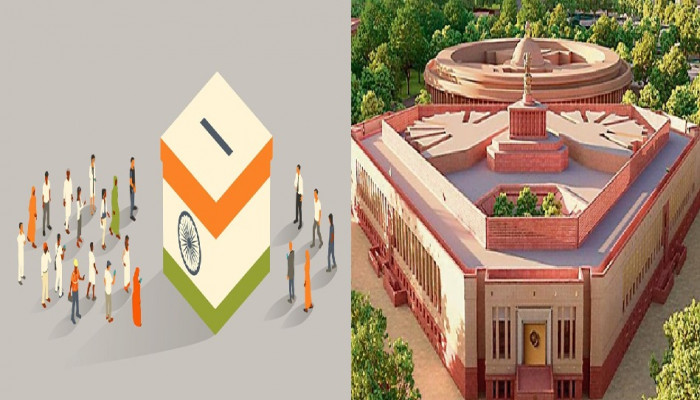
Delimitation—the periodic readjustment of electoral constituency boundaries and allocation of seats based on population—is a constitutionally mandated process under Articles 82 and 170 of the Indian Constitution. It upholds the core democratic principle of “one person, one vote, one value” by ensuring roughly equal representation per elected member. The issue has emerged as a major flashpoint in Indian politics, particularly with its linkage to demographic growth dynamics of various subsets of the population and the implementation of 33% women’s reservation in legislatures.
It is likely to feature prominently in the Monsoon Session of Parliament in 2026.
Beyond immediate political debates, delimitation also forces a deeper examination of demographic shifts, including religion-based shifts in the backdrop of the tragic partition of the country just seven decades ago, and regional and other demographic shifts.
India must address these shifts carefully, while protecting southern states’ concerns and safeguarding national cohesion as well as the secular, unified character of the republic that has not only suffered badly from the trauma of tragic partition but has also resulted in neighbouring countries that are no more neighbourly and that are full of hatred and animosity, on the contrary.
Historical Context: The Long-Standing Freeze on Delimitation
India conducted delimitation exercises following earlier censuses (1952, 1963, 1973), with the most recent boundary adjustments carried out in 2002–2008 based on the 2001 census. To encourage population control and avoid penalising states that succeeded in family planning, the 42nd Amendment (1976) and the 84th Amendment (2001) froze the allocation of seats to states on the basis of the 1971 census. This freeze has been extended until the first census after 2026.
Current Lok Sabha Strength: 543 elected seats
Current Allocation: Remains disproportionately based on 1971 population figures, resulting in significant malapportionment. For instance, an MP from some southern states represents fewer voters compared to those in northern states with higher population growth.
The upcoming census (delayed from 2021, with house-listing underway) will provide fresh data and can trigger the next full exercise, but that is fraught with undesirable serious implications. Hence, the government came up with some well-thought-out proposals.
The April 2026 Proposals: What the Government Sought
In a special parliamentary session in April 2026, the government introduced the Constitution (131st Amendment) Bill, 2026, a new Delimitation Bill, 2026, and related Union Territories amendments.
The key elements of the bills were:
Increasing total Lok Sabha seats from 543 to approximately 850 through a roughly 50% uniform/pro-rata increase across states, preserving existing inter-state proportions (based on 1971 figures) while allowing internal boundary redrawing.
Operationalising one-third (33%) reservation for women, including for Scheduled Castes and Scheduled Tribes, potentially from the 2029 elections instead of post-2034.
Constituting a Delimitation Commission with provisions for using population figures as determined by Parliament.
The constitutional amendments and bills failed to secure the required two-thirds majority in the Lok Sabha (securing around 278–298 votes against the needed ~352).
Subsequently, the Parliamentary Affairs Minister Kiren Rijiju announced that the Delimitation Bill was shelved as it was interlinked with the women’s reservation push.
Current Status (July 2026): The original bills lapsed or were not advanced following the defeat. The government has not included the Delimitation legislation in the tentative agenda for the Monsoon Session but retains the option to introduce it. Active consensus-building is underway, with repeated assurances of a uniform 50% seat increase to address regional apprehensions. A separate JPC headed by BJP MP Aparajita Sarangi is examining the unrelated Constitution (130th Amendment) Bill, 2025, which proposes the removal of the Prime Minister, Chief Ministers, and ministers if detained for 30 consecutive days on serious criminal charges (aimed at decriminalising politics). Its adoption seems to have been deferred amid broader political outreach.
Opposition Criticisms and the Detailed Rebuttal: Regional Fairness
Opposition parties, led by Rahul Gandhi, have argued that the proposals would disadvantage southern states for their population control success, enable gerrymandering, render Parliament unwieldy, and serve as a cover for broader constitutional changes favouring the ruling dispensation.
Nationalist Activist Anand Ranganathan’s Comprehensive Point-by-Point Demolition (widely regarded as one of the most forensic takedowns, aired on platforms like CNN-News18)
Mathematical Logic and Pro-Southern Bias: The proposal for a 50% pro-rata increase from 543 to 850 seats is unbiased and mathematically favours southern states in the immediate term. No state loses its current proportional representation. Uttar Pradesh (currently 80 seats) would gain 40 seats to reach 120. Tamil Nadu (39 seats) would rise to approximately 59 seats. If pure post-census delimitation (as demanded by the opposition) were conducted using the latest population figures, Tamil Nadu—due to slow population growth—would receive only around 49 seats. Thus, southern states actually gain, not lose, under the uniform percentage formula.
Bottom line: Purely population-based post-census delimitation would deliver fewer additional seats to the South precisely because of their lower population growth. Northern states have already seen a 3.1% drop in seat share over 60–70 years compared to 1.2% for southern states under the freeze.
South’s current ~150 seats (28% proportion) would rise to ~227 while maintaining the proportion. Examples include Telangana moving from 17 to 26 seats (3.13% to 3.18%).
Debunking the Family Planning “Punishment” Narrative: The propaganda that southern states are being penalised for prosperity and successful family planning is both dangerous and factually incorrect. Tamil Nadu has 39 Lok Sabha seats and a voting population of 62 million (1.6 million voters per seat). Northern Union Territory of Delhi has only 7 seats with 15.5 million voters (2.2 million per seat). Total Fertility Rate: Tamil Nadu 1.3; Delhi even lower at 1.2. Fiscal returns further expose the hypocrisy—Tamil Nadu gets back 30 paisa for every 100 rupees contributed to India, while Delhi gets back just 0.5 paisa despite higher per capita GDP (~5 lakh vs. Tamil Nadu’s ~3.1 lakh). Delhi did not complain.
Within Kerala itself, the 2008 delimitation (based on the 2001 census) saw Malappuram district (highest population surge of over 5 lakh between 1991–2001) gain 4 assembly seats, while lower-growth districts like Pathanamthitta and Alappuzha lost 2 seats each—without any major outcry from southern or even Hindu leaders.
Ranganathan forcefully concludes: “All of us have to grow together... Put your parochialism and divisiveness where the sun doesn’t shine. We are all Indians.”
He questions whether tomorrow’s leaders like Stalin would demand separation of poorer districts within Tamil Nadu from prosperous ones.
Additional rhetorical points include the inconsistency of Opposition Parties’ “Jitni Abadi Utna Haq” logic and references to differential community growth rates since 1947. “Jitni Abadi” “logic” is conveniently put aside when it comes to certain identities where the opposition is in ruling seat.
Reinforcing Points from Senior Government Leaders:
Home Minister Amit Shah: Southern states will gain substantially (five southern states collectively from 129 to 195 seats). Specifics: Karnataka 28→42, Andhra Pradesh 25→38, Telangana 17→26, Tamil Nadu 39→59, Kerala 20→30. The expansion ensures no absolute loss of seats while enabling women’s reservation without displacing sitting MPs. He dismissed “false narratives” and noted the Delimitation Bill mirrors previous laws.
Parliamentary Affairs Minister Kiren Rijiju: Proportional representation of states remains unchanged; the 50% increase is uniform. Current 543 seats impose an unsustainable burden on MPs (many representing millions of people). Expansion to ~816–850 is rational and conservative by global standards (UK ~600 MPs; China ~3,000). Southern states are rewarded, not penalised, for family planning success as they retain their share.
Demographic Realities: From Region to Religion: Fairness amid Faultlines:
Muslim Population Growth and Its Electoral Implications in the backdrop of tragic partition
A parallel and even more critical dimension of the delimitation debate concerns religious demographic shifts, particularly the faster growth of the Muslim population in certain pockets and its impact.
From 1951 to 2011 (Census data):
Hindus grew from ~304 million (84.1%) to ~966 million (79.8%).
Muslims grew from ~35 million (9.8%) to ~172 million (14.2%), with consistently higher decadal growth rates and higher total fertility rates.
State-Specific Patterns and Representation:
Kerala: Muslims constitute ~27% of the population, with strong concentrations (e.g., Malappuram district often exceeding 70%). This has translated into consistent political influence, including through parties like the Indian Union Muslim League, with Malappuram frequently returning Muslim representatives.
Jammu & Kashmir: Muslim-majority (~68% in 2011). The recent delimitation couldn't make any significant impact in protecting the interests of Hindus and of Jammu. Some Muslim leaders still openly say that they will not allow a Hindu CM in Jammu and Kashmir.
Assam: Muslims 34% (up from ~30.9% in 2001), with high concentrations in districts like Dhubri (80%), Barpeta, etc. Pre-2023 delimitation, this created ~30–35 seats with decisive Muslim influence. The 2023 exercise (using the 2001 census) attempted to undo the punishment to those who opted for population control vigorously and reduced seats to ~22–23 through boundary redrawing, mergers, and reservations for SC/ST, benefiting indigenous communities and aiding religious fairness. Barak Valley’s seats dropped from 15 to 13. But reportedly Assam still faces issues due to forced religious conversions, love jihad, infiltration and other crimes.
West Bengal: Muslims 27% (up from 19.5% in 1951), heavily concentrated in Murshidabad, Malda, and Uttar Dinajpur (41 Muslim-majority influence assembly seats). Border district growth has fuelled migration debates.
Obviously, this demographic trend has its implications and resultant counteractions.
Why This Matters for Democracy and National Integrity: Higher growth in specific border and district-level pockets, when combined with bloc voting patterns in some areas, creates localised dominance that can influence policy on issues like personal law, conversions, or resource allocation. This mirrors southern states’ fears of “punishment” for demographic responsibility but carries additional risks of polarisation and separatism. India’s Partition in 1947—founded on the “two-nation” theory—demonstrates how religion-based demographic assertions can fracture national unity. Unaddressed, such trends risk jeopardising not just electoral equity but the secular, pluralistic soul of the Republic, where individual citizenship must prevail over group majoritarianism in sensitive pockets.
Equitable Solutions on the Lines of Southern and Other Protections:
Apply the uniform 50%+ pro-rata seat increase nationally to shield all proportions (southern model).
Use latest census data for intra-state boundaries but incorporate safeguards: development indices, migration audits, urban-rural/tribal balance, and explicit protections against enclave-style dominance.
Introduce performance-based incentives via Finance Commissions—rewards for districts/states achieving replacement-level fertility across all communities.
Ensure regional and religious fairness in the Delimitation Commission with judicial oversight and public data audits.
Complement with broader integration measures: Uniform Civil Code, targeted development in high-fertility backward pockets, and robust voter list cleansing to address illegal migration (drawing from Assam’s NRC experience and SIR initiatives of the Election Commission).
Delimitation must be a tool for strengthening “one person, one vote” while proactively managing all demographic pressures like southern success, urban growth, tribal rights, and potentially subversive religious demographic trends. Delimitation must be a strengthening factor in service of national unity.
Conclusion: The delimitation exercise, paired with women’s reservation, is a constitutionally vital reform for equitable representation and empowerment. By stalling these through persistent parliamentary obstruction, the opposition—led by figures like Rahul Gandhi—is not protecting federalism but actively stalling democracy itself.
India requires mature consensus on these updates, grounded in census realities, that fairly addresses southern, urban-rural, tribal, and religious concerns while safeguarding the secular, unified soul of a nation scarred by Partition.
Only through such balanced, forward-looking statesmanship can the world’s largest democracy truly thrive as one indivisible entity.
Disclaimer: The opinions expressed within this article are the personal opinions of the author. MyIndMakers is not responsible for the accuracy, completeness, suitability, or validity of any information on this article. All information is provided on an as-is basis. The information, facts or opinions appearing in the article do not reflect the views of MyindMakers and it does not assume any responsibility or liability for the same.


 Loading...please wait
Comments