




IIT Delhi, Jindal Steel sign MoU to create nodal Centre of Excellence for Structural Steel Research
- In Reports
- 06:40 PM, Feb 23, 2026
- Myind Staff
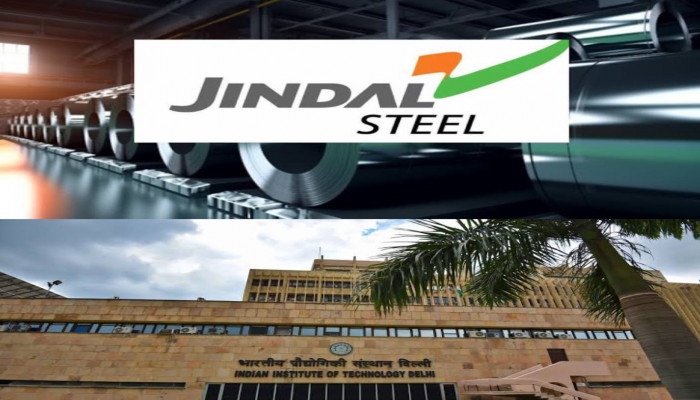
On February 23, 2026, the Indian Institute of Technology (IIT) Delhi signed an important Memorandum of Understanding (MoU) with Jindal Steel to set up a Nodal Centre of Excellence (CoE) focused on structural steel research. This collaboration aims to help India design and build better infrastructure using advanced steel technology.
The agreement was formally signed in New Delhi and was announced by the ANI news agency. Under this MoU, the Nodal Centre of Excellence will work on research, design innovation, and skill development in the area of high-strength and performance-oriented structural steel.
Structural steel is used widely in building bridges, tall buildings, industrial constructions, housing, and more. The goal of the new Centre is to encourage the expanded use of structural steel in infrastructure projects across India. This includes focusing on more sustainable buildings, reducing the lifecycle cost of structures, and speeding up overall infrastructure delivery nationwide.
According to the announcement-
- The Nodal Centre will act as a translational platform bringing together research, design, fabrication, and construction in steel structures.
- It will work on high-strength steel applications in housing, tall buildings, bridges, and industrial facilities, aiming to improve performance and efficiency.
- The Centre will help modernise design codes, design methodologies and engineering standards used in structural steel design.
- It will promote performance-based design, durability, systems that are less likely to suffer damage, and resilience against multiple hazards.
- A key objective is also to reduce the overall carbon footprint of steel-based construction, which is crucial for environmental sustainability.
The Nodal CoE will be responsible for nationwide capacity building. This means it will organise workshops, specialised courses, and training programmes available through both physical and digital platforms. It will also provide design support directly to infrastructure projects so engineers and planners can use the latest research and tools.
To attract global expertise and strengthen research connections with industry, the Centre will also create Chair Professorships. These special positions will bring in expert researchers and promote cutting-edge work in performance-oriented structural steel applications.
The Nodal Centre of Excellence will not work alone. It will coordinate with other Centres of Excellence in India, multiple IITs, Government ministries, industry stakeholders, and professional bodies.
This coordinated approach is meant to ensure research, skill development, technology transfer, and outreach are all aligned with India’s long-term infrastructure and industrial development.
Prof. Rangan Banerjee, Director of IIT Delhi, said, "We are pleased to partner with Jindal Steel to establish this Nodal Centre of Excellence at IIT Delhi. The Centre will bring academic rigour and continuity to structural steel research, particularly in high-strength applications. Together, we have identified the need to systematically review design methodologies and performance frameworks suited to Indian conditions."
He explained that the collaboration will generate new knowledge, create reference materials, and support capacity building for engineers and designers. He also said it will help create ongoing dialogue among researchers, policymakers, and professionals needed to advance structural steel usage in India.
As the main coordinating body under a hub-and-spoke model, IIT Delhi will lead the Centre’s efforts, while other IITs such as IIT Bombay, IIT Hyderabad, IIT Madras, and IIT Roorkee will contribute to research, outreach, training, curriculum development, and preparation of educational handbooks. This will help build a structured national framework supporting structural steel construction across the country.
Gautam Malhotra, CEO of Jindal Steel, said, "India stands at a crucial stage in its infrastructure development. While steel production capacity is strong, the ecosystem for high-strength, performance-oriented structural steel must be strengthened. This partnership with IIT Delhi is a strategic step toward modernising design standards, advancing research, and enabling scalable infrastructure solutions."
He added, "By aligning research, innovation, and industry practice, we are laying the foundation for a more resilient and sustainable built environment. We look forward to working with IIT Delhi and the wider IIT network to develop construction solutions that are safer, more sustainable, and globally competitive."
The MoU also supports India’s wider goals to modernise infrastructure, strengthen engineering standards, and improve technical capabilities. It fits into the country’s long-term development agenda and broader vision of building a resilient and sustainable steel construction ecosystem that aligns with national plans like “Viksit Bharat 2047”.



 Loading...please wait
Comments