




ICJ rules Myanmar committed genocide against Rohingya during 2017 military crackdown
- In Reports
- 04:41 PM, Nov 20, 2026
- Myind Staff
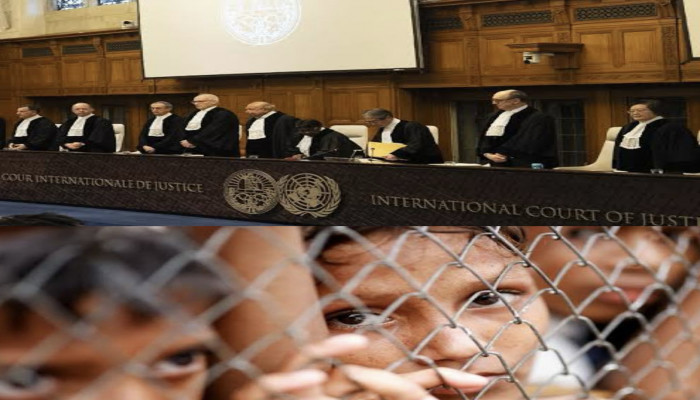
The International Court of Justice (ICJ) on Thursday ruled that Myanmar committed genocide against the Rohingya population during its August 2017 military operations in northern Rakhine State. The landmark judgment has major implications for international law and the interpretation of the Genocide Convention.
This is the fourth time since the Holocaust that an international court has established that the legal threshold for genocide has been met. Previous cases involved the 1994 genocide against the Tutsis in Rwanda, the 1995 Srebrenica massacre in Bosnia and the Khmer Rouge regime in Cambodia between 1975 and 1979. It is also the first time an international court has held a state responsible for genocide.
"The Republic of the Union of Myanmar has committed genocide against the Rohingya group in northern Rakhine State, in violation of its obligations under the Convention on the Prevention and Punishment of the Crime of Genocide," the court said.
The 15-judge bench concluded that Myanmar intended to destroy a substantial part of the Rohingya population. It examined the broader pattern of military conduct to establish genocidal intent.
"Based on all the evidence taken together, the Court is of the view that the only reasonable inference that can explain Myanmar's actions is an intention to destroy a substantial part of... the Rohingya population in northern Rakhine State," the court said.
Reading the judgment, court president Yuji Iwasawa said evidence showed that security forces killed around 10,000 Rohingya civilians during the clearance operations. This represented 1.2% of the targeted population of 815,000.
The court also found widespread rape and sexual violence against Rohingya Muslims. It said such acts were intended to cause physical and mental harm and affect the population's ability to reproduce. The military also committed extreme violence against children and attacked Rohingya civilians fleeing towards Bangladesh.
The Gambia, backed by the Organisation of Islamic Cooperation, filed the case in November 2019. It accused Myanmar of violating the 1948 Genocide Convention during its military campaign. The crackdown forced more than 730,000 Rohingya to flee to Bangladesh amid reports of killings, rape, torture and village burnings. Myanmar rejected the allegations, describing the operations as a response to attacks by the Arakan Rohingya Salvation Army (ARSA).
More than 1.2 million Rohingya refugees currently live in crowded camps in Bangladesh's Cox's Bazar district. Despite their roots in Myanmar, the minority community remains denied citizenship under the country's 1982 nationality law.
Amnesty International Secretary General Agnes Callamard welcomed the ruling, saying: "The International Court of Justice is fully convinced that Myanmar committed genocide against the Rohingya. Complex and well-presented lines of argument on genocidal intent. Many implications for jurisprudence and future trials. Well evidenced and well argued finding. Courageous too in view of the threats and pressure,"
The ruling is legally binding, but enforcement remains difficult as the ICJ has no independent mechanism to compel compliance. Under Article 94(2) of the UN Charter, The Gambia can approach the UN Security Council if Myanmar refuses to comply. The council can consider sanctions and diplomatic measures, although its five permanent members can veto substantive resolutions. It has never used these powers to enforce an ICJ judgment.
The ruling could also influence South Africa's ongoing genocide case against Israel over Gaza. Another case involving Ukraine's challenge to Russia's genocide allegations against the Russian-speaking population in Donbas is also pending before the court.
The judgment further addresses state responsibility for actions committed by government institutions, particularly the military, and countries' obligations to prevent genocide.
Human Rights Watch Deputy Asia Director Meenakshi Ganguly said: "This is a landmark judgment and will provide some relief to the Rohingya who have for so long endured stigmatisation, discrimination and genocidal acts by the Myanmar military and others. Governments should now press the Myanmar junta to comply with the ruling, and ensure the safe return of Rohingya refugees, "



 Loading...please wait
Comments