




IAF unveils Sankalp-2026 roadmap to indigenise spares and Russian-origin fighter fleet
- In Reports
- 06:54 PM, Aug 01, 2026
- Myind Staff
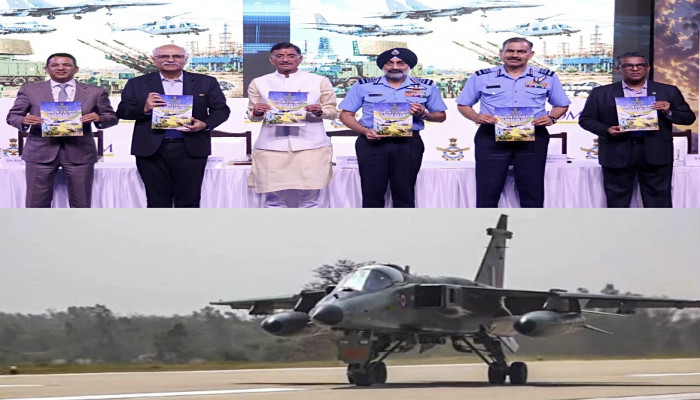
The Indian Air Force (IAF) has launched Sankalp-2026, a detailed roadmap to strengthen the indigenisation of spares and systems for its fighter aircraft, with a major focus on Russian-origin platforms. The initiative aims to reduce dependence on foreign suppliers and strengthen India's defence preparedness by encouraging domestic production of critical components. According to The Tribune, the move comes at a time when global supply chains have remained under pressure following the Russia-Ukraine conflict.
The Sankalp-2026 compendium outlines the IAF's requirements for indigenising equipment, systems and spare parts that are currently imported. It has been prepared in partnership with the domestic defence industry and serves as a ready reference for companies willing to support the Air Force's self-reliance programme. The document presents a detailed list of problem statements and highlights the areas where Indian manufacturers can contribute.
A major priority under the initiative is the long-term sustainment of the Sukhoi-30MKI and MiG-29 fighter fleets. Together, these aircraft make up nearly 340 fighters in the IAF's inventory. The Air Force currently operates around 270 Sukhoi-30MKI aircraft and about 70 MiG-29 fighters. The Indian Navy also operates around 40 MiG-29K marine variants.
The roadmap focuses on replacing Russian avionics with indigenous systems. It also plans upgrades to existing radar systems and the integration of Indian-developed weapons. One of the key additions will be the Astra beyond-visual-range air-to-air missile (BVRAAM), which will improve the combat capability of these aircraft while reducing reliance on imported weapon systems.
The document also places strong emphasis on the indigenous development of the Tejas light combat aircraft. It calls for the complete indigenisation of its avionics and electronic warfare systems. Another important objective is the integration of the indigenous Uttam Active Electronically Scanned Array (AESA) radar into the aircraft. This upgrade is expected to significantly improve the Tejas' operational performance and combat effectiveness.
Apart from aircraft modernisation, the IAF is also working on a new industry collaboration model known as the "Plant-in-Plant" concept. Under this arrangement, private companies will deploy their workforce inside the secure facilities of the Air Force's Base Repair Depots (BRDs). This will help speed up repairs, overhaul activities and the production of critical spares within IAF facilities. The model is expected to improve efficiency and reduce delays linked to external supply chains.
The Air Force has already established Nodal Technology Centres (NTCs) at several Base Repair Depots in collaboration with the Indian Institutes of Technology (IITs) and the Defence Research and Development Organisation (DRDO). These centres have completed nearly 300 projects aimed at solving supply chain challenges linked to foreign manufacturers. Many of these projects focus on producing critical spare parts that have become difficult to procure. The next phase of the initiative plans to involve private industry on a larger scale to expand production capacity and ensure long-term support for the fleet.
The Sankalp-2026 compendium also highlights the impact of the Russia-Ukraine conflict on military logistics. The disruption has affected the availability of several critical spare parts and has increased procurement costs. As a result, the IAF has reviewed its maintenance strategy and shifted greater attention towards indigenous production of high-technology spares known as line replaceable units (LRUs). These include avionics, electronic warfare equipment and aero-engine components that play a vital role in aircraft operations. Producing these systems within the country will help reduce strategic risks linked to imports.
The initiative is not limited to Russian-origin aircraft alone. The document also identifies the need for indigenous spares for US-origin helicopters and French Rafale fighter jets. This reflects the IAF's broader strategy to increase self-reliance across its entire fleet instead of focusing on only one category of aircraft.
The Society of Indian Defence Manufacturers (SIDM) has also supported the initiative and stressed the importance of close cooperation between industry and the armed forces. The organisation believes domestic companies should participate across the entire production cycle, including design, certification, quality assurance, manufacturing and long-term sustainment.
Sankalp-2026 aligns with the government's larger vision of Aatmanirbhar Bharat, which aims to strengthen India's defence manufacturing capabilities and reduce dependence on foreign suppliers. Through the indigenisation of critical systems, advanced technologies and essential spares, the IAF plans to build a more resilient and self-sufficient force that can maintain operational readiness even during periods of global uncertainty.



 Loading...please wait
Comments