




Houthis claim drone strike on Saudi airport as Yemen-Saudi tensions escalate
- In Reports
- 07:57 PM, Aug 04, 2026
- Myind Staff
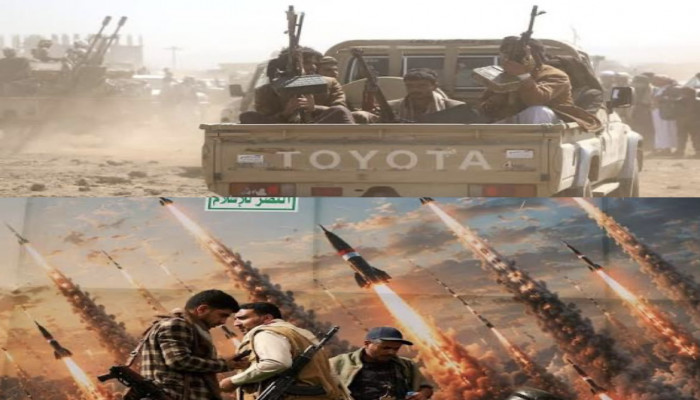
The Iran-backed Houthi group has claimed responsibility for a drone strike on Saudi Arabia’s Najran Airport, marking another escalation in the growing tensions between Yemen and Saudi Arabia. The development comes at a time when the ongoing conflict involving the United States and Iran has already increased instability across West Asia.
According to reports by AFP and Reuters, the Houthis said they had carried out a drone attack on a "sensitive site" at Najran Airport in southern Saudi Arabia. The group released a statement on Telegram confirming the operation. It described the strike as a successful attack on an important target inside the airport.
Houthi military spokesperson Yahya Saree said the group had "successfully targeted a sensitive target belonging to the Saudi enemy at Najran Airport using a drone," adding that the strike on the southern airport was "in response to the Saudi enemy's violation of airspace over the Saada and Hajjah governorates using drones".
Saudi Arabia has not yet issued an official response to the Houthi claim.
The latest attack reflects the renewed tensions between the Houthis and Saudi Arabia. The group recently accused Riyadh of targeting Sanaa Airport. It claimed the strike was meant to stop Houthi leaders from returning after attending the funeral procession of Iran’s late Supreme Leader Ayatollah Ali Khamenei.
The latest developments have ended a period of relative calm between the two sides. It is the first major escalation since the United Nations-backed truce in 2022. After the reported airport strike in Sanaa, the Houthis launched attacks on facilities owned by Saudi Arabia’s national oil company, Aramco.
The attacks have affected Saudi energy infrastructure. One of the major impacts was the shutdown of the Jazan production plant. The disruption came at a difficult time for Saudi Arabia as the Strait of Hormuz continues to face instability linked to the ongoing US-Iran conflict. The situation has raised fresh concerns over oil supplies and regional security.
The Houthis have also expanded their campaign to the sea. The group announced that Saudi-linked commercial vessels would no longer be allowed to pass through the Bab el-Mandeb Strait. The strategic waterway, often called the Gate of Tears, has become increasingly important for Saudi oil exports amid disruptions in the Strait of Hormuz.
Houthi spokesperson Yahya Saree also claimed that the group had targeted a Saudi oil tanker in the Red Sea. He stated that the Houthis had “carried out a military operation targeting the Saudi oil tanker (NCC GHAZAL) for violating the maritime navigation ban” that the group had imposed on Saudi vessels on July 28.
The reported operation followed earlier Houthi claims that they had attacked two Saudi oil tankers, Encelia and Layla, in the Red Sea. These incidents have added to concerns over the safety of commercial shipping in one of the world's busiest maritime routes.
Saudi Arabia has responded by carrying out strikes on Houthi targets. It has also formed a maritime coalition aimed at protecting shipping lanes and securing key trade routes in the region. The coalition seeks to prevent further attacks on commercial vessels and energy infrastructure.
The conflict between Saudi Arabia and the Houthis has its roots in Yemen’s civil war. Since 2014, the Iran-backed Houthi movement has been fighting against a Saudi-led coalition that supports Yemen’s internationally recognised government.
The conflict intensified after the Houthis took control of Yemen’s capital, Sana’a, in 2015. In response, Saudi Arabia led a coalition of Gulf countries that launched military operations against the group. The coalition also worked to economically isolate Yemen and carried out air strikes with intelligence support from the United States.
Over the years, the conflict included naval blockades, military raids and the seizure of weapons. The fighting caused widespread destruction and created one of the world's worst humanitarian crises. In April 2022, the United Nations brokered a ceasefire between the two sides. Although the truce officially expired in October 2022, both sides largely avoided major military escalation for several years.
The recent series of attacks and counterattacks now signals a sharp rise in hostilities. The reported drone strike on Najran Airport, attacks on Saudi energy facilities and oil tankers, along with Saudi military responses, indicate that the fragile calm between the two sides has come to an end. The renewed confrontation also adds another layer of uncertainty to an already volatile West Asian region.



 Loading...please wait
Comments