




Houthis attacks on Saudi Arabia after Sanaa airport strike ending four-year ceasefire
- In Reports
- 01:24 PM, Jul 14, 2026
- Myind Staff
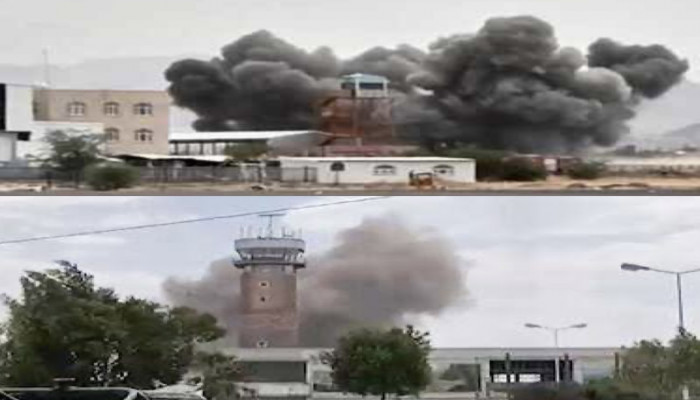
Yemen's Houthis launch missiles at Saudi Arabia on Monday after accusing the kingdom of carrying out airstrikes on Sanaa International Airport. The attack ended a four-year informal truce between the Iran-aligned group and Saudi Arabia and raised concerns about fresh fighting along their shared border.
Saudi Arabia said it intercepted missiles fired toward its southern region. A spokesperson for the Saudi-led military coalition in Yemen wrote on X that the kingdom had stopped missiles "launched by the terrorist Houthi militia toward the southern region."
Houthi military spokesperson Yahya Saree said the group had targeted Abha International Airport in southern Saudi Arabia. Abha is the capital of a mountainous region near the Yemeni border and is a popular summer destination for many Saudis.
This was the first missile attack claimed by the Houthis against Saudi Arabia since an informal truce began in March 2022. The truce followed Houthi attacks on Saudi energy facilities and helped reduce direct military confrontation between the two sides.
The latest exchange of strikes has increased fears of renewed conflict on Saudi Arabia's southern border. The situation had remained relatively calm after an April truce in the Iran conflict reduced Iranian drone and missile attacks on Saudi Arabia's eastern regions and the capital, Riyadh.
Saudi Arabia's large size allowed it to manage the impact of earlier regional conflicts better than several smaller Gulf countries. The kingdom continued exporting oil through a pipeline that carries crude from the eastern oil fields to its western Red Sea coast. This route avoids the Strait of Hormuz, one of the world's most important shipping lanes. However, a wider conflict involving the Houthis could create fresh risks. The group has previously targeted commercial ships in the Red Sea, raising concerns about regional trade and shipping.
The Saudi government's communication office did not immediately respond to a request for comment.
Earlier on Monday, the Houthis accused Saudi Arabia of launching airstrikes on Sanaa International Airport, which remains under Houthi control. The group described the strikes as "blatant aggression" and declared that the period of de-escalation had ended.
The Houthis also warned airlines against using Saudi airspace until the "siege" on Sanaa airport was lifted.
Yemen's internationally recognised government claimed responsibility for the strike on Sanaa airport. The government receives strong backing from Saudi Arabia, and many of its officials currently live in the kingdom.
Yemen's defence ministry said government forces targeted the runway at Sanaa International Airport to stop an Iranian aircraft from landing in violation of Yemen's sovereignty. The ministry also said government forces would respond to any hostile aircraft violating Yemen's airspace "by all available means", and it held Iran responsible for the incident.
Later, a military spokesperson said the Iranian aircraft landed instead at Hodeidah airport, which is also under Houthi control. Hodeidah lies around 150 kilometres southwest of Sanaa on Yemen's Red Sea coast. Officials did not say whether anyone had tried to stop the aircraft from landing there.
Another government minister said the Houthis were also holding an aircraft belonging to the International Committee of the Red Cross (ICRC) at Sanaa airport. Hachem Osseiran, the ICRC spokesperson for the Middle East, told Reuters that all ICRC staff members and the aircraft crew were safe and accounted for. He declined to comment further.
The latest escalation follows the collapse of an ICRC-mediated prisoner exchange agreement between the Houthis and Yemen's internationally recognised government. Both sides blamed each other for the failure of the deal, adding to signs of rising tensions.
Yemen has remained trapped in civil war and regional proxy conflict for more than a decade. The crisis began after the Houthis seized the capital, Sanaa, and forced the internationally recognised government to move to the south. Saudi Arabia formed a military coalition and intervened in Yemen in 2015 to support the government. The war later created one of the world's worst humanitarian crises.
Fighting intensified again late last year when a separatist group backed by the United Arab Emirates captured territory in southern Yemen. The offensive divided the Saudi-led coalition that had originally united to fight the Houthis.
Despite several regional crises, the informal truce between Saudi Arabia and the Houthis had largely remained in place since 2022. The ceasefire survived periods of heightened tensions linked to the Israel-Gaza war, during which the Houthis launched attacks on several ships in the Red Sea. It also continued through the recent Iran conflict.
The latest missile exchange has now ended that period of relative calm. The renewed hostilities have raised fresh concerns about security along the Saudi-Yemen border and the possibility of another prolonged phase of conflict in the region.



 Loading...please wait
Comments