




Hormuz will not open until US removes blockade, lifts sanctions and asset freeze: Iran
- In Reports
- 06:30 PM, Aug 18, 2026
- Myind Staff
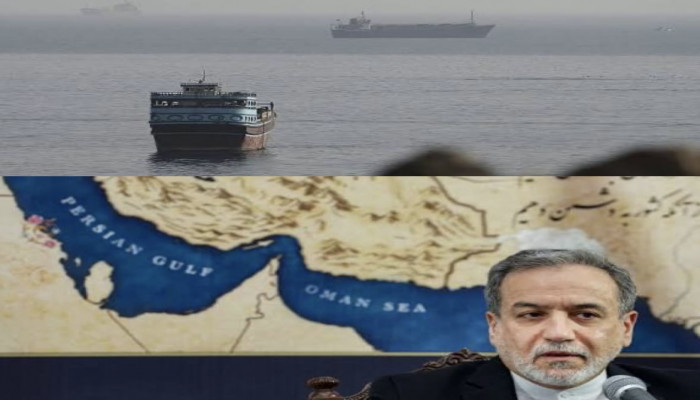
Iran has said the Strait of Hormuz will remain closed to maritime traffic until the United States fulfils all commitments outlined in a 14-point Memorandum of Understanding (MoU) between the two countries. Iranian Parliament Speaker Mohammad Bagher Ghalibaf said Tehran would not reopen the key waterway until Washington removes the blockade, releases frozen Iranian assets, lifts oil sanctions and ends military operations and threats against Iran.
"Until America's commitments in the memorandum of understanding — including lifting the blockade, releasing frozen assets, lifting oil sanctions, ending threats and military operations on all fronts, and other conditions to which America committed — are implemented, the "Strait" will not be opened," Ghalibaf said.
Ghalibaf made the remarks on Tuesday as disagreements between Tehran and Washington remain unresolved after the 60 days linked to the agreement. Iran has made the normal movement of vessels through the Strait of Hormuz dependent on several conditions. These include the end of the blockade, the withdrawal of troops and reparations.
The Iranian Parliament Speaker also warned countries seen as adversaries against taking further military action. He said Iran was prepared to respond strongly to any new aggression. "Of course, it is necessary to clarify that the opportunity gained from the memorandum regarding the lifting of the blockade and the ceasefire was a worthy help in increasing economic resilience and rebuilding Iran's defensive power," he said.
Ghalibaf said the diplomatic process had given Iran an important period to strengthen its economy and national defence. The pause in military hostilities allowed the country to focus on improving its economic resilience and rebuilding its defensive capabilities.
He also stressed that Iran would continue to stand by what he described as its national responsibilities and would not forget those killed in the conflict. Ghalibaf referred to the country's "martyrs" and said Iran would continue to defend its sovereignty and pursue what it considers the rights of its people.
"We will not pass over the blood of the martyred leader, the innocent children of Minab, and other martyrs of the second and third sacred defence. Under the guidance of the Supreme Leader of the Revolution and before the Iranian nation, we pledge to use all our strength to achieve the rights of the Iranian people, eliminate aggression, punish the aggressor, and make the country proud," he said.
Ghalibaf also addressed concerns over Iran's internal stability. He warned against attempts by foreign powers to weaken unity within the country. He said political officials and the public remained united in the face of external pressure.
"We will not allow the enemy to target national unity, the presence of the people, the resilience of the nation, and the motivation of officials. Iran is united, powerful, and vigilant, and with trust in Almighty God, the guidance of the Supreme Leader, the willpower of the nation, and the coordination and synergy of the military, diplomatic, and service arenas, it will emerge victorious from this historic test, and divine victory will certainly be realised for these striving people," he added.
Ghalibaf's remarks came after an incident involving a vessel travelling through the Strait of Hormuz. The vessel was struck by an unknown projectile while making an outbound transit of the strategic waterway. The incident damaged its engine room and left one crew member injured, according to the UK's Maritime Trade Operations (UKMTO).
"The Company Security Officer has reported that the vessel was struck by an unknown projectile while conducting an outbound transit of the Strait of Hormuz," UKMTO said in its incident report. "The impact caused damage to the engine room and resulted in a crew casualty," it added.
The latest remarks from Tehran indicate that the future of maritime traffic through the Strait remains closely linked to the wider US-Iran agreement. The conclusion of the 60-day period has not resolved the main disputes between the two sides. Iran continues to demand an end to the blockade, the withdrawal of foreign troops and reparations before it agrees to restore normal traffic through the Strait of Hormuz.
For Iran, reopening the waterway is therefore not a separate issue. Tehran has tied it directly to the implementation of the commitments it says the United States made under the MoU. Until those conditions are met, Ghalibaf has made clear that Iran does not intend to reopen the Strait.



 Loading...please wait
Comments