



Hindus in Bangladesh send SOS to India: ‘Please save us from mob fury, open the borders’
- In Reports
- 12:30 PM, Dec 27, 2025
- Myind Staff
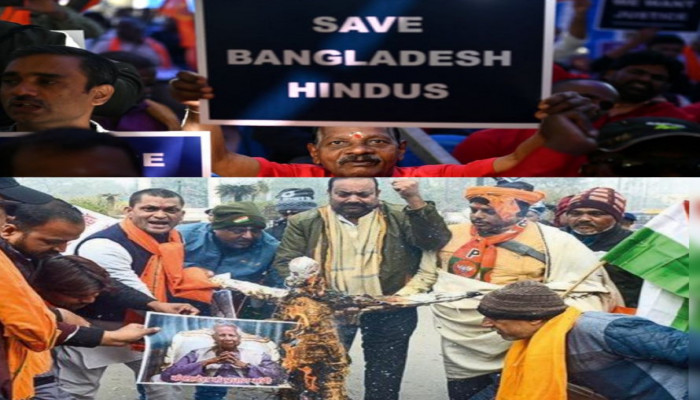
Hindus living in Bangladesh are in fear after incidents of mob violence and killings, including the lynching of Dipu Chandra Das and Amrit Mondal. Many of them say they are scared, trapped, and want India to open its borders so they can escape the growing threats from Islamist mobs.
The fear has increased recently due to growing political support for Bangladesh Nationalist Party (BNP) leader Tarique Rahman, who is considered a hardline figure. Many Hindus believe that if the political situation changes, their safety could worsen even further.
The Times of India contacted several Hindus from places like Rangpur, Chittagong, Dhaka, and Mymensingh through WhatsApp calls. These calls were arranged through Nihar Haldar, a former leader of the Bangladesh Sanatan Jagran Macha who is currently in exile and has been accused of sedition along with former ISKCON monk Chinmoy Krishna Das.
One 52-year-old man from Rangpur spoke with deep fear in his voice about the daily harassment faced by Hindus in Bangladesh. He said, “We face constant insults for our faith but cannot react to repeated humiliation. The mere taunts we face while walking down the road may soon turn into mob killings. We are trapped and have nowhere to go. We swallow insults as we fear we could meet the same fate as Dipu or Amrit.” The man also said that many Hindus have only one possible refuge. According to him, “We are helpless. We can only escape to India, but there is strict control at the borders.”
Another Hindu resident living in Dhaka expressed similar concerns. He said the killing of Dipu Das has already scared the community, and the possible political rise of Tarique Rahman has increased their anxiety. He said, “If Dipu Das’ lynching has triggered fears, the return of Tarique Rahman, son of former President Khaleda Zia, to Bangladesh makes them more anxious. If the BNP comes to power, we could face more persecution.” He added about the ruling party, “Sheikh Hasina’s Awami League was our only saviour.”
The fear felt inside Bangladesh is also affecting refugees who had earlier migrated to India. These include people settled long ago in areas such as Gadchiroli and Chandrapur in Maharashtra and Pakhanjur in Chhattisgarh.
Dr Subodh Biswas, president of the Nikhil Bangla Samanbay Samiti, an organisation representing refugees who earlier came from East Pakistan, criticised the lack of strong action. He said, “Why don’t Hindu organisations get proactive? India is the only country where Hindus of Bangladesh can bank upon during a crisis. More Hindus will be killed, but borders remain shut. We plan to stage protests at the border.”
Another activist from the Sanatan Jagran Macha, who did not want to reveal his identity, warned that the situation could get much worse. He said, “There are 2.5 crore Hindus in Bangladesh. It’s not a small number. Hindu organisations in India are doing nothing more than lip service. We are staring at a holocaust.”
A resident of Mymensingh explained that allowing people to cross into India might not lead to a full-scale migration, but that it would still be a safe option. He said, “It’s not that there will be Hindu exodus after borders open, but we will be at least insulated from violence.”
One Hindu resident of Dhaka shared the same hope that an open border could serve as protection. He said, “We are living the worst nightmare. Opening the Indian borders will at least create an escape route for those facing persecution.”
Many Hindus in Bangladesh live in poor economic conditions and often struggle to make ends meet. Even after facing threats, some may choose not to leave their homes because their livelihood is uncertain elsewhere. One man from Dhaka, in his forties, explained, “For them, livelihood comes first, and they may not prefer an uncertain life after fleeing to India. If you wear or sport any Hindu symbol, passers-by don’t hesitate to call you an Indian agent.”
These testimonies show the anxiety and helplessness among Hindus in Bangladesh after the recent violent incidents. Many community members believe their safety depends on whether India will allow them refuge. Their plea is clear: they want borders opened so that those who fear persecution can escape.
The situation continues to worry Hindu organisations, refugee groups, and citizens across both countries. While many Hindus in Bangladesh try to stay quiet to avoid provoking violence, their fear of further attacks remains strong. Their messages, words, and emotional appeals highlight their desperation as they look to India for help and protection during this tense time.



 Loading...please wait
Comments