



Himachal Assembly approves cess on petrol and diesel to fund welfare schemes
- In Reports
- 11:36 AM, Mar 24, 2026
- Myind Staff
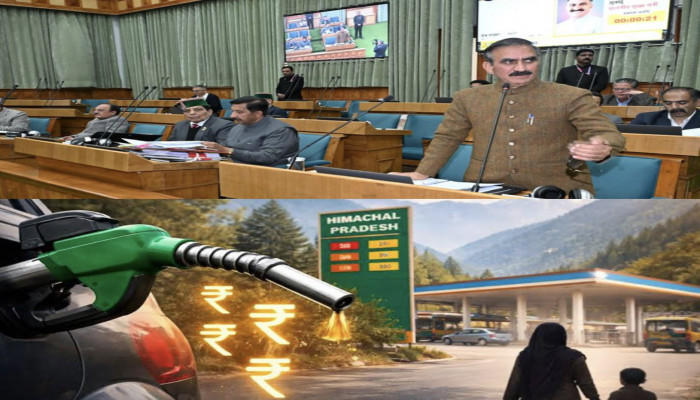
The Himachal Pradesh Legislative Assembly on Monday passed the Himachal Pradesh Value Added Tax (Amendment) Bill, 2026, paving the way for an increase in fuel prices across the state. The bill proposes to levy a special cess on petrol and high-speed diesel to support welfare schemes for widows and orphaned children. The legislation was cleared through a voice vote, even as members of the Bharatiya Janata Party staged protests inside the House.
According to the state government, the move is intended to create a steady and reliable source of income that can be directed towards social welfare initiatives. The government has positioned the cess as a necessary step to strengthen financial support systems for vulnerable sections of society, particularly widows and children who have lost their parents. However, the decision has triggered political tensions and opposition strongly contested the measure, warning of its impact on the general public.
Speaking during the assembly session, Chief Minister Sukhvinder Singh Sukhu expressed disappointment over the protests by the opposition. He said, “It (Protest) is regrettable …. The maximum limit for this cess is ₹5, now, whether we choose to levy 10 paise or ₹2, is at our discretion.” He defended the bill, citing the government’s commitment to helping economically weaker sections and questioned the opposition’s stance on welfare measures.
Continuing his remarks, Sukhu slammed the opposition for opposing what he described as a socially responsible initiative. “If we are taking steps for the welfare of widows and orphaned children, the opposition should support it instead of opposing,” he said. He also targeted former Chief Minister Jai Ram Thakur, stating, “Jai Ram Thakur is merely parroting the rhetoric of Punjab’s Aam Aadmi Party. Look at our intent; our concern lies with those children who have lost their parents and those women who have lost their husbands. This decision will simply bring our rates on par with those of other states. Our sentiments lie with orphaned children and widowed women.”
The Chief Minister further argued that even after the proposed increase, fuel prices in Himachal Pradesh would remain lower than those in neighbouring states such as Punjab and Haryana. He added, “We have conducted a thorough study on this matter,” indicating that the government had carefully assessed the potential impact before introducing the bill.
Sukhu also launched a broader attack on the Bharatiya Janata Party and the central government. Referring to Prime Minister Narendra Modi, he said, “Go to PM Modi, who levies a cess of ₹27, ask him to reduce it first. PM Modi funds the Kisan Samman Nidhi scheme using the cess collected on petrol and diesel. Yet, they have discontinued our Revenue Deficit Grant. Why is the BJP so hostile towards Himachal?” His remarks highlighted the ongoing friction between the state government and the Centre over financial support and policy decisions.
On the other hand, the opposition strongly criticised the bill, calling it an added burden on people already dealing with rising prices and inflation. BJP leaders argued that increasing fuel prices would have a cascading effect on the economy, impacting not just vehicle owners but also the cost of goods and services. They warned that the move could push petrol prices beyond ₹100 per litre and diesel prices above ₹90, making fuel in Himachal Pradesh more expensive than in nearby regions.
BJP state media in-charge and MLA from Naina Devi, Randhir Sharma, voiced the party’s concerns. He said, “We opposed this bill because we believe that making petrol and diesel more expensive will put an economic burden on the people of Himachal. This burden will not only affect those who own vehicles—whether commercial or private, even scooters and bikes—but will also increase overall inflation, impacting all sections of society.” His statement reflected the opposition’s argument that the policy could worsen the financial strain on ordinary citizens.
Following the passage of the bill, opposition members staged a walkout from the assembly, signalling their continued resistance to the measure. The protest underscored the sharp political divide over the issue, with both sides standing firm on their positions.
The bill will now be sent to the Governor for approval. Once it receives assent, it will officially come into effect, leading to revised fuel prices in the hill state. The implementation of the cess is expected to directly impact consumers, while also generating additional revenue for welfare programs.
Meanwhile, Jai Ram Thakur further criticised the ruling party, accusing it of using welfare as a pretext for raising funds. He said, “The current reality is that in order to sustain its administration, the government is now raising funds in the name of widows and orphans; this money is being collected solely to keep the government running.” His remarks added to the ongoing political debate, highlighting the differing perspectives on the intent and impact of the new policy.



 Loading...please wait
Comments