




Haryana government takes over Al-Falah University appoints IAS officer as administrator
- In Reports
- 07:54 PM, Mar 21, 2026
- Myind Staff
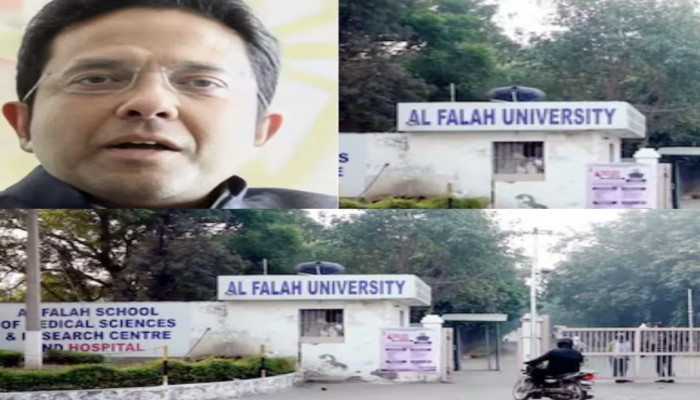
The Haryana government has taken decisive action by bringing Al-Falah University under its direct control following an inquiry that uncovered several violations of statutory rules and irregularities in the institution. As part of this intervention, the state has initiated a major restructuring of the university’s administrative and financial systems to restore order and accountability. Officials stated that the decision was necessary to rectify long-standing issues and ensure that the institution functions in line with required standards.
A senior IAS officer, Amit Aggarwal, has been appointed as the administrator and has already assumed responsibility for overseeing both the financial and administrative operations of the university. Authorities have indicated that his appointment is aimed at stabilising governance while maintaining continuity in academics for approximately 1,700 students currently enrolled. The government has reassured that despite the administrative overhaul, students’ education will not be disrupted and regular academic activities will continue smoothly.
To strengthen the management further, officials from the J.C. Bose University of Science and Technology have been brought in to take up key positions. Ajay Ranga has been appointed as the vice-chancellor, while Rajeev Kumar Singh will handle the responsibilities of controller of examinations. In addition, Ravi Kumar Sharma has taken charge as the chief finance and accounts officer, and Meha Sharma has been appointed as registrar. Officials have clarified that while these leadership roles are being reshuffled, the existing teaching staff will remain unchanged to ensure that students do not face any academic setbacks.
The government’s intervention comes after an investigation reportedly revealed multiple lapses in compliance with statutory norms. These findings raised concerns about the university’s functioning and prompted the need for immediate corrective measures. The institution came under scrutiny in connection with the Red Fort blast on November 10, 2025, where individuals associated with the university were arrested for investigation. This development intensified the need for stricter oversight and regulatory action.
Established in 2013, Al-Falah University has yet to receive accreditation from the National Assessment and Accreditation Council, a key quality assurance body for higher education institutions in India. Officials noted that earlier regulatory gaps allowed certain compliance issues to go unnoticed, making it necessary for the state to step in and enforce stronger monitoring. The government has emphasised that its primary goal is to restore proper governance while protecting the academic interests and future of the students.
In a broader move to tighten regulations, amendments have been introduced to the Haryana Private Universities law. A new provision under Section 44 now clearly outlines penalties for mismanagement, misleading disclosures, and failure to meet academic and regulatory standards. Under these updated rules, the government has the authority to suspend admissions in specific courses, impose financial penalties ranging from ₹10 lakh to ₹1 crore, and even initiate a phased shutdown of the institution if necessary corrective actions are not taken within a fixed timeframe. Officials have stressed that these measures are meant to ensure accountability and prevent similar issues in the future.
Earlier this year, in January, the Enforcement Directorate took significant action by attaching properties worth around ₹140 crore linked to the university under the provisions of the Prevention of Money Laundering Act. This move was part of a wider investigation into alleged financial wrongdoing. The attached assets include about 54 acres of land in the Dhauj area of Faridabad, along with the university’s main buildings, academic blocks, and hostels. The agency identified that these properties are proceeds obtained through illegal means.
According to the Enforcement Directorate, the university’s chairman, Jawad Ahmed Siddiqui, along with the Al-Falah Charitable Trust, is accused of generating nearly ₹493 crore through fraudulent activities. Investigators claim that students and their families were misled into paying large fees based on false claims that the institution had accreditation from NAAC and recognition from the University Grants Commission. These allegations have added to the seriousness of the case and reinforced the need for strict action.
The university has also been at the centre of attention due to its alleged links to a larger terror network. Several individuals linked with the institution, including faculty members- Umar Nabi, who worked as an assistant professor at the university’s medical college, are believed to have been involved in the attack. Others, including Muzzamil Shakeel and Shaheen Shahid, were arrested with weapons and explosive materials.
The blast at the Red Fort metro station in November 2025 resulted in the deaths of at least 15 people and left several others injured. Authorities described the case as part of a sophisticated “white-collar” terror network operating across multiple states, including Kashmir, Haryana, and Uttar Pradesh, with alleged links to extremist groups such as Jaish-e-Mohammed and Ansar Ghazwat-ul-Hind. The scale and nature of the case have intensified scrutiny on institutions connected to those under investigation.
Located in Dhauj, the university spans around 70 acres and was granted recognition by the University Grants Commission in 2015. It also operates a 650-bed charitable hospital as part of its medical sciences division, along with separate hostel facilities for male and female students. Beyond the university, the Al-Falah Charitable Trust manages several other educational institutions, including engineering, management, education, and health science colleges.
Through this intervention, the Haryana government aims to bring stability, enforce transparency, and ensure that students’ academic progress is not affected while the institution undergoes necessary reforms. Authorities have made it clear that restoring trust and maintaining educational standards remain their top priorities.



 Loading...please wait
Comments