




Harendranath Barua: A Forgotten Hero
- In History & Culture
- 12:08 PM, Aug 31, 2026
- Ankita Dutta
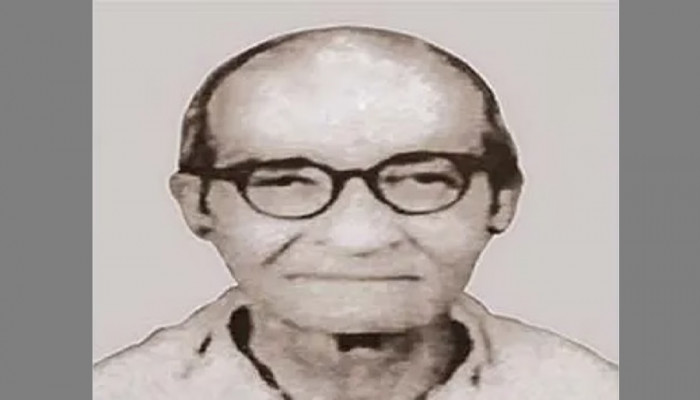
Not everyone’s name is forever etched in history. It is the impact of their life and works that establishes a long-lasting legacy, continuing to guide us, even in their absence. Their names teach us that life isn’t measured in years, but in the struggles they faced and how they overcame them, fearlessly and uncompromisingly. One such immortal name in the socio-political landscape of Assam is ‘Asompran’ Harendranath Barua, a broad-minded nationalist who strove for Assam’s cultural integrity and unity with Bharat till his last breath. Harendranath Barua’s legacy as a noted freedom fighter, brilliant intellectual, and journalist of principles immediately evokes a sense of utmost respect in the hearts and minds of the Assamese. But his name is still missing from Indian history textbooks!
Early Life and Education
Harendranath Barua was born in 1908 to Ramakanta Barua and Sabitri Barua in a small, sleepy village of Mohima (also officially known as Dheria within revenue village Upor Khatowal in the Dergaon Sub-District of Golaghat district), 12 kilometres away from Golaghat town under the former Golaghat Sub-Division of undivided Sibsagar district. Barua was inspired by the life and works of Karamveer Nabin Chandra Bordoloi, father of poetess Nalini Bala Devi and the seniormost freedom fighter and Congress leader of Assam before Independence. He went to Gauhati in 1925 (almost a century ago) after passing his matriculation examination from Golaghat Bezbarua High School. He passed the Intermediate Arts (IA) examination in 1928 as a non-collegiate candidate from Victoria College in Cooch Behar under Calcutta University after being debarred from appearing from Cotton College for his political activities against the British Government. He passed the BA examination from Cotton College and later graduated in law. However, he could not complete his MA in English Literature due to his political activism.
A Fearless Journalist
Harendranath Barua, a friend and contemporary of former Assam Chief Minister Mahendra Mohan Choudhury, began his journalistic career in 1933 as assistant editor to the then editor Padmadhar Chaliha of the Chandra Kumar Agarwala-founded bi-weekly newspaper ‘Asomiya’. When he later took over the editorship of the same newspaper on March 13, 1934, after completing his graduation, he had to fight a fierce battle against the State Government’s policies concerning the unchecked and continuous illegal infiltration of Muslims from East Bengal. During the tenure of the Government headed by Bimala Prasad Chaliha, he wrote a series of editorials on it. He was very critical of the erstwhile Chief Minister and the Assam Government, although as an ex-Congressman, he was personally on good terms with Chaliha and held him in high regard as a human being rather than an administrator. Although he became the Chairman of the Gauhati Municipality during 1946-47, he was not very happy since many senior Congress leaders of the time, such as Lakhidhar Bora and Dr Jagadish Chandra Medhi, had lost the municipal elections. In one of the editorial columns of ‘Asomiya’, he had expressed his dissatisfaction over the faulty electoral rolls, leading to the subsequent loss of the Congress stalwarts. For his fearless and uncompromising attitude, Barua earned the wrath of many powerful political leaders. including Moinul Haque Choudhury, who was the most vocal minister against him in the Ministry of Bimala Prasad Chaliha. As he never sought any MLA or MP ticket, he could be forthright in his criticism of the Congress Government’s policies.
Fight Against Muslim League
Long back in the mid1940s, when the Muslim League Ministry in Assam, led by Mohammad Sadullah, tried conjuring up blatant falsehoods to prove that Assam was a Muslim-majority province to be rightfully included in the proposed East Pakistan, Harendranath Barua, along with Gopinath Bordoloi and others, were at the forefront of exposing their false claims. Sadullah’s dangerous designs to incorporate Assam in East Pakistan, ‘Grow More Food’ scheme, Line System, allowing the occupation of fertile lands including PGRs and VGRs by Bengali Muslims, the British Government’s increase of land revenue (‘khajona’) for the native Assamese, and colonial machinations for a caste-wise Census based on tribe and not religion, etc. were continuously discussed by him in different editorials published in ‘Asomiya’. Especially his editorials pertaining to the British Government’s land revenue regulations and deterioration of people’s economic conditions, atrocities committed against the people to collect land revenue, and demand for the reduction of land revenue at the rate of eight annas per rupee, garnered widespread attention. Besides these, he also highlighted issues such as discrimination suffered by the Assamese people in matters of appointment in the Railways and other Government jobs, as well as handing out inconsequential postings to senior Assamese officers in the Railways. Nobody could counter his arguments presented with logic and backed by solid facts and figures.
Fight Against Grouping
At every conceivable instance, Harendranath Barua came down heavily on the Sadullah Ministry, which was constantly trying to mislead the public. He even warned people like Surendra Nath Borgohain and Rupnath Brahma who had joined Sadullah not to betray the cause of the Assamese. In short, he severely criticised all those people harbouring secessionist and fissiparous tendencies, while also questioning the diabolical role of the Tribal League leaders in supporting and joining the Sadullah Ministry. It was none other than Harendranath Barua who first detected the sinister agenda behind the disastrous Grouping Proposal of the British Government once it was made public on May 16, 1946. As per this Proposal, Assam was to be included in a Muslim-dominated and linguistically Bengali-majority state with the support of the Central Congress leaders who wanted Independence at the earliest. Immediately, he wrote a detailed article in the ‘Asomiya’ against it, cautioning the Central Congress Party for its near-complete acceptance of the same. Barua was a member of the Congress Party at that time, and his views drew sharp reactions from top Congress leaders such as Md. Tayebullah who was then serving as the Assam Congress President, and supported the Grouping Proposal. Barua also telegraphed Gopinath Bordoloi, who was in Delhi at that time. Bordoloi, after coming back from Delhi, informed that although he expressed his reservations on the matter to the Party’s top leadership, he didn’t believe that it would have any impact. Late. Gauri Shankar Bhattacharyya, a prominent Communist leader of Assam at one time and much junior in age to Harendranath Barua, had mentioned in an article in the Assamese daily newspaper ‘Ajir Batori’ dated 31/08/1997, that Barua’s article on Grouping was so full of proven facts and figures that until then, he had not come across such a detailed article on the subject penned by any other Assamese. He also emphasised that Barua had spoken nothing much about himself in the article.
Barua not only analysed the perils facing Assam vis-à-vis Sadullah and the Muslim League, but he was also an active participant in Assam’s fight against Grouping. It was a difficult task to extricate Assam from it in the face of the Central Congress leaders’ desperation to gain Independence by any means possible. All-round protests against the Proposal in Assam were the only way out. Hence, all organisations of different ethnic communities, including students’ unions throughout Assam, protested in different ways against the havoc created by the Grouping Proposal. Under such circumstances, Barua, himself in the thick of a storm, led a delegation of the Assam Congress Working Committee comprising Devakanta Barooah, Hareswar Goswami, Kamakhya Prasad Tripathi, and Pushpalata Das to present Assam’s case to the members of the Central Congress Working Committee in Delhi. As the seniormost member of the delegation, the memorandum was prepared by Barua himself with his name at the top. It was submitted to the Congress Working Committee members and can be read in the Diganta Oja, first edited volume of Barua’s writings captioned ‘New Proposal and Assam’ which, in a nutshell, described the Grouping Proposal and the dangers posed by it to the Assamese people. He even wrote a booklet titled Reflections on Assam cum Pakistan, in which he threw light on the conspiracy of the Muslim League leaders and its propagandists to prove that Assam was a Muslim-majority Province where Hindus were in a minority and most of its people spoke Bengali. Published in the latter half of 1944, the foreword to this booklet was written by Gopinath Bordoloi. Detailed, lengthy facts were later reproduced in his own words by Dr Rajendra Prasad in his monumental book India Divided published in 1946 (2010 edition, pages 333-334), with due credit to Harendranath Barua.
Journalism as a Full-Time Career
Harendranath Barua continued to serve as the editor of ‘Asomiya’ till after Independence, when the newspaper was published as a daily. Because of his active involvement in the freedom struggle, his career as a journalist saw numerous gaps, as he had to face several jail terms. Although Barua was a staunch Congressman supporting the Independence Movement, whenever required, his journalistic instinct never shied away from criticising the Party. On 31/03/1949, the Chandra Kumar Agarwala-founded ‘Asomiya’ had closed down permanently due to financial reasons. After severing all ties with the Congress and retiring from active politics, Barua decided to pursue journalism independently as a full-time profession. Back then, journalism was a career fraught with many risks. He preferred to be non-political while pursuing journalism, although his former colleagues in the Congress Party continued to consider him a Congressman and one amongst them.
On January 26th, 1950, when India formally declared itself as a Republic by adopting its own Constitution, Harendranath Barua, along with former Congress MLA Beliram Das, founded the bi-weekly newspaper ‘Tinidiniya Raij’, edited by him. It became quite popular for the catchphrase Raijei Roja, i.e. the people are the king-makers. In many of its editorials, he had vividly brought to light the lawlessness perpetrated by the Communists in Assam and their destructive acts. But, after nearly two years of its publication, Barua fell seriously ill due to excessive workload. He had to undergo an emergency operation at the hands of freedom fighter and surgeon Dr Harikrishna Das for gastric ulcer perforation. He survived fortunately. However, he had to be bedridden for a long period. It was during this time that he indulged himself in freelance journalism by writing articles for the Calcutta-based Statesman and Amrita Bazar Patrika. The editor of Amrit Bazar Patrika, Tushar Kanti Ghosh, even published the goodwill message of Harendranath Barua in full in the centenary supplement of the newspaper. Meanwhile, Beliram Das couldn’t give sufficient time to ‘Tinidiniya Raij’ due to his political preoccupations and as a result, the paper finally closed down.
Language Movement and Harendra Nath Barua’s Role
When the three-member States Reorganisation Commission appointed by the Government of India to constitute states on the basis of language,\ visited Assam in 1954, many organisations, including the Assam Government, Assam Pradesh Congress Committee, Assam Jatiya Mahasabha led by Ambikagiri Roychowdhury, etc. submitted their memorandums. One such memorandum was submitted on May 14, 1954, under the banner of the All Assam States Reorganisation Conference (AASRC), presided over by the well-known Assamese poet Raghunath Choudhury, who was believed to have financed it. Harendranath Barua prepared the memorandum in his capacity as the General Secretary of the organisation. The signatories of the memorandum were well-known political leaders, mostly from the Congress Party and the Praja Socialist Party, such as Kamakhya Prasad Barua, Haladhar Bhuyan, Hem Barua, Padmeswar Gogoi, Nalini Bala Devi, Chandra Prabha Saikiani, Jai Chandra Choudhury, Santi Ram Lahkar, Benudhar Sarma, Baharul Islam, Pabindra Nath Sarma, Balendra Ram Phukan, Robin Nobis, Dharanidhar Das, etc. The memorandum, which was the first to be submitted to the Commission, presented a detailed survey of the Assamese language, its history and culture, and vehemently denounced the claims of vested interest groups to include old Goalpara district (encompassing present-day Dhubri, Kokrajhar, Goalpara, and South Salmara-Mankachar, etc. districts) in West Bengal. He had argued for the inclusion of Coochbehar and Jalpaiguri into Assam based on the history, culture, and languages spoken in these regions. Harendranath Barua went beyond the call of his duty to ensure that the memorandum reached the States Reorganisation Commission or the Congress headquarters in New Delhi. He also ensured that concerned citizens from the so-called disputed district of Goalpara appeared before the Commission to provide evidence and supplementary memorandums by writing to its members personally. Accordingly, Nepalis, Santhals, and Biharis of Goalpara submitted their own memorandums opposing the transfer of old Goalpara to West Bengal as demanded by West Bengal, claiming similarities of language and culture.
In 1956, Harendranath Barua took over the editorship of ‘Natun Asomiya’, the only local Assamese-language daily of that time that actively fought against the false, concocted stories propagated by the politically strong and influential Calcutta-based anti-Assamese lobby during the turbulent times of the language disturbances. The events have been described in detail by Barua in his brochure titled A Glimpse of Assam Disturbances, where he also put forth the demand for making Assamese the state language. From 1957 onwards, he continuously kept drawing the attention of the public to the state’s language issue and the Pakistani (now Bangladeshi) infiltration problem in particular, along with other national problems. Although he was not directly associated with the Assam Sahitya Sabha, upon its request, he accompanied one of its delegations to New Delhi to meet top leaders of the Central Government to explain Assam’s case and the causes of disturbances that ensued because of the agitation for declaring Assamese as the state language.
In many of his editorials published in ‘Natun Asomiya’, Harendranath Barua tactfully refuted the claims of the Assam Domiciled People’s and Settlers’ Association to make Assam a multilingual state. Barua had even got Hamdi Bey, the then Assam correspondent of The Statesman, who was stationed in Guwahati, transferred out of Assam by writing to the then editor of the newspaper Pran Chopra, accusing Bey of communally-motivated writings and his attempt to denounce the Pakistani infiltration problem into Assam as a ‘non-issue’ kept alive by a few communal Assamese leaders.
After the killing of a young student named Ranjit Barpujari in police firing on July 4, 1960 in the Cotton College hostel premises of curfew-bound Guwahati, ‘Natun Asomiya’ played an important role in disseminating the Assamese side of the story to the intelligentsia and non-Assamese people both within and outside Assam. In his capacity as the editor of that newspaper, Harendranath Barua had earnestly taken up the demand for sanctioning a bridge over the Brahmaputra, establishment of another refinery in the state, declaration of Assamese as the state language and the medium of instruction at the collegiate level, etc. With these objectives, he worked towards spreading awareness amongst the people for molding a favourable public opinion on different problems concerning Assam. It was in 1961 that Assamese was ultimately declared the state language in the Brahmaputra Valley, while Bengali was made the official medium of communication at the district level in the undivided Cachar district of the Barak Valley.
A Socio-Political Activist
Harendranath Barua was not happy with the Central Government’s decision to introduce Hindi in place of classical Sanskrit, besides English and the mother-tongue, in the three-language formula of education. He understood the importance of Sanskrit and had immense adoration for Hindu sacred texts such as the Bhagavad Gita. It would not be an exaggeration to say that Harendranath Barua was one of the first persons to have brought to the public notice the unusually high increase in the number of voters in the Mangaldoi Lok Sabha constituency, which eventually became the focal point of the Assam Movement (1979-1985). Thus, well ahead of the start of the Movement, Barua had enlightened the common masses about the core problem. One of his articles published on November 15, 1978 in the editorial page of ‘The Assam Tribune’ had quoted the then Chief Election Commissioner (CEC) of India S.L. Sakhdher’s speech in this regard that was delivered in the meeting of the Chief Electoral Officers of the States and Union Territories held in Ooty in October, 1978. However, the CEC later somersaulted from his statement under political pressure.
Harendranath Barua finally retired from active journalism in 1976 after having served as the editor of ‘Natun Asomiya’ for a long 20-year period. His farewell meeting was attended by the then Chief Minister of Assam, Sarat Chandra Sinha, and Home Minister Hiteswar Saikia. He always took the lead in explaining to the people of Assam the imminent dangers of demographic change and the steps to be taken for preventing it. He was not happy with the final outcome of the Assam Movement and the agreement reached by All Assam Students’ Union (AASU) with the Central and the State Government on the detection and deportation of illegal immigrants. He even wrote an article in the ‘Asom Bani’ dated June 12th, 1987 – just two and a half months before his death at the age of 79 years – discussing the drawbacks of the Assam Accord.
Barua was deeply disappointed when the Central Government forcibly pushed down the throat of Assam the infamous Assembly elections of 1983. He could not keep quiet when the Assam Government had only ordered an administrative inquiry under a retired Chief Secretary of Uttar Pradesh, which perhaps didn’t see the light of day. Two years before his death on August 31, 1987, Barua, as the President of the Assam Freedom Fighters’ Association, took the initiative of bringing to the notice of the public the incidents of mass murders, massacres, and riots that rocked the state during these elections. Barua’s efforts eventually succeeded. The freedom fighters, with limited resources, appointed a three-member non-official Judicial Inquiry Commission headed by Justice T.U. Mehta, Retd. Chief Justice of the High Court of Himachal Pradesh. It published a 222-page report, detailing each and every atrocity committed throughout Assam before, during, and after the elections. Despite the Assam Government’s orders that no Government employee should cooperate with the Commission, it was only because of the firm will and determination of Harendranath Barua that this report could be prepared.
A Visionary Still Alive
Till his last breath, Harendranath Barua protested against every such action of the Government which he perceived as unjust and many a times, took upon his own self the task of fighting against the same. He was very serious and passionate in whatever he did. In this context, if we closely observe Barua’s political life including his role as the Chairman of the Gauhati Municipality, besides his journalistic works, he may be truly described as a living legend of Bharat who never compromised with his pen. Neither did this valiant son ever succumb to any political pressure. No honest political commentator or analyst of the present times could ignore Harendranath Barua’s approach to the burning problem of infiltration from erstwhile East Bengal (later East Pakistan and now Bangladesh) facing Assam, its origins and causes, and the probable solutions that he had come up with.
Politicians and intellectuals across a diverse spectrum of the society including Dr. Rajendra Prasad, Gopinath Bordoloi, and Gauri Shankar Bhattacharyya etc. have, on record, acknowledged the role of Harendranath Barua in Assam’s fight against the Grouping Proposal. It also appears from available sources that the abolition of the posts of Divisional Commissioners and changing the nomenclature of the Deputy Commissioner of districts into District Magistrate by the incumbent Government of Assam under Chief Minister Dr. Himanta Biswa Sarma, was first suggested by Harendranath Barua way back in 1948 in one of his editorials published in ‘Dainik Asomiya’ dated 10/11/1948. The Govt. of Assam had awarded him literary pension of Rs. 400/- per month in the first batch itself without him ever asking for it. This was the only so-called ‘favour’ that he received from the Government. No free or subsidized land as some might believe. His financial position was not at all good and he hardly owned any bank balance, his only aim being to stand for the truth and save Assam from foreign infiltrators through his pen.
(In remembrance of Harendra Nath Barua’s death anniversary on 31st August)
Disclaimer: The opinions expressed within this article are the personal opinions of the author. MyIndMakers is not responsible for the accuracy, completeness, suitability, or validity of any information on this article. All information is provided on an as-is basis. The information, facts or opinions appearing in the article do not reflect the views of MyindMakers and it does not assume any responsibility or liability for the same.


 Loading...please wait
Comments