




‘Hardly any other option’: Supreme Court places Bengal SIR under judicial oversight
- In Reports
- 05:59 PM, Feb 20, 2026
- Myind Staff
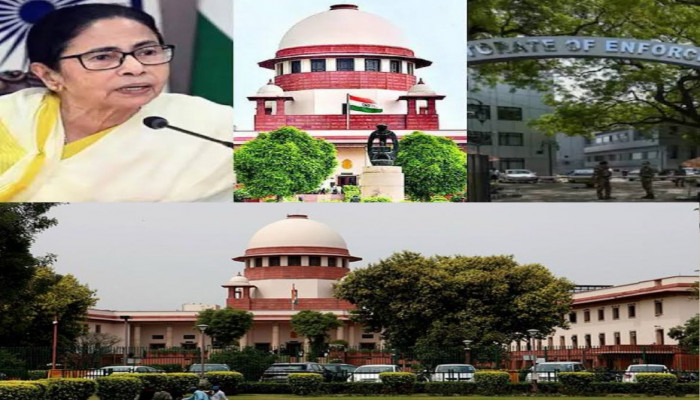
The Supreme Court has ordered that the ongoing Special Intensive Revision (SIR) of electoral rolls in West Bengal will now be overseen by judicial officers. The court said it had “hardly any other option” because of a clear trust deficit between the West Bengal government and the Election Commission of India (ECI).
A bench headed by Chief Justice of India Surya Kant, along with Justices Joymalya Bagchi and Vipul M Pancholi, passed the order on Friday. The court directed that either serving or former additional district judges be appointed as judicial officers to supervise the SIR process. These officers will be appointed by the Chief Justice of the Calcutta High Court.
While hearing the matter, the bench said, “The foremost issue for consideration is the completion of the ongoing SIR in West Bengal. Various interim directions are issued from time to time. There is an unfortunate allegation/counter-allegation which clearly depicts a trust deficit between two constitutional functionaries – democratically elected state government and the ECI.”
The court said it was forced to take this step because of the “unfortunate blame game” between the two sides. The dispute mainly relates to whether the West Bengal government has provided enough Group B officers, in the rank of Sub-Divisional Magistrate (SDM), to act as Electoral Register Officers (EROs). The Mamata Banerjee-led government objected to the Election Commission’s decision to depend on micro-observers and special roll observers appointed by it. The bench clarified that the newly appointed judicial officers will perform the functions of the EROs.
In its detailed order, the Supreme Court said, “In order to ensure fairness in the adjudication of documents and consequential determination of inclusion/exclusion on the voter list, and as agreed to by both sides, we are left with hardly any other option but to request the CJI of Calcutta HC to spare some serving judicial officers along with some former judicial officers of integrity in the rank of additional district judge...who can then in each district revisit/dispose of pending claims under category of logical discrepancy. Each such officer shall be assisted by micro-observers and officers of the state government who have already been deputed by the state for such duties.”
The court noted that these judicial officers will review and decide pending claims, especially those falling under the “logical discrepancy” category. They will be supported by micro-observers and state government officers who are already assigned to SIR-related duties.
During the hearing, the bench also acknowledged that its order could affect ongoing court cases. Because of this, it asked the Chief Justice of the Calcutta High Court to seek assistance from the Committee of Registrar General and District Judges. This committee will prepare an “interim arrangement” so that cases requiring urgent relief can be transferred to alternative courts without delay.
The Supreme Court further directed that district collectors and Superintendents of Police must provide full logistical support to the appointed judicial officers and their teams. This support is necessary to ensure that the remaining SIR process is completed smoothly and without disruption.
The court allowed the publication of the final voters’ list on the scheduled date of February 28, but only to the extent that the process had been completed. It also clarified that the Election Commission is permitted to publish supplementary lists even after the final date, if required.
Additionally, the Director General of Police (DGP) of West Bengal has been directed to file a supplementary affidavit. This affidavit must detail the steps taken in response to complaints about threats made against SIR officers.
The SIR process in West Bengal has become a major point of disagreement between the state government and the Election Commission. The issue even saw Trinamool Congress chief and Chief Minister Mamata Banerjee appear before the Supreme Court during a hearing on February 4. She raised concerns that West Bengal was being targeted just months before the upcoming Assembly elections. She sought an urgent pause on the deletion of voter names, especially those marked under the “logical discrepancy” category. Banerjee also pointed to the heavy workload placed on SIR officers.
On the other hand, the Election Commission told the court that the state government was not cooperating in providing enough officers for the revision process. The Commission also raised concerns about threats faced by its officers during the execution of SIR duties.
In an earlier hearing, the Supreme Court had warned the West Bengal government against creating any “impediments” in completing the SIR process. At the same time, the court had assured that it would address genuine roadblocks affecting the revision work.
With this latest order, the Supreme Court has attempted to ensure fairness, transparency, and timely completion of the voter roll revision in West Bengal. By placing the process under judicial supervision, the court aims to restore trust between the two constitutional authorities and prevent further disputes that could delay the electoral process.



 Loading...please wait
Comments