




Guyana urges Venezuela to honour ICJ ruling on disputed Essequibo
- In Reports
- 12:57 PM, Sep 25, 2026
- Myind Staff
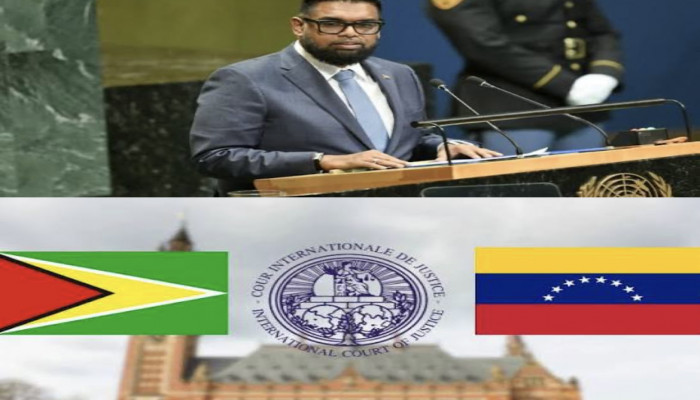
Guyanese President Irfaan Ali has urged Venezuela to respect the International Court of Justice’s (ICJ) forthcoming ruling on the disputed Essequibo region. Speaking before the UN General Assembly in New York on Thursday, Ali said Guyana would comply with the court’s decision and called on Venezuela to do the same.
“We urge Venezuela to abide by the forthcoming ruling in accordance with their obligations under the UN Charter, as Guyana will do,” Ali said in New York.
“Guyana has always advanced a peaceful settlement of the controversy in relation to our border with Venezuela,” he said.
The Essequibo region has remained at the centre of a territorial dispute between Guyana and Venezuela for more than a century. The oil-rich territory covers more than two-thirds of Guyana’s land area. Oil was discovered there in 2015, adding greater economic importance to the long-running dispute.
The ICJ has already heard the case but has not yet issued its ruling. Guyana wants the court to confirm the existing border, which was established during the British colonial period and formally ratified in 1899 by an Arbitration Tribunal in Paris.
Venezuela has presented its position before the ICJ but does not recognise the court’s jurisdiction over the dispute. Caracas argues that the border issue should be renegotiated under the 1966 Geneva Agreement, which Britain signed shortly before Guyana gained independence.
The dispute has also prominently featured at the United Nations this week. On Wednesday, Venezuela’s interim president Delcy Rodriguez called on Guyana “to return to the negotiating table.”
Rodriguez also appeared before the UN General Assembly wearing a brooch shaped like a map of Venezuela that included the disputed Essequibo territory. She had previously overseen Venezuela’s case on the disputed region before the ICJ.
Rodriguez became Venezuela’s interim president after US Forces removed Nicolas Maduro in January. The Essequibo dispute had earlier intensified when Maduro repeatedly called for the annexation of the territory.
Those statements raised concerns about a possible armed confrontation between the two South American neighbours. The tensions later eased after the leaders of Guyana and Venezuela met and committed to resolving the dispute without using force.
The territorial controversy dates back to the 19th century and has continued through several political changes in both countries. Guyana has consistently backed a legal settlement through the ICJ, while Venezuela has maintained that negotiations are needed to resolve the border question.



 Loading...please wait
Comments