




Gujarat: PM Modi unveils ₹20,000 crore worth projects, inaugurates semiconductor plant
- In Reports
- 07:50 PM, Mar 31, 2026
- Myind Staff
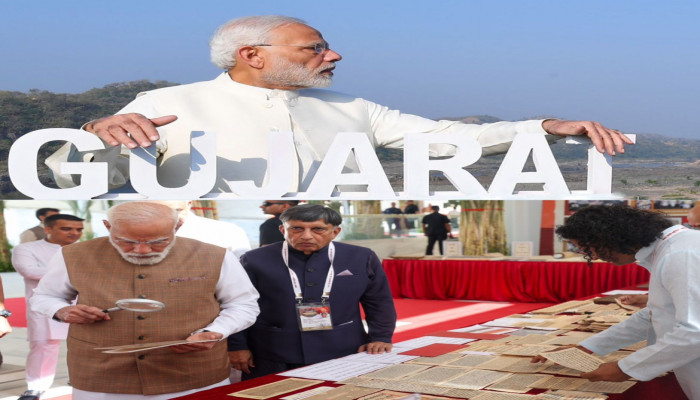
Prime Minister Narendra Modi on Tuesday launched and inaugurated development projects worth more than Rs 20,000 crore in Gujarat. The announcements combined a strong push for infrastructure and technology with sharp political remarks aimed at the Opposition. The Prime Minister also inaugurated a semiconductor plant and a cultural institution, highlighting both economic growth and India’s civilisational roots.
Addressing a large public gathering in Vav-Tharad, Modi said the projects cover multiple sectors, including roads, railways, power, water supply, and urban development. He stressed that these initiatives would improve connectivity and drive economic growth in the region. “These projects are not just about infrastructure; they are about improving lives, creating opportunities and strengthening the foundation of a developed India,” he said.
The Prime Minister laid foundation stones and dedicated several key projects to the nation. These include highway developments, railway upgrades, renewable energy transmission systems, and water supply schemes. One of the most significant projects is the Ahmedabad-Dholera Expressway. It is expected to boost industrial development in the Dholera Special Investment Region. Alongside this, rail line expansions and urban infrastructure initiatives were also highlighted as major steps toward regional development.
Focusing on clean energy, Modi said India is moving steadily toward becoming a global leader in renewable energy. He linked current investments with long-term sustainability goals. “India will emerge as a world leader in the renewable energy sector. Our investments today are shaping a sustainable tomorrow,” he said. He also referred to the Khavda transmission system, which is designed to handle and distribute large-scale green power generation.
Earlier in the day, Modi inaugurated the Kaynes Semicon Plant in Sanand. This marks a significant step under the India Semiconductor Mission. The facility is the second semiconductor unit in India to begin commercial production after Micron Technology’s project. It will manufacture advanced components used in the automotive and industrial sectors. Highlighting its importance, Modi said, “This is a big step toward self-reliance in high-technology manufacturing and strengthening India's position in the global semiconductor value chain.”
Along with development announcements, the Prime Minister also made strong political remarks. He criticised the Congress party and accused it of trying to take advantage of global tensions for political gain. Referring to the ongoing crisis in West Asia, he said, “Congress is waiting like a political vulture to exploit the situation and reap political dividends.”
He further stated that India has managed global disruptions without placing additional burden on citizens. Modi compared India’s approach with that of other countries where fuel prices have increased. “Many countries have increased fuel prices, but we decided not to pass that burden on to our people. India is capable of handling any crisis, but the Opposition is trying to spread panic and disorder,” he said. He also alleged that attempts were being made to create fear among people and encourage panic buying at fuel stations.
The Prime Minister used the occasion to highlight improvements in regional infrastructure. He mentioned the Deesa airport, which has now become operational. He noted that previous governments had not approved the project. “Earlier governments did not approve this project. When you gave me the opportunity to serve in Delhi, we ensured it became a reality. I had the privilege of landing there,” he said.
In Gandhinagar, Modi inaugurated the Samrat Samprati Museum on the occasion of Mahavir Jayanti. The museum is dedicated to the Mauryan ruler Samprati and focuses on Jain philosophy and India’s cultural heritage. It features rare artefacts and modern digital exhibits. The Prime Minister described the institution as an important link between India’s past and its future.
He emphasised the relevance of traditional values in today’s world. “This is not just a museum but a sacred centre of knowledge and values. At a time when the world faces instability, the message of non-violence and ethical living is more relevant than ever,” he said. Modi also spoke about efforts to preserve India’s knowledge systems. He mentioned initiatives to digitise ancient manuscripts and promote practices like yoga and Ayurveda.
Drawing a connection between tradition and technology, Modi said India is progressing on both fronts at the same time. “On one hand, we are preserving our roots; on the other, we are advancing in semiconductors and innovation. This balance defines India's future,” he said.
With major investments announced across infrastructure, energy, technology, and culture, the government signalled a comprehensive approach to development. The day’s events reflected a dual focus on economic progress and cultural revival. At the same time, the Prime Minister’s remarks indicated a sharpening political tone ahead of upcoming electoral contests.



 Loading...please wait
Comments