



Government warns X over failure to curb obscene AI-generated content, seeks action report within 72 hours
- In Reports
- 02:30 PM, Jan 03, 2026
- Myind Staff
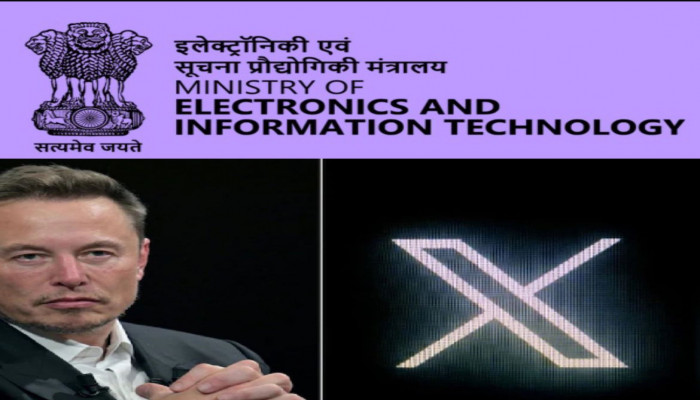
The Ministry of Electronics and Information Technology (MeitY) has issued a strong warning to social media platform X, formerly known as Twitter, over its alleged failure to moderate AI-generated content on its platform effectively. In a detailed letter addressed to X Corp’s Chief Compliance Officer for India operations, the government raised serious concerns about the misuse of artificial intelligence tools, particularly the Grok AI service developed by xAI, to generate and circulate obscene and non-consensual content.
According to the ministry, Grok and other AI-based services available on the X platform are reportedly being misused to create, manipulate and distribute obscene images and videos, many of which target women in a derogatory and vulgar manner. The ministry stated that such content violates the dignity, privacy and safety of women and children and reflects a serious failure in platform-level safeguards.
The government has directed X to immediately remove all illegal material, enforce strong AI guardrails, and submit a detailed Action Taken Report (ATR) within 72 hours. The ministry warned that failure to comply could lead to the loss of statutory immunity under Section 79 of the Information Technology Act, 2000, and may invite “strict legal consequences against your platform, its responsible officers and the users on the platform who violate the law, without any further notice.”
In the letter, MeitY said that it has received multiple reports and representations over time, including from parliamentary stakeholders and public discourse, pointing out that “certain categories of content circulating on your platform may not be in compliance with applicable laws relating to decency and obscenity.”
The ministry specifically highlighted the misuse of the “Grok AI” service, stating that it is being used to create fake accounts that “host, generate, publish or share obscene images or videos of women in a derogatory or vulgar manner in order to indecently denigrate them.” The letter also noted that such misuse is not limited to fake accounts, as women who publicly share their own images or videos are also being targeted through “prompts, image manipulation and synthetic outputs.”
Calling this a serious issue, the ministry said that such conduct “reflects a serious failure of platform-level safeguards and enforcement mechanisms, and amounts to gross misuse of artificial intelligence technologies in violation of applicable laws.”
MeitY expressed “grave concern” over these acts and omissions, stating that they contribute to the normalisation of sexual harassment and exploitation in digital spaces while undermining the statutory due diligence framework applicable to intermediaries operating in India.
The government reminded X that it is required to strictly follow the provisions of the IT Act and the Information Technology (Intermediary Guidelines and Digital Media Ethics Code) Rules, 2021. Referring to an advisory issued on December 29, 2025, the ministry stated that all intermediaries were clearly advised to conduct an immediate review of their compliance frameworks, content moderation practices and user enforcement mechanisms.
The letter made it clear that compliance is “not optional,” and that the statutory exemption from liability under Section 79 of the IT Act is conditional upon strict adherence to due diligence obligations. These include the appointment and effective functioning of a Chief Compliance Officer, timely removal of unlawful content, furnishing information sought by government agencies, and deployment of automated tools to proactively prevent the spread of obscene and harmful content.
The ministry also highlighted Rule 3(2)(b) of the IT Rules, which mandates that content depicting an individual in a sexual act or impersonation must be removed within 24 hours of receiving a complaint from the affected person or someone acting on their behalf.
Further, MeitY warned that hosting or distributing obscene, nude, indecent, sexually explicit, vulgar or paedophilic content, including through AI-enabled systems, attracts serious penal consequences under several laws. These include Sections 66E, 67, 67A and 67B of the IT Act, relevant provisions of the Bharatiya Nyaya Sanhita (BNS), the Indecent Representation of Women (Prohibition) Act, 1986, the Protection of Children from Sexual Offences Act, 2012, and the Young Persons (Harmful Publications) Act, 1956.
The letter also drew attention to Section 85 of the IT Act, which deals with offences committed by companies, and Section 33 of the Bharatiya Nagarik Suraksha Sanhita (BNSS), 2023. Under BNSS, platforms have a mandatory obligation to report certain offences, including organised cybercrime. The ministry warned that failure to report such offences despite knowledge or reasonable suspicion could independently attract penal action.
In clear terms, the government advised X to “strictly desist from the hosting, displaying, uploading, publication, transmission, storage, sharing of any content on your platform that is obscene, pornographic, vulgar, indecent, sexually explicit, paedophilic, or otherwise prohibited under any law.”
The ministry directed X to immediately conduct a comprehensive technical, procedural and governance-level review of the Grok AI application. This review must include its prompt processing, output generation using large language models, image handling systems and safety guardrails to ensure that the AI does not generate or facilitate unlawful content.
X has also been instructed to enforce its user terms, acceptable use policies and AI usage restrictions, including taking strong deterrent actions such as account suspension and termination against violating users. The government further directed the platform to remove all existing illegal content without delay and without tampering with evidence.
As part of compliance, X must submit a detailed Action Taken Report within 72 hours, covering technical and organisational measures adopted for Grok, oversight by the Chief Compliance Officer, actions taken against offending users and content, and mechanisms for complying with mandatory reporting obligations under BNSS.
The letter concluded by reiterating that non-compliance would be viewed seriously and could lead to the loss of legal protection under Section 79 of the IT Act, along with further action under the IT Act, IT Rules, BNSS, BNS and other applicable laws.
The notice was issued with the approval of the competent authority in the ministry and was signed by Ajit Kumar, Joint Secretary, Cyber Laws, MeitY.



 Loading...please wait
Comments