




Government to transform India’s ration system with smart AI tracking, grievance redressal
- In Reports
- 01:21 PM, May 28, 2026
- Myind Staff
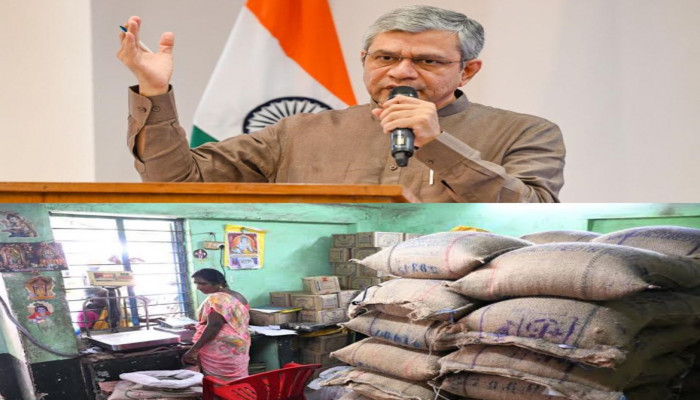
The Union Cabinet on Wednesday approved the extension of the Scheme for Assistance in Ration Transport and Handling-Income with Automation in PDS (Sarthak-PDS) with an outlay of ₹25,530 crore for five years. The scheme will now continue from April 2026 to March 2031. The government plans to modernise the Public Distribution System (PDS) by using artificial intelligence (AI) for beneficiary identification, food grain tracking, and grievance redressal.
The PDS is one of the country’s largest welfare systems and distributes subsidised food grains through ration shops to nearly 80 crore citizens every month. Under the upgraded programme, the government will introduce three AI-enabled systems as part of SMART PDS Phase 2. These systems will receive support from the India AI Mission under the Ministry of Electronics and Information Technology.
Union minister Ashwini Vaishnaw said the Cabinet has approved three key reforms under the Sarthak-PDS programme. These include financial support to states for transportation of food grains within states, assistance for fair price shops, and funding for wider modernisation of the PDS network.
“This is a huge structural reform in the PDS system, in the entire delivery system, logistics, transportation, material handling and for redressal of grievances of the PDS beneficiaries,” said Vaishnaw.
“Under this programme, a basic ration is provided to 80 crore citizens every month. It is often cited as an example of inclusive growth across the world. The scheme also has a great deal to do with reducing poverty, malnutrition, ensuring proper growth and not stunted growth.”
One of the AI-based systems introduced under the programme is called NIRMAL. It will create a real-time digital registry of PDS beneficiaries. The system will also allow integration with different government ministries and welfare schemes. The government believes this will help improve coordination between departments and ensure better identification of beneficiaries.
Another platform named ASHA will work as a multilingual AI grievance redressal system. Citizens will be able to register complaints and interact with the system through phone calls, WhatsApp, IVRS, and chatbots. The government said the platform will be capable of handling up to three lakh interactions every day. At present, nearly two lakh calls are made to beneficiaries every month. The new system is expected to significantly improve the speed and reach of grievance handling.
The third AI-driven system, called SAKSHAM, will focus on supply chain management within the PDS network. It will use AI tools for vehicle tracking, QR code-based tracing of food grain bags, route optimisation, and demand forecasting. The aim is to improve the efficiency of transportation and delivery of food grains across the country.
The government said these technological upgrades could reduce the transportation distance of food grains by 15% to 50%. It also expects the system to encourage more local procurement of grains, which can further improve supply chain efficiency. According to official estimates, the improved logistics system could help save nearly ₹280 crore every year.
The government also claimed that the use of AI and better route planning could reduce carbon emissions from the food grain supply chain by around 35%. As part of the modernisation process, QR-coded tags on food grain bags and vehicle location tracking systems will also be introduced to improve transparency and monitoring.
Officials believe the changes under SMART PDS Phase 2 will make the ration distribution system faster, more transparent, and more efficient. The government sees the AI-based overhaul as a major step towards improving the delivery of welfare benefits and strengthening one of India’s biggest social support systems.



 Loading...please wait
Comments