



Government to build underground railway tracks in Siliguri ‘Chicken’s Neck’ corridor
- In Reports
- 05:51 PM, Feb 03, 2026
- Myind Staff
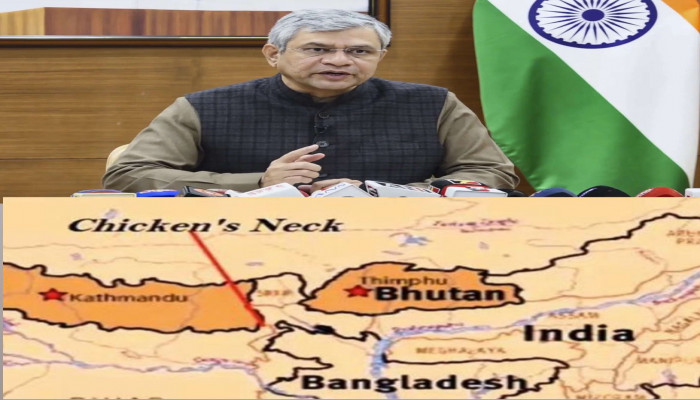
The Union government is planning to build underground railway tracks in the Siliguri corridor of West Bengal, a region popularly known as the ‘Chicken’s Neck’, which holds major strategic and security importance for the country. The Siliguri corridor is the only land route that connects mainland India with the northeastern states, making it crucial for logistics, transportation, and national security.
Union Railway Minister Ashwini Vaishnaw shared this information on Monday while addressing mediapersons through a video conference regarding the Union Budget allocation for the Railway Ministry. He said the government is giving special attention to strengthening railway infrastructure in this sensitive region.
“There is special planning for the 40-km strategic corridor connecting the North-East with the rest of the country. Planning is underway to lay underground railway tracks and also to expand the existing tracks to four lines,” Vaishnaw said.
The proposed project focuses on a 40-kilometre stretch in the Siliguri corridor, which lies in northern West Bengal. The corridor is extremely important as it serves as the narrow passage linking the northeastern states to the rest of India. Any disruption in this area can directly affect connectivity, movement of essential supplies, and national security operations.
According to officials from the Northeast Frontier Railway, the underground railway section is expected to run between Tin Mile Haat and Rangapani railway stations in West Bengal. An official from the Northeast Frontier Railway, quoted by agencies, highlighted the importance of the project and said, “This underground stretch is crucial from a security perspective.”
The plan to build underground railway tracks is aimed at improving connectivity while also addressing security concerns in the region. By moving railway lines underground, the government hopes to reduce vulnerability in this strategically sensitive corridor. The expansion of existing railway tracks to four lines is also expected to improve traffic flow and increase the capacity of trains running between the North-East and the rest of the country.
The Siliguri corridor has long been a focus of strategic planning due to its geographical position. The stretch is only about 20 to 22 kilometres wide at certain points, making it one of the most sensitive regions in the country. It connects mainland India to eight northeastern states—Arunachal Pradesh, Assam, Manipur, Meghalaya, Mizoram, Nagaland, Sikkim, and Tripura.
Recently, Union Home Minister Amit Shah also spoke strongly about the importance of the Siliguri Corridor. He issued a clear warning against any challenge to India’s territorial integrity and stressed the significance of the region. Shah stated that the Siliguri Corridor is an integral part of India and is beyond any threat or interference.
The government’s renewed focus on infrastructure development in the corridor reflects its commitment to strengthening national security and ensuring smooth connectivity to the North-East. Railway connectivity plays a key role not only in passenger travel but also in the movement of goods, defence logistics, and emergency services.
The announcement came during discussions on the Union Budget allocation for the Railways, indicating that the government is ready to invest in major infrastructure projects in sensitive and strategic areas. While the planning process is still underway, the proposal to build underground railway tracks marks a significant step towards enhancing both security and connectivity in the Siliguri corridor.
Officials have underlined that detailed planning is being done before moving ahead with the project, given the strategic importance of the region. The project, once implemented, is expected to strengthen India’s link with the northeastern states and provide a more secure and efficient railway network.



 Loading...please wait
Comments