



Government tightens grip on energy sector, mandates real-time data sharing
- In Reports
- 12:55 PM, Mar 20, 2026
- Myind Staff
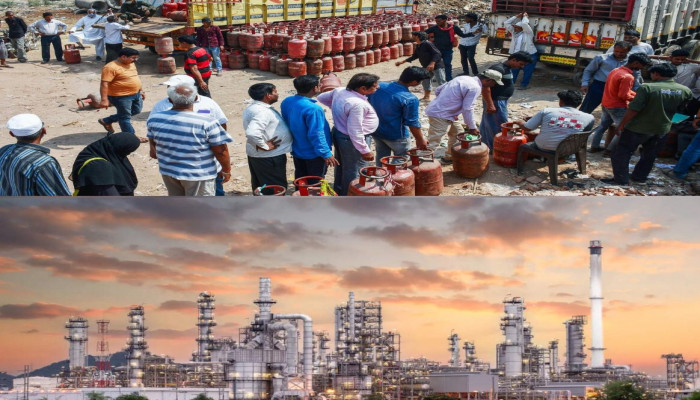
Amid rising concerns over a global energy crisis triggered by the ongoing conflict in West Asia, the Indian government has taken a significant step to strengthen its monitoring of the oil and gas sector. It has invoked the Essential Commodities Act, making it compulsory for all entities involved in the petroleum and natural gas ecosystem to share detailed and updated data with authorities. This move is aimed at ensuring better preparedness and quick decision-making during uncertain times.
The government has issued a Gazette Notification under Section 3 of the Essential Commodities Act. This notification designates the Petroleum Planning and Analysis Cell (PPAC) as the central agency responsible for collecting, compiling, maintaining, and analysing data related to the sector. “Yesterday, under Section 3 of the Essential Commodities Act, the government issued a Gazette Notification, whereby PPAC has been designated as a nodal agency for the collection, compilation, maintenance, and analysis of information,” said Sujata Sharma, joint secretary in the Ministry of Petroleum. PPAC already serves as the official data repository of the oil ministry, but the new order significantly expands its authority.
With this notification in place, PPAC can now demand more detailed, near-real-time data from companies involved in the production, refining, storage, transportation, import, export, marketing, and distribution of petroleum products and natural gas. This will allow the government to track supply and demand more closely and respond quickly to any disruptions. The step is particularly important in the current global scenario, where energy markets remain volatile due to geopolitical tensions.
The government has also made it clear that non-compliance will not be taken lightly. Any violation of orders issued under Section 3 of the Essential Commodities Act is treated as a criminal offence. This could lead to strict penalties, including imprisonment. The provision is intended to ensure full cooperation from all stakeholders and prevent any attempt to withhold crucial data.
Providing an update on the country’s energy situation, Sharma reassured that there is no immediate shortage. She said that crude oil supply in India remains sufficient and that refineries are operating at full capacity. Petrol pumps across the country are functioning normally, with no reports of fuel shortages or dry-outs. This indicates that the domestic supply chain is stable despite global uncertainties.
On the natural gas front, Sharma highlighted that supplies of piped natural gas (PNG) and compressed natural gas (CNG) are currently running at 100%. She added that the government is encouraging commercial LPG users to switch to PNG through city gas distribution networks. “Commercial LPG [liquefied petroleum gas] users are being encouraged to shift to PNG through CGD [City Gas Distribution] companies with incentives and quick connections where networks exist,” she said. This shift is expected to reduce pressure on LPG supplies and improve efficiency.
The government’s efforts have already shown visible results. Around 125,000 new domestic and commercial PNG connections have been provided in just two weeks. In addition, more than 5,600 LPG consumers have switched to PNG in the last three days alone. These measures are part of a broader strategy to manage energy demand more effectively during the crisis.
Recent developments in West Asia have further complicated the situation. Iran’s attack on Qatar’s Ras Laffan industrial city, in response to an Israeli strike on Iran’s South Pars gas facility, is a cause of concern for India. Qatar is a major supplier of liquefied natural gas (LNG) and LPG to India, accounting for nearly 47% of the country’s total natural gas imports. Any disruption in supplies from Qatar could have a direct impact on India’s energy security.
However, India has taken steps to diversify its energy sources over the years. It currently imports crude oil from around 40 countries, including Venezuela, Russia, and the United States. Natural gas imports also come from countries like the US, Australia, Norway, and Russia. This diversification helps reduce dependency on any single region and provides some cushion against supply shocks.
To prevent misuse and ensure fair distribution, the government has also intensified efforts on the demand side. States and local authorities have been directed to take strict action against hoarding and black marketing. Control rooms have been activated, and raids have been stepped up in several areas. Oil marketing companies are also conducting regular inspections to maintain transparency and accountability.
Consumer behaviour is also showing signs of improvement. Sharma noted that more people are opting for online booking of LPG cylinders, which has now reached 94%. This shift has helped streamline the supply process and reduce unnecessary crowding. About 83% of LPG refills are now delivered using OTP-based delivery authentication codes, ensuring that cylinders reach the intended consumers.
Importantly, panic buying appears to be declining. “Panic bookings have gone down,” Sharma said. The number of LPG bookings dropped to around 57 lakh on Wednesday, compared to a peak of about 89 lakh on March 13. This indicates growing confidence among consumers about the stability of supplies.
Overall, the government’s latest measures reflect a proactive approach to managing the energy sector during a period of global uncertainty. By strengthening data collection, ensuring supply stability, and controlling demand, authorities aim to maintain a steady flow of essential fuels and prevent disruptions in the country.



 Loading...please wait
Comments