




Government may introduce 20-year rule for retired officials to publish books
- In Reports
- 02:48 PM, Feb 14, 2026
- Myind Staff
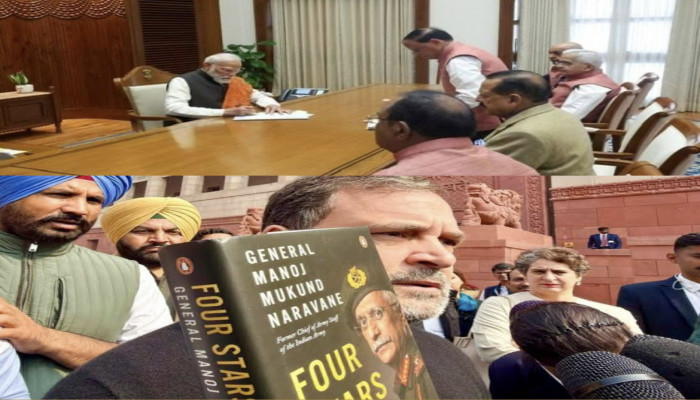
In the aftermath of a major controversy over the unpublished memoir of former Army Chief General M. M. Naravane, the Central government is considering a plan that could require senior officials to wait up to 20 years after retirement before publishing books. Top government officials who spoke to the media said a formal notification on this change could be issued soon.
The proposal is part of broader talks in the Union Cabinet, where ministers discussed concerns raised by the Naravane book episode during a recent meeting. Although the plan was not on the official agenda, several senior ministers reportedly supported the idea of a long “cooling-off period” for those who have held powerful positions before they can release books on sensitive subjects.
The current debate began with General Naravane’s memoir titled Four Stars of Destiny, which includes his account of critical moments during the India–China military tensions of 2020 in eastern Ladakh. Parts of this book drew strong political reactions when members of Parliament referenced its claims in early February.
On February 2, Rahul Gandhi, the Leader of the Opposition in the Lok Sabha, mentioned content from the book during a Parliament session. Government members objected because the book had not yet been officially published. When Gandhi later displayed a physical copy of the manuscript in Parliament to support his remarks, the dispute intensified.
Soon after, a PDF version of the manuscript began circulating widely online. This led to a police investigation into how an unpublished book was being shared on social media and other digital platforms before official release.
The Delhi Police registered a First Information Report (FIR) over the unlawful circulation of the manuscript. Authorities are probing whether anyone shared the book’s content online or physically without proper clearance.
Penguin Random House India, the publisher of Naravane’s memoir, issued a statement saying that any copies circulating — in print or digital form — are unauthorised and infringe on the publisher’s copyright. The company warned that legal action may be taken against those responsible for the dissemination of the material.
Both the publisher and General Naravane have clarified that the book has not been officially published and remains pending clearance from the Ministry of Defence (MoD).
Officials involved in the discussions said the Naravane episode highlighted the need for clearer rules about when and how former officials can publish books after leaving public service. As a result, the government is also preparing a broader set of guidelines that may apply not only to military officers but to other senior public servants as well.
Under the draft framework being discussed, a “cooling-off period” of up to 20 years could become mandatory before high-ranking officials are allowed to publish accounts relating to their service. This idea was supported by several ministers who feel it would help balance freedom of expression with national security interests.
The Ministry of Defence is also said to be preparing detailed rules about the approval process for manuscripts by both serving and retired armed forces personnel. This would clarify existing procedures and ensure that security and confidentiality considerations are addressed before publication.
The memoir Four Stars of Destiny was originally planned for release in January 2024. Excerpts were carried by news agencies at that time, including a section on the Agnipath scheme — a major defence recruitment policy — which had sparked some debate.
Around the same period, General Naravane had tweeted that his book “is available now” and shared a pre-order link, though the Defence Ministry instructed both him and the publisher to submit the manuscript for official clearance before publication. The Army reviewed the text and sent its observations to the MoD, but the final approval has not yet been granted.
The controversy has also sparked wider discussions on how memoirs by former government and military officials should be regulated. Supporters of free speech argue that retired leaders should be able to share their experiences, while others stress the need for safeguards to protect sensitive national security information. Critics have questioned whether any restrictions might impact democratic openness.
As the government finalises its policy options, Parliament and political parties continue to debate both the specifics of the Naravane episode and what it means for future memoirs by former officials.



 Loading...please wait
Comments