



Government launches new national counter-terrorism policy 'Prahaar'
- In Reports
- 02:55 PM, Feb 23, 2026
- Myind Staff
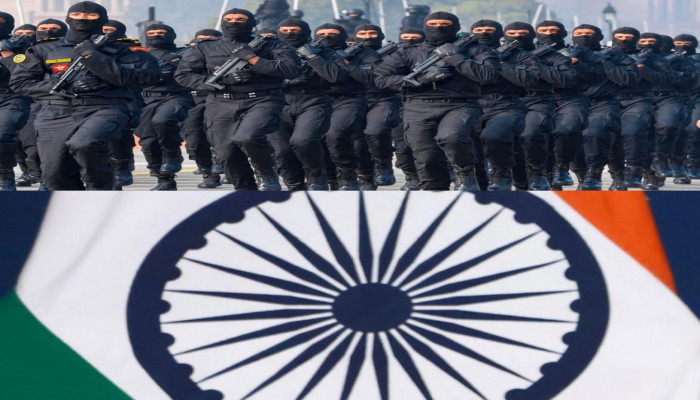
The Ministry of Home Affairs (MHA) has introduced a new national counter-terrorism policy and strategy called ‘Prahaar’. The policy lays out a detailed plan to deal with changing terror threats through prevention, coordinated action, capacity building, and strict adherence to the rule of law.
In its official statement, the ministry said that India has been at the forefront of the global fight against terrorism for decades, even as threats continue to evolve. It said, “while the nature of threats continues to change and present new challenges, India has remained consistently opposed to terrorism in all its forms and manifestations.”
The ministry pointed out that instability in India’s neighbouring regions has often created ungoverned spaces. It added that “few countries in the region have sometimes used terrorism as an instrument of State Policy." At the same time, the government made it clear that terrorism is not linked to any religion or identity. It stated, “India does not link terrorism to any specific religion, ethnicity, nationality or civilisation." Reaffirming its stand, the ministry said India has always denounced terrorism “unambiguously and unequivocally" and follows a policy of ‘zero tolerance’ against terrorism.
According to the MHA, the new strategy is based on India’s long-standing commitment to support victims of terrorism and its belief that “there can be no justification whatsoever for violence in the world."
The policy focuses on preventing terror attacks, ensuring quick and proportionate responses, and bringing together internal capacities through a whole-of-government approach. It also stresses the importance of protecting human rights and following rule-of-law-based processes.
The strategy aims to reduce conditions that allow terrorism to grow. It supports international counter-terror efforts and highlights the need to build recovery and resilience through a whole-of-society approach.
The ministry said India has long faced sponsored terrorism from across the border. It noted that jihadi terror outfits and their frontal organisations continue to plan and support attacks. Global terrorist groups such as Al-Qaeda and ISIS have also tried to encourage violence through sleeper cells.
The MHA highlighted the increasing misuse of technology by terror groups. It said handlers are using “the latest technologies, including the use of drones, for facilitating terror-related activities and attacks in Punjab and Jammu and Kashmir." Terrorists are also using social media and instant messaging platforms for propaganda, recruitment, and communication. Tools such as encryption, the dark web, and crypto wallets allow them to operate anonymously.
The ministry expressed concern about attempts by terror groups to gain access to Chemical, Biological, Radiological, Nuclear, Explosive and Digital (CBRNED) materials. It also warned about cyber-attacks carried out by criminal hackers and even nation-states.
The MHA said India follows a proactive and intelligence-based approach to counter terrorism. The Multi Agency Centre (MAC) and the Joint Task Force on Intelligence (JTFI) under the Intelligence Bureau act as key platforms for real-time intelligence sharing and coordination.
Law enforcement agencies are working to stop the misuse of the internet by breaking online propaganda channels, recruitment networks, and logistical systems, including overground worker (OGW) modules. Special focus has also been placed on cutting off terror funding using legal methods.
Border guarding forces and immigration authorities have been equipped with advanced technologies to secure land, air, and sea routes. Important sectors such as power, aviation, ports, defence, and atomic energy are being protected from threats posed by both state and non-state actors.
The policy states that local police are the first responders in case of terror incidents. They are supported by specialised state and central forces. The National Security Guard (NSG) acts as the main national counter-terror force, assisting states and helping with capacity building.
Investigations are carried out by the National Investigation Agency (NIA) and state police agencies. The government says high prosecution rates are meant to create strong deterrence against future terror acts.
The strategy also includes modernising training systems, acquiring advanced technologies, and standardising procedures across agencies to improve overall preparedness.
The ministry emphasised that Indian anti-terror laws give proper importance to human rights and function within the rule of law. It said laws are applied evenly and protect fundamental rights. There are also multiple levels of judicial redress available to accused individuals.
‘Prahaar’ gives importance to preventing radicalisation. The MHA said agencies use graded responses to deal with violent extremism. Community leaders, NGOs, and moderate preachers are involved in spreading awareness about the consequences of extremist violence.
Efforts are being made to prevent radicalisation inside prisons. The government is also working to reduce socio-economic vulnerabilities through education, employment opportunities, and welfare schemes aimed at youth and women.
The ministry highlighted that terrorism is transnational in nature, making international cooperation essential. India will continue intelligence sharing, extradition arrangements, and joint cooperation frameworks with global partners. The country will also work with other nations to designate terrorists and build an agreement on counter-terror actions.
Looking ahead, the MHA said stronger coordination among agencies, periodic legal reforms, and better capacity building of state counter-terror units are necessary. The strategy aims to deny terrorists access to funds, weapons, and safe havens while investing in technology and partnerships to handle future threats.
Through ‘Prahaar’, India seeks to strengthen coordinated national action and follow a comprehensive strategy to fight terrorism while protecting democratic values and social resilience.



 Loading...please wait
Comments