




Government launches nationwide survey to document India’s manuscript heritage
- In Reports
- 06:30 PM, Mar 16, 2026
- Myind Staff
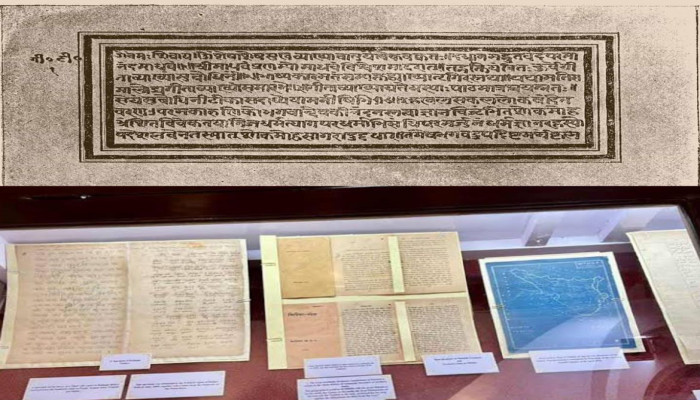
The Ministry of Culture has launched a nationwide survey to identify and document India’s vast manuscript heritage under the Gyan Bharatam Mission. This major initiative aims to create a detailed digital record of the country’s historical manuscripts, many of which are scattered across institutions, private collections and with individual custodians. According to reports, the survey began on Monday and will continue for about three months. The exercise is being carried out across the country, starting at the district level, with teams assigned to locate and record manuscripts wherever they are found.
The main objective of the survey is to compile a single, consolidated database of manuscripts and develop a national digital repository. This repository will be created on the central portal of the Gyan Bharatam Mission to preserve the information for easy access and future availability. During the survey, teams will identify manuscripts from libraries, educational institutions, temples, monasteries, private collections and other locations where such materials may be stored. By bringing all this information together, the government hopes to better understand the extent of India’s manuscript heritage.
As part of the process, the manuscripts discovered during the survey will also be geotagged. This will help authorities keep track of their exact location and plan measures for conservation, preservation and digitisation. The collected information will help create an organised system for managing these valuable cultural resources. Once recorded, the manuscripts can be protected more effectively and preserved for future generations.
Officials have also highlighted that modern technology will play an important role in the process. Culture secretary Vivek Aggarwal explained that survey teams will use a digital platform to upload information immediately during the fieldwork. He said, “The survey teams would use the Gyan Bharatam app to upload the details and technology will be leveraged going forward to enable digitisation in a standardised format to eventually make them accessible.” By using the mobile application, the government aims to ensure that information is collected quickly and stored in a uniform format.
The nationwide survey is also linked to the vision outlined in the New Delhi Declaration. This declaration was adopted in September last year during the Gyan Bharatam Conference held at Vigyan Bhawan in New Delhi. The mission reflects the broader goal of preserving India’s knowledge traditions and cultural heritage through modern technology and systematic documentation.
During the conference, Prime Minister Narendra Modi emphasised the importance of preserving manuscripts and described the initiative as a significant cultural effort. He called the mission the “proclamation of India's culture, literature and consciousness”. The Prime Minister also pointed out that India is believed to possess the largest collection of manuscripts in the world.
According to estimates, the country may have around one crore manuscripts. He said that digitising these manuscripts under the Gyan Bharatam Mission, which was announced in the Union Budget for 2025–26, would also help curb “intellectual piracy”.
To ensure that the survey is carried out effectively, the government has already formed committees at both the state and district levels. These committees will supervise the process and coordinate the work of the survey teams. At the state level, the committees are chaired by the chief secretaries, while district magistrates lead the committees at the district level. Their role is to monitor the progress of the survey and make sure that manuscripts are properly documented.
Along with identifying new manuscripts, the Ministry of Culture is also working to integrate manuscripts that have already been digitised by different institutions and state governments. Many organisations across the country have previously digitised their collections independently. According to officials, these existing digital collections together include more than one million manuscripts. The government now plans to connect these collections to the central digital platform so that all the information can be accessed through a single national system.
Overall, the nationwide survey marks an important step toward preserving India’s manuscript heritage. By identifying, recording and digitising these manuscripts, the government aims to protect valuable historical knowledge and make it more accessible for researchers, scholars and future generations.



 Loading...please wait
Comments