




Government invokes ESMA to safeguard LPG supply amid West Asia crisis
- In Reports
- 05:08 PM, Mar 10, 2026
- Myind Staff
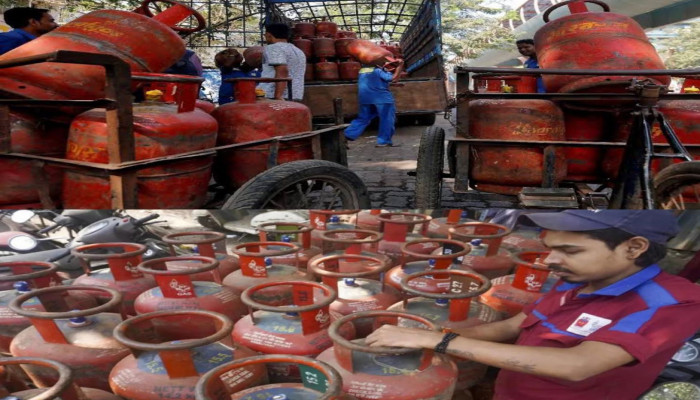
The Union Government on Tuesday invoked the Essential Commodities Act (EC Act) to ensure an uninterrupted supply of domestic cooking gas across the country. The decision comes as the ongoing conflict in West Asia continues to put pressure on global fuel supplies and raises concerns about disruptions in the energy market.
Through a new order, the government directed oil refineries and petrochemical units to maximise the production of liquefied petroleum gas (LPG). It also instructed them to divert key hydrocarbon streams towards the LPG pool so that domestic demand for cooking gas can be met without disruption.
According to the government order, the supply of natural gas to certain sectors will now be treated as a priority allocation. These sectors will receive a gas supply equivalent to one hundred per cent of their average consumption over the past six months, subject to operational availability.
The priority sectors listed in the Gazette order include domestic piped natural gas (PNG) supply, compressed natural gas (CNG) used for transport, LPG production, including LPG shrinkage requirements, and fuel used for pipeline compressors and other essential operational requirements of gas pipelines.
The government also specified guidelines for gas supply to fertiliser plants. The order states that fertiliser plants will receive 70 per cent of their past six-month average gas consumption, depending on operational availability.
Gas marketing entities have also been given instructions to maintain gas supply to tea industries, manufacturing units and other industrial consumers that receive gas through the national gas grid. According to the order, these industries should receive around 80 per cent of their past six-month average gas consumption, subject to operational availability.
Similarly, all City Gas Distribution (CGD) entities have been directed to ensure that industrial and commercial consumers connected to their networks receive eighty per cent of their past six-month average gas consumption, again depending on operational feasibility.
To manage the possible impact of liquefied natural gas (LNG) supply disruptions, the government has asked oil refining companies to adjust their gas usage. Under the order, refineries will reduce their gas allocation to approximately 65 per cent of their past six-month average gas consumption. This step is expected to help manage the available supply while ensuring that priority sectors continue to receive gas.
The order also requires every producer, importer, transporter, marketer and distributor of natural gas, including LNG and regasified LNG, to provide detailed information to the Central Government or any officer authorised by it. The information must include details related to production levels, imports, stock availability, allocation, supply and overall consumption.
Meanwhile, the Ministry of Petroleum and Natural Gas issued additional instructions to oil refineries to further increase LPG production. The ministry also directed that the extra LPG produced should be specifically used for domestic consumption.
The move aims to ensures undisrupted cooking gas supply to households across the country amid uncertainties in the global energy market due to the ongoing West Asia conflict.
Confirming the step, the Ministry of Petroleum and Natural Gas said in a statement posted on X, "In light of current geopolitical disruptions to fuel supply and constraints on supply of LPG, the Ministry has issued orders to oil refineries for higher LPG production and using such extra production for domestic LPG use."
The government has made domestic LPG supply a top priority to maintain energy security for citizens during the current situation. Ensuring a steady supply of cooking gas to households remains one of the key objectives of the order.
To further manage the supply situation and prevent misuse, the ministry has also introduced a 25-day inter-booking period for LPG consumers. This measure has been taken to discourage hoarding of cylinders and to prevent black marketing.
Officials believe that these combined measures will help maintain stability in the LPG supply chain while managing the impact of disruptions in global energy markets.
By invoking provisions under the Essential Commodities Act and issuing operational directions to refineries, gas companies and distribution networks, the government aims to maintain steady availability of cooking gas and other essential gas supplies for priority sectors.
The steps are part of a broader effort to ensure that households and essential services do not face shortages during a period of global fuel supply uncertainty linked to the West Asia crisis.



 Loading...please wait
Comments