




Government directs GitHub to take down Bitchat over national security risks: Jack Dorsey
- In Reports
- 07:02 PM, Jul 24, 2026
- Myind Staff
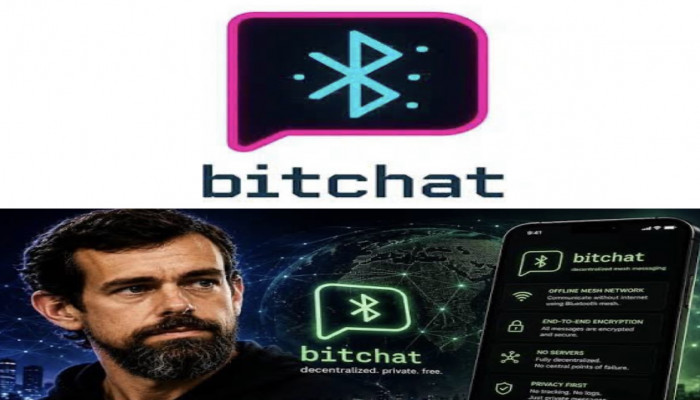
The Indian government has directed GitHub to remove the Bluetooth-based messaging application Bitchat, citing concerns over national security and law enforcement. The order came from the Indian Cybercrime Coordination Centre (I4C), which functions under the Union Home Ministry. A notice dated July 23 asked GitHub, a Microsoft-owned platform, to take down the application from its repository.
Bitchat was developed by former Twitter CEO Jack Dorsey. On Friday, Dorsey shared a copy of the government notice on X and criticised the move. He wrote, "The Government of India does not like technologies like Bitchat and wants it taken down." Officials from the I4C did not immediately respond to queries seeking their comments on the matter.
In its notice, the I4C said the application hosts or publishes content that is prohibited under Indian law or is being used to commit unlawful acts. The agency stated that it has identified several communication platforms that allow decentralised peer-to-peer messaging through Bluetooth mesh networks. These platforms do not depend on mobile networks, internet services, or centralised servers to function.
The agency said Bitchat allows users to communicate anonymously. It does not require mandatory user registration, phone number verification, or any centralised logging of conversations. The notice stated that these features make it difficult for law enforcement agencies to trace users or investigate communications.
"The application enables anonymous communication without mandatory user registration, phone number verification, or centralised logging of communications. The technical architecture of the application significantly impedes lawful interception, attribution and investigation by law enforcement agencies," the notice said.
The government notice came after authorities observed several people using Bluetooth-based messaging applications during a protest organised by the Cockroach Janata Party at Jantar Mantar in New Delhi. The users reportedly relied on these applications after the government imposed temporary internet restrictions in the area.
According to the I4C, the application's decentralised mesh network allows nearby devices to exchange messages directly. The agency said this system can help users avoid lawful surveillance. It can also support anonymous coordination and bypass restrictions imposed by authorities during situations involving riots, terrorism, organised crime, public disorder, or internet shutdowns.
The notice also referred to intelligence inputs received by the government. It said such decentralised communication platforms have the potential to support unlawful activities. The agency warned that these applications could help people coordinate unlawful assemblies, violent protests, criminal conspiracies, radicalisation campaigns, and the spread of misinformation. It added that such activities could threaten the sovereignty and integrity of India, the defence of India, the security of the State, public order, and could facilitate the commission of cognisable offences.
"Intelligence inputs indicate that such decentralised communication platforms are capable of being exploited for coordinating unlawful assemblies, violent protests, dissemination of misinformation, radicalisation, criminal conspiracies, and other activities prejudicial to the sovereignty and integrity of India, defence of India, security of the State, public order, and for facilitating the commission of cognizable offences," the notice said.
The I4C also highlighted another challenge linked to the application's design. It said the absence of a centralised service provider limits the ability of investigating agencies to obtain subscriber details, communication records, or timely assistance during investigations. This makes it harder for authorities to collect evidence and identify users involved in illegal activities.
"The application's design, which enables communication even during network restrictions, creates a substantial risk of misuse by anti- national elements, terrorist organisations, organised criminal groups, and cybercriminals seeking to evade lawful detection and continue communication despite legally imposed restrictions," the notice mentioned.
The notice further stated that the application violates Sections 43, 84B and 84C of the Information Technology Act. It also referred to Section 61 read with Sections 196 and 197 of the relevant law. Based on these provisions, the I4C directed GitHub to remove the application from its platform.
The government's action has once again raised questions over the balance between privacy-focused technologies and national security concerns. While supporters of decentralised messaging apps view them as tools that protect user privacy and enable communication during network disruptions, the government has argued that such platforms can also create serious security challenges. The latest order marks another step in the government's efforts to regulate technologies that operate outside traditional communication networks.



 Loading...please wait
Comments