



Government charts ₹40 lakh crore infrastructure vision through NMP 2.0
- In Reports
- 04:11 PM, Feb 25, 2026
- Myind Staff
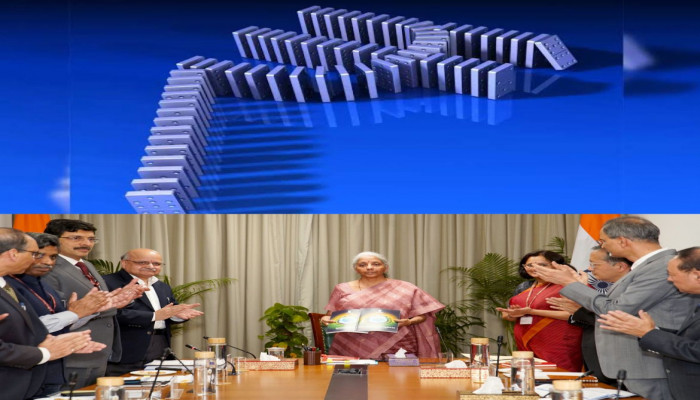
The government has rolled out the second phase of its National Monetisation Pipeline (NMP 2.0), laying out a detailed roadmap to unlock large-scale investments from existing public infrastructure assets. The plan is designed to generate a significant economic impact while ensuring that ownership of assets remains with the government. According to official estimates, the initiative could help create an overall economic impact of nearly ₹40 lakh crore over the next five to ten years.
NMP 2.0 builds on the earlier monetisation programme launched in 2021. The first phase had a target of ₹6 lakh crore and achieved close to 90% of that goal. Encouraged by this progress, the government has expanded the scope under the new phase. The second round covers more than 2,000 assets spread across 12 ministries and sectors.
The total monetisation potential identified under NMP 2.0 stands at ₹16.7 lakh crore for the period up to 2030. Out of this, about ₹10.8 lakh crore is expected to be realised between FY26 and FY30. The remaining amount will be unlocked in later years as projects move forward.
The monetisation strategy does not mean selling assets outright. Instead, the government will lease operational public infrastructure assets to private players for a fixed period. These private entities will operate and maintain the assets and, in return, provide upfront payments or revenue-sharing arrangements. The funds raised through these methods will then be reinvested into new infrastructure development projects.
The sectors identified under the programme include roads and highways, railways, power transmission and generation, ports, coal and mining, petroleum and natural gas pipelines, telecom, warehousing, civil aviation, tourism and urban infrastructure. Among these, roads and highways are expected to contribute the highest share, with an estimated ₹4.42 lakh crore in monetisation value. This includes highways, toll roads, logistics parks and ropeways.
The power sector is projected to contribute around ₹2.76 lakh crore. This will come from assets such as transmission lines and generation facilities. Ports are expected to generate approximately ₹2.63 lakh crore, while railways may contribute around ₹2.62 lakh crore through freight corridors, station redevelopment projects and other operational assets.
Coal and mining assets are estimated to unlock more than ₹3 lakh crore. Other sectors such as civil aviation, petroleum and natural gas, telecom and urban infrastructure will also contribute smaller but meaningful amounts to the overall target.
The proceeds from monetisation will flow to different entities. Around ₹4.6 lakh crore is expected to accrue directly to the central government between FY26 and FY30. In addition, public sector undertakings and port authorities are likely to receive about ₹1.6 lakh crore. State governments may receive approximately ₹38,418 crore in their consolidated funds. Private investments under concession agreements are estimated to be around ₹4.18 lakh crore.
If about 70% of the central government’s proceeds are reinvested into public infrastructure projects, this could translate into nearly ₹3.2 lakh crore of fresh capital expenditure. Monetisation proceeds available with public sector undertakings could also support additional investments, creating a broader cycle of infrastructure spending.
The economic impact projection of ₹40 lakh crore is based on the multiplier effect of capital expenditure. Infrastructure spending generally has a strong multiplier, meaning that every rupee invested can generate multiple rupees in economic activity across sectors such as construction, logistics, manufacturing and services. By reinvesting monetisation proceeds into new projects, the government expects to create sustained growth over the medium term.
The monetisation process will use a range of financial and contractual tools. These include public-private partnership concessions, infrastructure investment trusts, securitisation structures and capital market instruments. The aim is to attract long-term institutional investors while ensuring transparency and competitive bidding.
Officials have clarified that asset monetisation is not privatisation. Ownership of the assets will remain with the government. The private sector’s role will be limited to operating and maintaining the assets for a defined period under agreed terms. At the end of the concession period, control of the assets will return fully to the government.
The broader objective of NMP 2.0 is to maintain momentum in infrastructure creation without significantly increasing the fiscal deficit or public debt. By unlocking value from already operational assets, the government hopes to reduce the pressure on fresh borrowing while continuing large-scale capital expenditure.
The success of the programme will depend on proper execution, investor interest and coordination between ministries. Clear regulatory frameworks, transparent processes and timely implementation will be crucial in meeting the ambitious targets.
With NMP 2.0, the government has placed a strong bet on infrastructure as a driver of long-term growth. If implemented effectively, the plan could not only strengthen physical infrastructure across the country but also generate wide economic benefits in the years ahead.



 Loading...please wait
Comments