




Global oil supply crisis to deepen in April, IEA Chief warns
- In Reports
- 06:26 PM, Apr 01, 2026
- Myind Staff
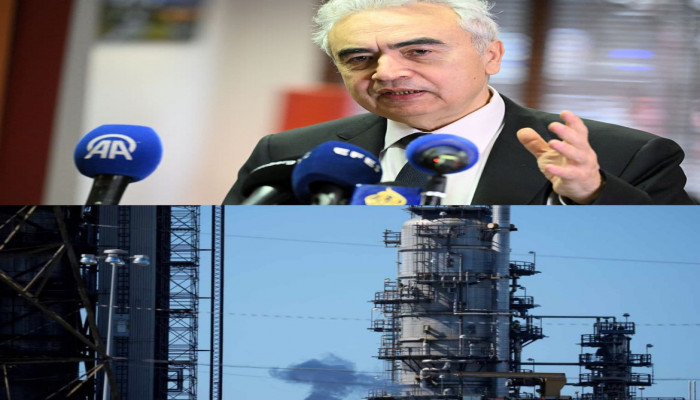
The global energy situation is expected to worsen sharply in April as oil supply disruptions intensify due to the ongoing U.S.-Iran conflict, according to the head of the International Energy Agency. Fatih Birol, speaking on the “In Good Company” podcast hosted by Nicolai Tangen, highlighted that the crisis has already reached an unprecedented level and is likely to deepen further in the coming weeks. He described the current situation as the worst energy crisis in history, driven by massive supply losses and disruptions in key transport routes.
Birol explained that the impact of the conflict was partially delayed in March because several oil and gas shipments had already passed through the Strait of Hormuz before tensions escalated. “The next month, April, will be much worse than March,” he said. He further added, “They are still coming to ports, still bringing oil and energy and other [things].” However, this buffer will disappear in April as fewer shipments are expected to arrive. “In April, there is nothing. The loss of oil in April will be twice the loss of oil in March. On top of that, you have LNG and others. It will come through to inflation, I think it will cut economic growth in many countries, especially emerging economies. In many countries, the rationing of energy may be coming soon.”
The warning comes even as U.S. President Donald Trump recently stated that American forces could withdraw from Iran “in two or three weeks,” which brought temporary relief to global financial markets. Despite this, Birol stressed that the damage has already been severe. He pointed out that the ongoing conflict, now in its fifth week, has caused a much larger supply shock than previous historical crises. He compared the current situation with the oil shocks of 1973 and 1979, as well as the disruptions following Russia’s invasion of Ukraine in 2022.
“When you look at the [1973 and 1979], in both of them we lost each about 5 million barrels per day of oil. These oil crises led to a global recession in many countries,” he said. He then emphasised the scale of the present crisis by adding, “Today, we lost 12 million barrels per day — more than two of these oil crises put together.” This sharp decline in supply has created serious concerns for global economic stability and energy security.
Birol also highlighted that the disruption is not limited to oil alone. Gas supplies have also been heavily affected due to the blockade of the Strait of Hormuz, which is a crucial route for global energy shipments. He noted that the scale of gas disruption is even greater than what the world experienced when Russian gas supplies were reduced a few years ago. “The current crisis is more than all these three put together. Plus, in addition to this, there are many vital commodities — petrochemicals, fertilisers, sulfur — they are very important for the global supply chains,” he said. “We are heading towards a major, major disruption, and the biggest in history.”
In response to the worsening situation, the International Energy Agency is considering releasing more oil from strategic reserves. Birol said the agency is closely monitoring the market at all times. “We are assessing the market on a daily, if not hourly, basis, 24/7. If we think there is a need, we may well make a suggestion [to release more reserves],” he said. He pointed out that shortages of jet fuel and diesel are already becoming visible, especially in Asia, and could soon spread to Europe. “The biggest problem today is the lack of jet fuel and diesel; these are the main challenges and we are seeing it already in Asia, but soon, in April, or maybe the beginning of May, it will come to Europe.”
Earlier in the month, the IEA and its 32 member countries had already agreed to release a record 400 million barrels of oil from emergency reserves to ease supply pressure. However, Birol made it clear that such measures are only temporary. “When the time is right, I will make the decision to make a suggestion to governments,” he said, while also cautioning that these steps cannot fully resolve the crisis. “This is only helping to reduce the pain, it will not be a cure,” he explained. “The cure is opening up the Strait of Hormuz. We are gaining some time, but I don’t claim that this will be a solution, our stock release.”
The conflict has also caused a sharp rise in global oil prices. Since the U.S. and Israel launched strikes on Iran on February 28, followed by retaliation from Tehran, prices have surged significantly. In March alone, Brent crude prices rose by more than 60%, marking the largest monthly increase since records began in the 1980s. This rapid price rise is adding further pressure on economies already dealing with supply shortages.
To reduce the impact of the crisis, the IEA has suggested several practical measures. These include lowering speed limits for vehicles, encouraging remote work, and reducing the use of gas-powered appliances such as ovens. These steps are aimed at cutting energy demand and easing pressure on limited supplies.



 Loading...please wait
Comments