




Global donors commit $300 million for climate health research at COP30
- In Reports
- 06:14 PM, Nov 14, 2025
- Myind Staff
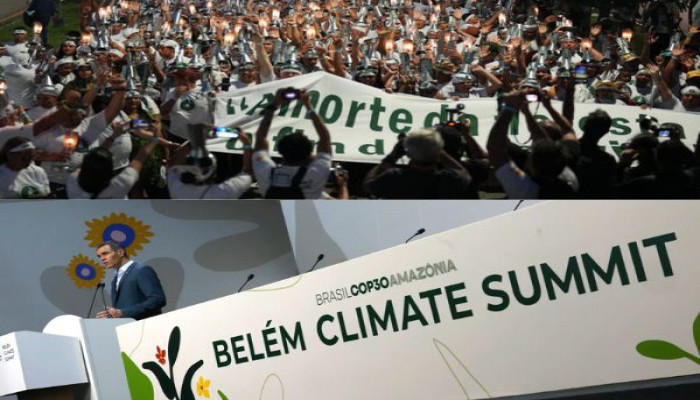
With more than half a million people losing their lives each year to heat-related causes across the world, a group of philanthropies is putting $ 300 million into developing life-saving solutions as global temperatures continue to climb.
The funding, announced this week at the COP30 climate talks in Brazil, is meant to improve data and guide the best investments for dealing with growing dangers from extreme heat, air pollution and infectious disease.
“We are a philanthropy. We can’t just keep plugging holes and resuscitating a dying model of development,” said Estelle Willie, the director of health policy and communications at The Rockefeller Foundation, one of the funders.
“So, what we are trying to do is through our philanthropy capital, we can start testing and validating new solutions through this work and coming together,” she said.
In a separate move, COP30 host Brazil launched an initiative called the Belem Health Action Plan to encourage countries to monitor and coordinate climate-related health policy across their different ministries and departments.
This effort is part of Brazil’s wider focus at the United Nations climate talks on helping countries prepare for and adapt to climate impacts that are getting worse, including floods, fires, drought, storms and hurricanes.
The newly pledged $300 million adds to the $1 billion to 2 billion already being spent in public money to research climate-related health impacts, according to a 2023 study in the PLOS journal.
Experts said this amount still falls short of what is needed.
“Progress on health is declining,” Willie said in an interview with Reuters. “We’ve had hard-fought wins in health through technology, through the global health system. But climate change is literally making every single problem and global health worse right now.”
An October report in The Lancet scientific journal estimates that nearly 550,000 people die each year from heat-related causes worsened by climate change.
Another 150,000 annual deaths can be linked to air pollution, often caused by burning fossil fuels but also by increasing wildfires, the report said, while some infectious diseases are also rising, and reported cases of dengue fever have gone up 49 per cent since the 1950s, it said.
United Nations agencies in August estimated that about half the world’s population, or more than 3.3 billion people, are already struggling with rising heat.
“The warnings from scientists on climate change have become reality. And it is clear that not all people are affected equally,” said John Arne Røttingen, chief executive of the Wellcome Trust, another funder.
He said the most vulnerable are children, pregnant women, older people and outdoor workers, along with “those communities with the least resources to respond.”
Other funders in the newly formed Climate and Health Funders Coalition include the Gates Foundation, Bloomberg Philanthropies and IKEA Foundation, and another 27 philanthropies have joined but have not yet committed funds.



 Loading...please wait
Comments