




Girls from 108 countries set a world record with ShaktiSAT space mission
- In Reports
- 06:40 PM, Sep 26, 2026
- Myind Staff
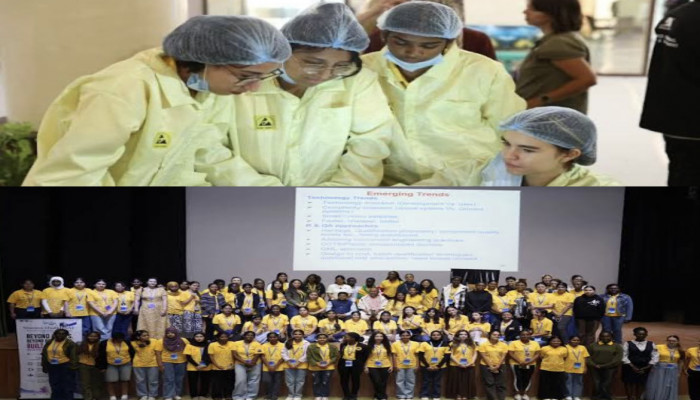
Girls from 108 countries have joined hands to build a satellite that is set to launch from India aboard the Small Satellite Launch Vehicle (SSLV). The initiative, Mission ShakthiSAT, has set a world record for an all-girls space programme and aims to combine space technology with international cooperation.
Led by Space Kidz India, the mission has completed its Phase 2 programme in India. The programme brought together young women and representatives from several countries for practical training in spacecraft engineering and satellite development. It focuses on hands-on learning rather than limiting space education to classrooms.
A key part of the programme involved the development and integration of a 12U CubeSat. The compact satellite can carry multiple scientific and technological payloads. Participants worked on several stages of spacecraft assembly. These included mechanical integration, spacecraft structure preparation, electrical assembly, solar panel soldering, power-bus preparation and payload integration.
The programme also involved international payload teams and institutions from Latvia, Egypt, the United States, Brazil, Australia, Switzerland, the Philippines and India. Mission documents list collaborations with the Egyptian Space Agency, University of South Alabama, Australian Astronomical Optics at Macquarie University, SMW Engineering, Shamal & Partners, 2H5, Indian Aerospace University and Space Kidz India.
Mission ShakthiSAT has also created a platform for youth diplomacy. Young women, women leaders, ambassadors and representatives from 108 nations have taken part in the initiative. The programme has received support through engagement with India’s wider diplomatic network, including the Ministry of External Affairs.
The initiative aims to expand access to aerospace engineering and space science for young women. It provides participants with exposure to spacecraft systems, satellite engineering, electrical fabrication, payload integration and other mission-related technologies. The programme also encourages students from different countries to work together on a shared scientific project.
Phase 2 completion marks another step in the satellite’s development. The spacecraft, expected to be launched from India, has brought together participants from 108 countries for a common space mission. The programme uses practical engineering training and international participation to create opportunities for young women to engage with space technology.



 Loading...please wait
Comments