



Germany unveils first-ever military strategy, flags Russia as top threat
- In Reports
- 07:27 PM, Apr 24, 2026
- Myind Staff
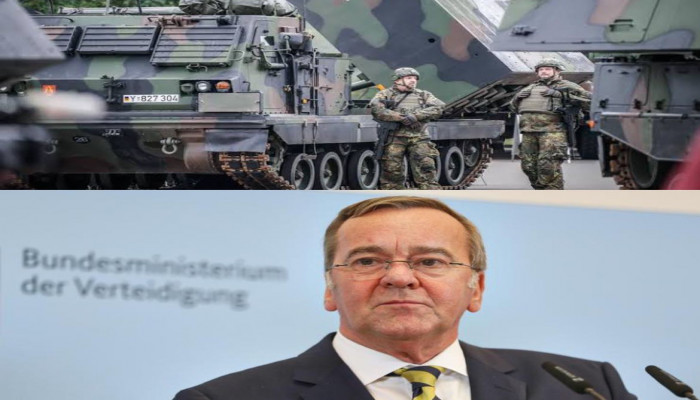
Germany has, for the first time, officially introduced a comprehensive military strategy for the Bundeswehr, marking a significant shift in its defence planning. The move comes at a time when global security conditions are becoming more uncertain and tense. The strategy outlines how the armed forces will prepare for future challenges and respond to potential threats. It reflects a broader reassessment of security priorities as Europe faces growing instability.
Presenting the strategy in Berlin, Defence Minister Boris Pistorius stressed the urgency of the moment. He said, "Rarely has a military strategy been as necessary as it is in this historic period," highlighting the seriousness of the current geopolitical climate. According to him, the situation has worsened significantly since Vladimir Putin launched the war against Ukraine. He added that the international legal order is under immense strain, making it essential for Germany to strengthen its defence framework.
A major part of the strategy remains classified, particularly the sections dealing with possible military responses. However, one key message is clear: Russia is seen as the most immediate and serious threat to Germany and transatlantic security. The document warns that Russia is preparing for a possible attack on NATO member states. It also outlines how the Bundeswehr should act in such scenarios, though specific operational details are not made public. Pistorius addressed this secrecy by saying, "It goes without saying that we cannot make these scenarios public. Otherwise, we might as well add Vladimir Putin to our mailing list."
The strategy places strong emphasis on increasing military personnel. Germany aims to expand the Bundeswehr to a total strength of 460,000 soldiers by the mid-2030s. Out of this, around 200,000 will be reservists. The broader goal is to build Europe’s strongest conventional army and significantly improve defence readiness by 2029. This marks a major step up in ambition compared to previous plans.
At present, the Bundeswehr is growing, but at a slow pace. By the end of March, the number of active-duty soldiers stood at approximately 185,400, which is an increase of 3,300 compared to the same time last year. To accelerate recruitment, the government has introduced a new military service program. This program combines incentives with compulsory elements, including mandatory military screening for young men. The aim is to encourage more voluntary enlistment.
Officials have indicated that if these efforts do not bring the desired results, Germany may reconsider reintroducing military conscription, which was suspended in 2011. However, this step is not currently planned. State Secretary for Defence Nils Hilmer emphasised during the strategy presentation that the current approach is working. He stated, "We are on track," suggesting confidence in the existing recruitment measures.
Alongside the main strategy, several supporting policy documents were also introduced. One of them is the “capability profile,” which defines the essential abilities the armed forces must have. This includes capabilities required for national defence as well as for contributing to NATO’s collective security. Another document, the “reserve strategy,” focuses on building a strong reserve force. By 2033, Germany aims to have around 200,000 reservists who will support homeland security and logistics. These reservists are also seen as an important link between the military and civilian society. Like the main strategy, the details of these documents are largely classified.
The government is also addressing internal challenges within the Bundeswehr, especially excessive bureaucracy. A new “plan for debureaucratization and modernisation” has been introduced to simplify procedures. Currently, military personnel have to deal with complex regulations and heavy paperwork. To fix this, the Defence Ministry has proposed 153 measures along with 580 specific steps for implementation.
One key reform is the introduction of expiration dates for all internal regulations. If a rule is no longer needed after its set date, it will automatically be removed. This is expected to make the system more efficient and adaptable. In addition, a digital tool called the “Bundeswehr Wallet” will be introduced. This will store all important personal documents of service members in one place, making access and management easier.
Another important feature of the new approach is flexibility. The documents presented are described as “living documents,” meaning they can be updated regularly based on changes in the strategic environment. This allows Germany to respond quickly to new threats without being tied to fixed long-term plans. Pistorius explained that this shift also involves a change in mindset. "We want to move away from the traditional silo mentality," he said, indicating a push for better coordination and integration within the armed forces.
The strategy has also drawn reactions from political circles. Ulrich Thoden, defence spokesperson for the socialist Left Party, acknowledged the need for such a policy. He described the military strategy as "logical and necessary in light of the real threat posed by Russia's aggressive actions." However, he also expressed concern about Germany’s broader ambitions, stating that it is not necessary for the country to aim to become a major military power.
Overall, the new strategy marks a turning point in Germany’s defence policy. It reflects a stronger focus on preparedness, growth, and adaptability in response to a rapidly changing global security environment.



 Loading...please wait
Comments