




Germany accuses Russia of Leipzig Airport drone attack, closes Bonn Consulate
- In Reports
- 01:05 PM, Sep 02, 2026
- Myind Staff
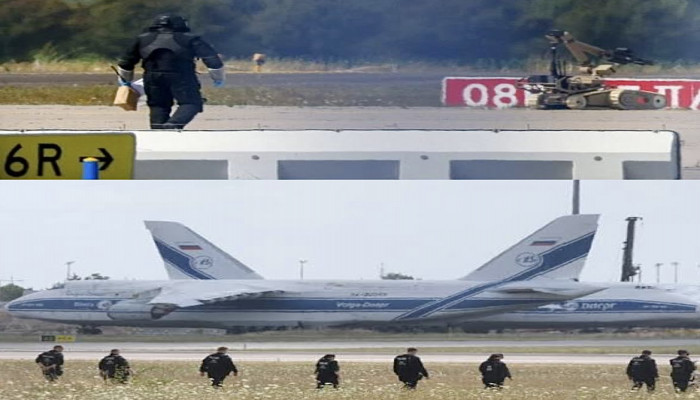
Germany has accused Russia of being behind an attempted drone attack at Leipzig Airport on August 4 and said the incident was part of a wider campaign of Russian hybrid operations across Europe. Berlin has announced measures against Russia, including the closure of its consulate general in Bonn and the termination of an agreement with the Russian House cultural centre in Berlin. NATO and several European countries have expressed full support for Germany.
German Interior Minister Alexander Dobrindt said intelligence findings showed that individuals involved in the attempted attack had acted on behalf of Russian state agencies. He said investigations by police, along with intelligence assessments and patterns linked to the incident, pointed to Moscow’s responsibility.
“Taken together, police investigations, patterns of the offences and intelligence findings establish Russian responsibility for the attempted attack at Leipzig Airport,” Dobrindt said.
Dobrindt said Germany considered the incident a serious security concern. Foreign Minister Johann Wadephul, who stood alongside him, said Berlin did not see the Leipzig incident as an isolated event. He linked it to what Germany sees as a wider campaign targeting European countries.
“It fits into a broader pattern of Russian hybrid operations in Europe,” Wadephul said.
Germany’s response will include closing Russia’s consulate general in Bonn. Berlin will also end its agreement with the Russian House cultural centre in the German capital. Wadephul said the measures were aimed at responding to what Germany considers growing attempts to destabilise the country and create insecurity.
“Germany remains secure, and Germany will defend itself against adversaries who seek to create insecurity,” Wadephul said. “We will not allow Russia’s attacks to divide or intimidate us in our social cohesion.”
He added, “The dangerous behaviour of the Russian Federation is part of attempts at destabilisation, disinformation, threats, sabotage and aggression.”
The German government has framed the Leipzig incident as part of a larger pattern of alleged Russian activities in Europe. Berlin says such operations include sabotage, disinformation, threats and other actions designed to create uncertainty and weaken public confidence. Wadephul also reaffirmed that Germany would continue supporting Ukraine despite the alleged Russian activities.
Russia has rejected Germany’s accusations and said it would respond to the measures announced by Berlin. Russian Foreign Ministry spokeswoman Maria Zakharova called Germany’s decision an “anti-Russian action”, according to the Interfax news agency. She did not provide further details.
The Russian Embassy in Berlin had earlier rejected the accusations surrounding the Leipzig incident. It called them a “fabricated provocation” and described the allegations as “a new wave of anti-Russian hysteria in Germany”.
Germany has received strong backing from NATO and several European governments following its accusations. NATO Secretary General Mark Rutte said he had spoken with German Chancellor Friedrich Merz and assured that the alliance stood behind Berlin.
“The evidence is clear,” Rutte said, while welcoming the measures announced by Germany in response to the incident. He described the Leipzig incident as a Russian hybrid attack and said NATO would continue strengthening its ability to deter and defend all members against threats.
Rutte said the alliance would remain prepared to deal with “malign actions” similar to those reported in Leipzig and elsewhere across NATO territory. His comments reflected growing concern among European governments over alleged Russian activities that fall below the level of conventional military conflict.
European Commission President Ursula von der Leyen also expressed support for Germany. She said she would discuss the incident with Rutte on Wednesday. EU foreign ministers are also expected to work on a joint response.
Polish Foreign Minister Radoslaw Sikorski said Poland stood firmly with Germany. “Looking forward to discussing collective countermeasures at the Gymnich meeting in Ireland tonight and tomorrow,” he said on X. “Full solidarity with Germany.”
Italian Prime Minister Giorgia Meloni also voiced support for Berlin. She said Italy stood in “full solidarity” with Germany following what she described as the Russian hybrid attack in Leipzig.
“The security of our Allies is the security of us all,” Meloni said. She added that attempts to intimidate NATO allies or create divisions between them would not succeed. Meloni said hybrid actions against any one member were a concern for the entire alliance and required a united response. She also stressed the need for continued cooperation and credible deterrence to protect citizens.
Finnish President Alexander Stubb expressed similar support for Germany. He said Finland stood in “full solidarity” with its ally after the incident. Stubb said Finland was familiar with the “Russian playbook”, which he said sought to intimidate European nations and weaken their determination to support Ukraine in its war against Russia.
French President Emmanuel Macron also backed Germany’s position. He said Berlin had established Russia’s responsibility for the serious incidents reported in Leipzig in early August.
“These hybrid attacks are multiplying in Europe. They cannot go unanswered,” Macron said.
British Prime Minister Andy Burnham also said Britain stood with Germany. He said any Russian efforts to weaken European support for Ukraine were “doomed to fail”.
Despite the accusations and Russia’s rejection of them, Germany has made clear that it will continue its support for Ukraine. Wadephul said Berlin would maintain both civilian and military assistance to Kyiv and remain committed to supporting Ukraine in its defence against Russia’s invasion.
The Leipzig incident has therefore become part of a wider European security debate. Germany’s decision to take diplomatic and institutional measures against Russia has received strong support from NATO and several European countries. The governments backing Berlin have stressed that they intend to respond collectively to what they describe as growing Russian hybrid activity across Europe.



 Loading...please wait
Comments