




Gen Z wave propels rapper-turned-politician Balendra Shah to Nepal’s top office
- In Reports
- 11:57 AM, Mar 09, 2026
- Myind Staff
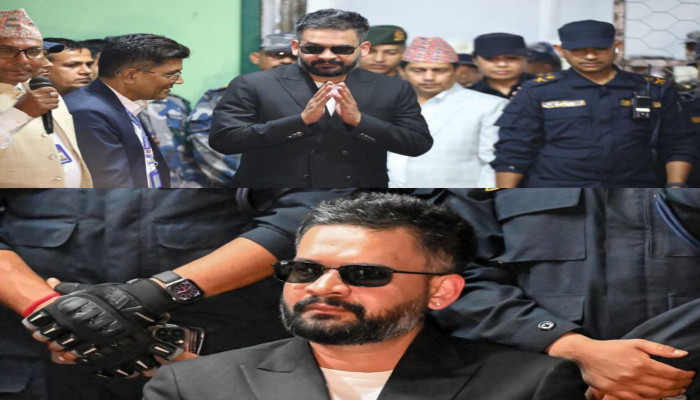
Balendra Shah, a former rapper who later became a political leader, is set to become Nepal’s next prime minister after his party secured a massive victory in the country’s latest elections. Shah, widely known as Balen, leads the Rastriya Swatantra Party (RSP), which achieved a historic win in the first national poll held after the youth-led protests that brought down the previous government.
The election result is being seen as a strong sign of public demand for change, especially from young voters. Leaders of Shah’s party described the outcome as a major endorsement of the movement that began with protests led largely by the younger generation.
“It is the victory of hope and change,” said Ramesh Paudyal, a senior RSP leader. “It is the most beautiful endorsement of the Gen Z movement. The true tribute to the Gen Z martyrs will be expressed through the work carried out every day by the government led by Balendra Shah.”
The results clearly showed public anger toward Nepal’s long-established political leadership. Many veteran parties and well-known leaders lost a large number of seats. Shah’s RSP, which was formed only three years ago by a former television executive, managed to secure a rare outright majority.
Nepal’s electoral system combines the first-past-the-post method with proportional representation. Because of this system, elections in the country usually result in coalition governments that can be weak or unstable. However, as the counting process reached its final stage, the RSP had won at least 122 of the 165 direct seats and was leading in three more. This placed the party on track to secure the biggest electoral majority seen in Nepal since it became a democracy.
The final results will also include additional seats that are allocated through proportional representation. These final numbers are expected to be announced in the coming days.
This election was considered one of the most important and closely watched contests in recent years. It brought a clear clash between the experienced political figures who have dominated Nepal’s politics for decades and a younger generation promising to end corruption and bring new ideas to governance.
Although Shah is relatively new to politics, he was widely viewed as the leading candidate during the campaign. His energetic campaign connected strongly with citizens, especially young Nepalis who are eager to see change in the country.
Shah, who is 35 years old and trained as an engineer, first gained popularity as a rapper. Many of his songs spoke openly about social issues such as poverty, unemployment and corruption. In 2022, he entered public office by contesting the mayoral elections of Kathmandu as an independent candidate. After winning with a strong majority, he began major efforts to clean up the city. His work included removing unauthorised structures and tackling the city’s long-standing waste management problems.
However, it was the youth uprising in September last year that brought Shah to national attention. The protests began after the government banned social media, but they quickly grew into a wider movement fuelled by frustration over the lack of opportunities in the country.
The government responded with force, and 19 protesters were killed. The unrest soon spread further, with incidents of arson and violence that led to a total of 70 deaths. The crisis eventually forced the resignation of the government led by four-time prime minister KP Sharma Oli and his Communist Party.
The sudden fall of the government surprised many people involved in the protest movement. Although Shah was the preferred choice of the Gen Z protest leaders to become interim prime minister, he refused the role. Instead, he decided to wait and contest the election held on 5 March.
In what many saw as a symbolic contest between the old political leadership and the new generation, Shah chose to run in the Jhapa-5 constituency against 74-year-old veteran leader KP Sharma Oli.
The results showed a decisive victory for Shah. He won the seat with 68,348 votes, while Oli received 18,724 votes. After the result was announced on Saturday night, Oli accepted defeat and said he wished Shah an “uninterrupted five-year term, heartfelt best wishes”.
Shah arrived to collect his certificate of election wearing his trademark dark sunglasses and black blazer. Standing through the sunroof of his vehicle, he raised a banner that read, “Congratulations to all of you, this is your victory.”
In Jhapa-5, many supporters celebrated the outcome. Aditya Karna, a 23-year-old voter, said, “One of the main factors behind the Gen Z movement, KP Oli, has been defeated. It feels like justice has been delivered to the martyrs. Now there is an expectation that Balen will lead the country toward a better future.”
Another supporter, Bhawana Raut, who is also a leader of the Gen Z movement, said the result could help the country move forward after the violence of the protests. “This sends a clear message to everyone who comes to power: you must be accountable,” she said. “Even leaders who rose after such a huge struggle can be brought down to zero by voters in a single moment. The government must be a servant of the people, not a ruling authority.”
Despite the celebrations, political experts say Shah will face major challenges once he takes office. Many young voters have placed high expectations on his leadership. During his campaign, Shah promised to investigate corruption by previous governments and also look into the actions of the Oli administration during the protests in which Gen Z demonstrators were killed.
Political analyst Lok Raj Baral pointed out that fulfilling all these expectations will not be easy. “The public has many aspirations and many desires,” he said. “They have placed extremely high hopes, but in a country like Nepal, it is very difficult to deliver. The bureaucracy remains the same old one, only the political leadership is new.”
Nepal’s geographic position between India and China also makes foreign policy an important issue for the new government. The interests of these two powerful neighbours have often influenced Nepal’s domestic politics.
Baral added, “They won a majority largely because they convinced people that they would work for good governance. That mandate is positive. But from the moment Balen becomes prime minister, challenges will be waiting for him at every step.”



 Loading...please wait
Comments