



Gauhati High Court clears Maa Kamakhya temple access corridor project
- In Reports
- 05:53 PM, Feb 14, 2026
- Myind Staff
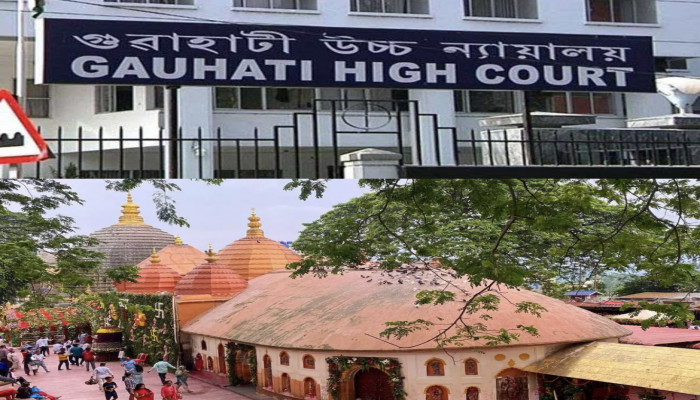
The Gauhati High Court on Friday allowed the Assam government to proceed with the proposed Maa Kamakhya Temple Access Corridor Project, dismissing the ongoing legal challenges related to its construction. The court’s decision paves the way for development work to begin, with assurances that the sacred environment of the temple and its underground water springs will be protected.
A division bench of the court, headed by Chief Justice Ashutosh Kumar and Justice Arun Dev Choudhury, heard petitions against the project and found no reason to continue the cases. The bench emphasised that scientific studies and design plans by technical institutes ensure the protection of the temple’s heritage and sacred elements.
The legal challenges included a Public Interest Litigation (PIL) and a writ petition. The PIL demanded the release of a White Paper explaining the proposed construction plans and raising concerns that the project could affect the temple’s ancient structures and environment. The writ petition, filed by Navajyoti Sarma, questioned the tender process based on claims that it violated laws protecting historical monuments.
During the hearing, the court focused on the project’s technical reports. The Assam government submitted an affidavit from the Public Works Department stating that the corridor project was prepared under the PM-DEVINE Scheme to improve the temple area, which had become crowded with unplanned residential and commercial buildings. These structures were seen as restricting open space for pilgrims and limiting the development of better facilities.
The government explained that the front area of the temple complex had lost its visibility and space due to these unregulated buildings. The corridor project aims to improve access for pilgrims and enhance amenities without harming the sanctity of the temple.
To ensure environmental and religious safety, the government commissioned technical studies. The Indian Institute of Technology (IIT) Guwahati was asked to carry out hydrological and geophysical research on the proposed construction site. Alongside this, the National Institute of Hydrology, Roorkee, was engaged to assess potential impacts of construction on underground water springs that are considered sacred by devotees.
Both institutions completed their studies and submitted reports. The hydrology institute’s findings were vetted by IIT Guwahati, which concluded that the corridor project could proceed without harming the temple’s structures or the sacred underground springs. The final designs of the corridor, including structural plans, were shaped based on these recommendations.
The court noted that with these detailed reports and scientific data incorporated into the design, there was no reason to block the project. During arguments, the Advocate General of Assam, Devajit Lon Saikia, assured the court both verbally and in writing that construction work would not start until all clearances from authorities, including technical clearances, were received.
After reviewing the documents, the bench agreed that the project could move forward. The court also confirmed the government’s assurance that the corridor’s construction would be strictly according to approved designs and would not interfere with the temple’s ancient architecture or sacred features.
The verdict stated that the execution of the project must proceed without affecting the underground holy water springs “even in the least,” showing the court’s strong emphasis on protection of sacred elements. With all objections addressed and assurances recorded, the bench closed both the PIL and the writ petition.
However, the court gave the petitioners the right to revive their cases in the future if any breach occurs during the project’s execution. For this, they would only need to file a short affidavit outlining their concerns.
Supporters of the project say that it will transform the temple surroundings by improving facilities for pilgrims, reducing congestion, and creating a more organised temple precinct. The corridor is expected to offer a better approach route for devotees from busy and narrow streets that currently make access difficult during peak festival times.
Critics had earlier feared that the construction could disrupt religious practices, damage heritage structures, or upset natural water flows, especially those linked to the sacred underground springs within the hill. These concerns played a central role in the legal challenges.
With the High Court’s ruling, the Assam government can now begin development work, provided all conditions of safety and preservation are maintained throughout. The state has reiterated that the sanctity of the Maa Kamakhya Temple — one of the most revered pilgrimage sites in India — will remain a top priority in all project phases.



 Loading...please wait
Comments