




From Regime Change to Citizen Protection: Why BJP Must Stop Tolabaji at Its Germination in West Bengal
- In Politics
- 12:44 PM, Jul 08, 2026
- Dr Ryan Baidya
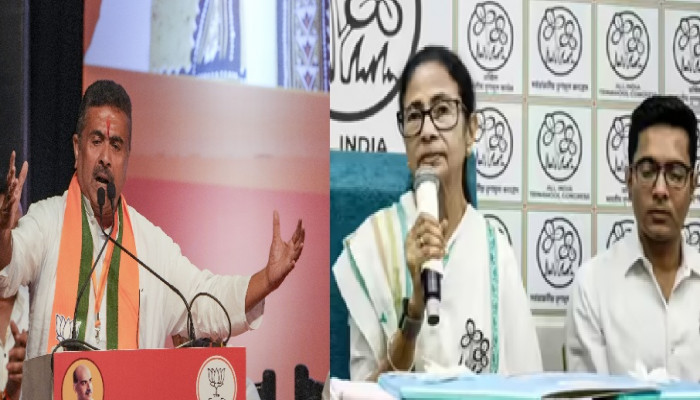
West Bengal’s recent political transition from TMC to BJP administration should not be seen merely as a change of party. It should be seen as a serious test of democratic governance.
A fair and clean election can remove one party from office, but it does not automatically remove the political culture that grew under that party. The deeper question is not simply whether citizens voted for BJP or against TMC. The real question is whether the new administration can prevent the same old practices from reappearing under a new political colour.
In Bengal, this danger is not imaginary. During the earlier transition from the CPM/Left era to the TMC era, many citizens hoped that the end of one cadre-driven political structure would bring relief, fairness, freedom, and citizen-centred administration. Instead, many later found themselves facing another network of local coercion, tolabaji, cut-money, protection money, syndicate pressure, and party-worker interference.
This is the tragedy of Bengal’s political transitions: citizens vote for liberation, but too often receive a new class of local political controllers.
The citizens regret that much of this extortion was visible but not always formally reported. Business owners, transporters, contractors, shopkeepers, small manufacturers, industrial units, and ordinary families often remained silent because they feared retaliation, police indifference, or administrative capture. Thus, the true cost of political extortion was not merely financial. It damaged trust, discouraged investment, weakened industry, and trained citizens to believe that survival required submission to local political handlers.
BJP must understand this history clearly. If it assumes that electoral victory alone proves public trust, it will make a dangerous mistake. The people may have given BJP an opportunity, but that opportunity is conditional. Citizens still have vivid memories of the TMC episode. Even the smallest spark of dadabaji, tolabaji, extortion, protection money, or syndicate culture will remind them of what they wanted to escape.
There are already reports of extortion and tolabaji by BJP-associated cadres in industrial areas of West Bengal, and possibly in other regions as well. Whether these reports are isolated, exaggerated, politically motivated, or widespread, BJP cannot afford to dismiss them. In a state with Bengal’s recent political memory, even a few incidents can become symbolically explosive. Citizens do not need a large statistical report to lose confidence; they only need to see familiar behaviour returning under a new flag.
This is why BJP must stop the culture at its germination stage.
Electoral Victory Is Not Democratic Understanding
BJP should not assume that electoral victory means democratic understanding. Winning an election gives a party the authority to administer, but it does not automatically make its cadres democratic in conduct, temperament, or ethics.
Democracy is not merely the counting of votes. It is a system of citizen sovereignty, limited power, lawful administration, public accountability, and respect for dissent. A party may win a fair election and still behave undemocratically if its workers treat citizens as subjects, public offices as party assets, and police stations as instruments of political control.
A democratic administration must understand the following principles:
- The citizen is the master, not the party cadre.
- Government must administer, not “rule.”
- Police must serve law, not party instruction.
- Public money is a sacred trust, not a party resource.
- Opposition must not be crushed by revenge.
- Bureaucrats must be protected from political extortion.
- Corruption by “our people” is still corruption.
This is especially important in West Bengal because decades of cadre politics have damaged the civic meaning of democracy. Many party workers, across parties, have learned politics as access, pressure, collection, recommendation, intimidation, and control. They may understand electoral mobilisation, but not democratic governance.
Therefore, BJP must train, discipline, and monitor its own cadres from the beginning. Without such internal correction, the party may win the state but fail democracy. It may defeat TMC electorally while reproducing the same political culture that citizens rejected.
The Danger of Colour-Changing Cadres
One of the greatest dangers after a political transition is not merely the defeated party’s resistance. It is the migration of the same local power-brokers into the winning side.
Many cadres may change their political colour before or after an election, but not their habits. Those who practiced tolabaji, extortion, protection-money collection, syndicate pressure, and local intimidation under one party may simply seek shelter under another. If such people are welcomed without scrutiny, the new administration will inherit not only supporters but parasites.
A person who has lived by political extraction does not become a public servant merely because the party flag has changed. Greed is an appetite that does not end by itself. Fear may temporarily restrain it, but fear alone cannot create ethical administration. Moral preaching is also insufficient. Those who have treated politics as a business of collection must be watched, disciplined, removed, and, when necessary, prosecuted.
If the BJP allows these elements to operate under its protection, the citizens will not experience democratic change. The citizen will experience only a change of uniform.
Party Workers Must Not Administer the State
In a democracy, elected officials and government servants administer. They do not “rule.” Party workers may campaign, organise, communicate, and help citizens politically, but they must not interfere in police stations, tenders, welfare benefits, land disputes, school appointments, hospital access, industrial permissions, transport movement, or business operations.
The new administration should publicly declare a strict firewall between party activity and state administration. No BJP worker, old or newly joined, should be allowed to act as an unofficial gatekeeper between the citizen and the government.
A citizen should not need a party recommendation to file a police complaint. A factory owner should not need to pay a local handler to move goods. A contractor should not need to surrender a percentage to receive payment. A shopkeeper should not need to pay protection money to remain open. A poor household should not need political loyalty to receive welfare.
If these practices continue, the party in office may change, but the citizen remains trapped under local political domination.
Internal Vigilance Is Necessary
BJP must institute a disciplined internal vigilance mechanism at every local level, especially in industrial regions where extortion and protection-money culture can cause great economic damage.
This should not become a reckless party spy network. That would create another danger: factional vendetta, false allegations, and local blackmail. Instead, BJP needs a structured, accountable, multi-layered vigilance system.
Such a system should include:
- anonymous reporting channels for citizens, business owners, transporters, contractors, and industrial units;
- internal secret informers within the party structure to identify cadres misusing the BJP name;
- a second layer of verification, or “informer of informer” mechanism, to ensure that reports are not fabricated by rival factions;
- independent administrative review by district-level officers not locally dependent on the accused network;
- direct reporting to a state-level anti-extortion cell;
- strict confidentiality and protection for complainants;
- fast disciplinary action within the party, followed by legal action where appropriate.
The purpose is not revenge against TMC workers or harassment of ordinary political opponents. The purpose is clean administration. Any person, whether old TMC cadre, newly joined BJP worker, local contractor, union handler, or party-linked middleman, who uses political identity to collect money or intimidate citizens must face immediate consequences.
BJP’s message should be unmistakable: changing political colour will not protect anyone who continues the old culture of dadabaji, tolabaji, extortion, protection money, or syndicate pressure.
Industrial Areas Need Special Protection
West Bengal cannot rebuild its economy if investors, small manufacturers, traders, logistics operators, and industrial units fear local political extraction. Industrial regions are especially vulnerable because money, contracts, labour, transport, land, and permits all converge there. That makes them attractive targets for tolabaji networks.
The new administration should establish special anti-extortion monitoring in industrial belts. Business associations should have a direct channel to report demands for money, forced subcontracting, labour intimidation, illegal gate collection, transport obstruction, and political pressure.
A factory that must pay unofficial money at every stage cannot compete. A small entrepreneur who fears local muscle will not expand. An outside investor who hears that political middlemen control industrial life will go elsewhere. Thus, tolabaji is not only a moral crime; it is an anti-development force.
If BJP wants West Bengal to attract industry, it must make one thing unmistakable: no party worker, union handler, local strongman, or political middleman will be allowed to tax enterprise unofficially.
The Political Risk Before Lok Sabha
There is also an immediate political risk. If citizens begin hearing that BJP cadres are behaving like TMC cadres, disappointment will spread quickly. Bengal voters are politically alert. They remember patterns. They may forgive early administrative difficulty, but they will not forgive betrayal.
The coming Lok Sabha election will test whether BJP is seen as a real alternative or merely the next holder of local power. If reports of dadabaji, tolabaji, extortion, and protection money multiply, opposition parties will not need to create a narrative; BJP’s own cadres will create it for them.
Therefore, the party’s self-interest and the citizen’s interest align. To protect citizens, BJP must discipline its own workers. To protect its political future, BJP must prevent local corruption from becoming its public identity.
Recommended Policy Actions
The new administration should immediately consider the following measures:
- Issue a public zero-tolerance order against political extortion, syndicate pressure, cut-money collection, and party-worker interference.
- Create a state anti-extortion helpline and digital complaint portal with tracking numbers.
- Establish district-level anti-tolabaji cells focused on business, industry, transport, land, and welfare delivery.
- Protect complainants from retaliation through confidential reporting and follow-up monitoring.
- Suspend party members from organisational responsibility as soon as credible complaints arise.
- Publish periodic district-wise action summaries without exposing complainants.
- Rotate police officers in areas where local political capture is suspected.
- Create direct communication channels between industrial units and the Chief Minister’s office or a designated industrial protection authority.
- Penalise false complaints, but only after careful review, so the system is not misused.
- Place newly joined cadres from other parties under special observation before giving them local organisational influence.
- Train BJP workers in democratic conduct, citizen service, legal limits, and the difference between party work and government administration.
- Make every district-level BJP leader personally responsible for preventing extortion by party-associated workers in his or her area.
Conclusion: No More Tolabaji: BJP’s First Test of Democratic Governance in West Bengal
West Bengal does not need another party-centred society. It needs citizen-centred democratic administration.
BJP’s victory, if it is to mean anything historically significant, must not simply replace TMC’s political machinery with BJP’s political machinery. It must dismantle the culture of local extraction. The test is not how loudly the party speaks against TMC corruption. The test is how firmly it acts against corruption by its own people.
The message must be direct:
- No political flag is a license for extortion.
- No party worker is above the citizen.
- No local strongman will be allowed to become the face of the new administration.
- No business should pay protection money to survive in West Bengal.
- No citizen should fear the party that claims to represent them.
If BJP fails at this early stage, Bengal may repeat the tragic cycle from CPM to TMC: citizens vote for relief, but receive a new structure of coercion. If BJP succeeds, West Bengal can begin a new chapter in which the government administers, police protect, industry grows, and citizens finally feel that democracy belongs to them.
Disclaimer: The opinions expressed within this article are the personal opinions of the author. MyIndMakers is not responsible for the accuracy, completeness, suitability, or validity of any information on this article. All information is provided on an as-is basis. The information, facts or opinions appearing in the article do not reflect the views of MyindMakers and it does not assume any responsibility or liability for the same.



 Loading...please wait
Comments