




From Cultural Undercurrents to Electoral Assertion: The Quiet Architecture Powering Bengal’s Political Realignment
- In Politics
- 10:37 AM, Apr 25, 2026
- Siddhartha Dave
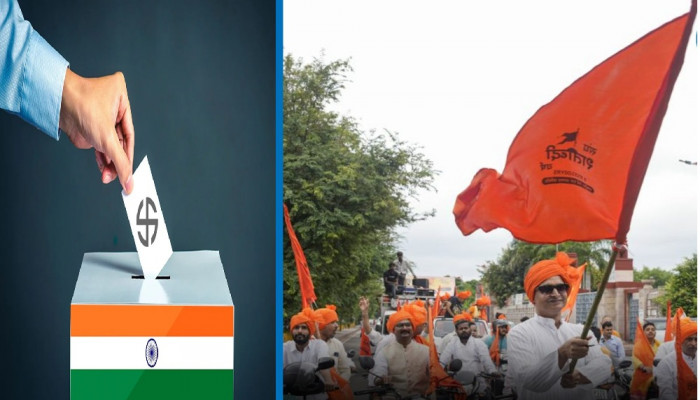
The extraordinary 92.88% turnout in Phase 1 of West Bengal’s electoral cycle is not merely a statistical anomaly—it is a political signal of deep consequence. In electoral behaviour analysis, such high participation rarely emerges in isolation. It reflects an intensification of public sentiment, a shift from passive voting to assertive political engagement. Bengal today appears to be entering precisely such a phase, where electoral participation is no longer routine but expressive—often shaped by accumulated grievances, identity concerns, and aspirations for structural change.
At the heart of this evolving landscape lies the quiet yet determined work of the Rashtriya Swayamsevak Sangh (RSS). Operating beyond the immediacy of electoral cycles, the RSS has steadily invested in building a long-term societal presence in Bengal. What is now becoming visible in political outcomes is, in many ways, the cumulative result of years of disciplined organisational expansion and cultural engagement.
Bengal’s Historical Resistance—and Its Gradual Transformation
West Bengal has historically occupied a distinctive intellectual and cultural space within Bharat. The legacy of Rabindranath Tagore and Swami Vivekananda shaped a society deeply anchored in philosophical introspection, literary excellence, and a form of universal humanism. This cultural environment, reinforced by decades of Left ideological dominance, created barriers to the acceptance of cultural nationalism as articulated by the RSS.
Yet, cultural ecosystems are not immutable. The political transition of 2011 under Mamata Banerjee introduced a new paradigm centred on identity-driven welfare politics and grassroots mobilisation. The RSS, rather than confronting this shift, demonstrated its characteristic adaptability. It began to align its outreach with local idioms, cultural symbols, and societal concerns, thereby embedding itself gradually within the Bengali social fabric.
The Post-2024 Strategic Reset
The 2024 Lok Sabha elections served as a moment of introspection for the Bharatiya Janata Party in Bengal. The reduced seat tally underscored a critical lesson: electoral success built predominantly on leadership appeal cannot substitute for sustained organisational depth. This realisation catalysed a recalibration, where the emphasis shifted decisively towards strengthening grassroots networks.
In this transformation, the RSS assumed a central role. Its organisational philosophy—rooted in daily engagement, ideological training, and social service—offered a framework that transcended electoral immediacy. The transition from personality-driven mobilisation to institution-based consolidation reflects not merely a tactical adjustment but a deeper strategic evolution.
The Expanding Organisational Ecosystem
The scale of the RSS’s expansion in Bengal is both impressive and instructive. From a historically marginal presence, it has evolved into a widespread network with thousands of functional units across the state. This growth is not merely quantitative; it signifies a qualitative deepening of engagement at the grassroots level.
The organisation’s national strength, reflected in its vast network of daily shakhas and social initiatives, provides a robust backbone to this regional expansion. The centenary phase has further energised these efforts, with sustained outreach and leadership involvement, including extensive visits by Mohan Bhagwat. Such engagement underscores the importance accorded to Bengal as a key frontier in the broader civilisational mission.
Cultural Reframing and Civilisational Integration
One of the most significant aspects of the RSS’s work in Bengal has been its effort to harmonise regional identity with a broader civilisational consciousness. Rather than presenting cultural nationalism as an external imposition, the RSS sought to demonstrate its organic resonance with Bengal’s own spiritual and intellectual traditions. By drawing upon the legacy of figures like Vivekananda, who articulated a confident and inclusive vision of Hindu thought, the RSS has positioned its narrative as a continuation rather than a contradiction of Bengal’s heritage.
This cultural reframing is subtle yet powerful. It transforms the discourse from one of ideological confrontation to one of civilisational continuity. In doing so, it reduces resistance and fosters acceptance, particularly among sections of society that value intellectual coherence and cultural authenticity.
Festival-Based Mobilisation as Social Cohesion
The increasing prominence of public celebrations such as Ram Navami reflects another dimension of the RSS’s strategy. These events are not merely religious observances; they function as instruments of community bonding and collective expression. Organised with discipline and participation, they create a shared sense of identity that transcends individual differences.
Such mobilisation also serves as a rehearsal for larger societal engagement. It familiarises communities with collective action, builds organisational capacity, and reinforces cultural confidence. Over time, these gatherings contribute to the normalisation of a more assertive public expression of identity, which can have significant political implications.
The Shifting Mindset of the Bhadralok
The Bengali middle class, often referred to as the Bhadralok, has traditionally been sceptical of overtly ideological politics. However, recent developments—ranging from governance concerns to allegations of corruption and institutional decline—have begun to alter this disposition. A section of this class is increasingly open to alternatives that promise stability, accountability, and cultural rootedness.
The RSS’s emphasis on discipline, social service, and national commitment resonates with these aspirations. Its non-electoral character lends it a degree of credibility, allowing it to engage with the Bhadralok not merely as voters but as participants in a broader societal project.
The Matua Question and Identity Politics
The Matua community represents a significant and politically sensitive constituency in Bengal. Issues related to citizenship, identity, and socio-economic security have placed this community at the centre of political discourse. The RSS’s engagement here reflects its broader approach of addressing societal concerns through a combination of ideological clarity and grassroots interaction.
By engaging with the community’s aspirations and anxieties, the organisation contributes to shaping a narrative that integrates identity with national belonging. This has the potential to influence not only electoral outcomes but also the broader discourse on citizenship and inclusion.
Electoral Recalibration in Sensitive Constituencies
In constituencies with significant minority populations, shifts in voter dynamics are introducing new complexities into the electoral landscape. Changes in voter rolls, patterns of participation, and community alignments are altering traditional calculations. The RSS, through its continuous grassroots presence, is better positioned than most to understand and respond to these evolving dynamics.
This capacity for real-time societal feedback allows for a more nuanced approach to political engagement. It also reinforces the organisation’s role as a bridge between ground realities and strategic planning.
Tribal Consolidation and the Jangal Mahal
The tribal regions of Bengal, particularly in areas such as Jangal Mahal, have historically experienced economic marginalisation and identity-related challenges. The RSS’s work in these areas focuses on social service, cultural engagement, and community empowerment. By addressing both material and psychological needs, it fosters a sense of inclusion and dignity.
This engagement is gradual and trust-based, reflecting the organisation’s long-term approach. Over time, it contributes to the emergence of new socio-political alignments, grounded in shared experiences and aspirations.
Beyond Strategy: The Ethos of Silent Nation-Building
What distinguishes the RSS’s work in Bengal is not merely its strategic coherence but its underlying ethos. It operates without the urgency of electoral deadlines, focusing instead on building enduring relationships within society. Its programmes—whether in education, service, or cultural outreach—are designed to create a resilient social foundation.
This model of engagement, often described as silent nation-building, reflects a belief that lasting political change must be rooted in societal transformation. It is an approach that prioritises depth over immediacy, continuity over spectacle.
A Transformation Beyond Elections
The developments unfolding in West Bengal today cannot be fully understood through the prism of electoral arithmetic alone. They represent a deeper shift in the state’s socio-political fabric—one in which the Rashtriya Swayamsevak Sangh is playing a pivotal role.
Through sustained effort, cultural sensitivity, and organisational discipline, the RSS has moved from the margins of Bengal’s public life to a position of growing influence. Its work exemplifies a long-term vision, where political outcomes are seen not as endpoints but as reflections of deeper societal currents.
Regardless of the immediate results in 2026, the structural transformation underway in Bengal is likely to endure. And in that enduring shift lies the true significance of the RSS’s quiet yet profound contribution.
Disclaimer: The opinions expressed within this article are the personal opinions of the author. MyIndMakers is not responsible for the accuracy, completeness, suitability, or validity of any information on this article. All information is provided on an as-is basis. The information, facts or opinions appearing in the article do not reflect the views of MyindMakers and it does not assume any responsibility or liability for the same.


 Loading...please wait
Comments