




Free Forever for You, Built by All: The Untold Economics of India’s UPI Miracle
- In Economics
- 10:23 PM, Sep 16, 2026
- Viren S Doshi
What is UPI?
The Unified Payments Interface (UPI) has rewritten how India moves money. In a decade, it has grown from a modest pilot into the world’s largest real-time payments system by volume, powering everyday transfers, merchant payments, and cross-border links while remaining free for ordinary users. This article examines its ownership, origins, current scale, the economics of “free,” the new Merchant Discount Rate (MDR) framework, gains versus cash, NPCI’s finances, and its expanding global footprint.
Who Owns UPI?
UPI is owned and operated by the National Payments Corporation of India (NPCI), a not-for-profit company (Section 8 of the Companies Act) created as a joint initiative of the Reserve Bank of India (RBI) and the Indian Banks’ Association (IBA).
NPCI is majority-owned by public-sector banks (historically around 50–60%+), with shareholding expanded over time to include private banks, foreign banks, cooperative banks, regional rural banks, and others. Initial promoters in 2008–09 included State Bank of India, Punjab National Bank, Canara Bank, Bank of Baroda, Union Bank of India, Bank of India, ICICI Bank, HDFC Bank, Citibank, and HSBC. Shareholding later broadened significantly. The RBI provides regulatory oversight; the government exercises influence indirectly through public-sector bank ownership and policy. NPCI functions as a utility-style entity focused on retail payments infrastructure rather than profit distribution to shareholders.
How Was UPI Started?
NPCI was incorporated in December 2008 under the Payment and Settlement Systems Act, 2007, and began operations after taking over the National Financial Switch (ATM network) from the Institute for Development and Research in Banking Technology (IDRBT). Early capital came from the ten promoter banks (combined contribution around ₹100 crore).
The idea for a unified, real-time, interoperable payments system grew from RBI’s vision documents (notably around 2012) emphasising safe, efficient, accessible, and inclusive payments. Nandan Nilekani and others influenced thinking around a common platform. NPCI collaborated with the iSPIRT open-source community and drew lessons from faster payments systems abroad while customising for India. UPI built on earlier systems such as Immediate Payment Service (IMPS, launched 2010).
UPI was launched on a pilot basis on 11 April 2016 in Mumbai, with 21 member banks. Public rollout followed in August 2016 as bank apps appeared on app stores. The Bharat Interface for Money (BHIM) app arrived in December 2016. The Narendra Modi Government vigorously promoted the “whole-of-government” measures. This rightly preceded “demonetisation” later that year, which further accelerated adoption of UPI.
Current Status of UPI
By FY 2025–26, UPI processed over 24,162 crore (241.62 billion) transactions valued at around ₹314 lakh crore — nearly a 13,000-fold rise in volume and a 4,000-fold rise in value from FY 2016–17.
Daily averages reached about 66 crore transactions. Monthly volumes hit records such as 23.66 billion in July 2026 and 24.51 billion in August 2026.
It accounts for roughly 84–85% of India’s digital payments by volume and about 49% of global real-time payment volume (2025 data). Over 700–740 banks are live on the platform.
Person-to-merchant (P2M) transactions form a majority of volume; person-to-person (P2P) dominate value in some periods.
UPI is deeply embedded in daily life — from street vendors to large retailers, bill payments, and more.
How Is It Offered Free (and Why the Shift on MDR - Merchant Discount Rate)?
UPI has been free for end users and largely for most merchants because of deliberate policy. From around January 2020, MDR was set to zero on UPI and RuPay debit card transactions to drive rapid adoption, especially among small merchants. The government provided incentive schemes (budgetary support) to partially compensate banks and payment service providers. Cumulative incentives ran into thousands of crores (e.g., peaks around ₹3,600 crore in one year), though these covered only a fraction of industry-estimated costs (often cited near ₹20,000+ crore annually for the broader ecosystem).
Costs were absorbed by banks, apps, NPCI infrastructure, and the public exchequer as per the following key figures:
Public exchequer (government incentives): Cumulative budgetary support of ₹8,276 crore between FY 2021–22 and FY 2024–25. Year-wise: ₹1,389 crore (FY22), ₹2,210 crore (FY23), ₹3,631 crore (FY24 peak), and about ₹1,046–1,923 crore in FY25. For FY 2025–26, the eventual payout rose to around ₹2,196 crore (from a low budget estimate), while FY 2026–27 allocation stands at ₹2,000 crore. These incentives typically covered only about 10–11% of industry-estimated costs.
Banks and payment service providers (apps/TPAPs): Industry estimates put annual operating costs of the UPI ecosystem (servers, bandwidth, fraud prevention, bank technical support, and P2M processing) at roughly ₹20,000–20,700 crore. Banks have absorbed the bulk of the shortfall after government support — often cited as 3–4 basis points per transaction in core processing plus technology service provider fees (now under 1 basis point in many cases). 1 basis point is equal to 0.01% (one-hundredth of a per cent), or 0.0001 in decimal form. 100 basis points equal 1%. In one earlier assessment (around FY24), the ecosystem spent about ₹12,000 crore on P2M processing while receiving only ~₹3,000 crore in returns/incentives, leaving a large gap borne mainly by banks and apps.
NPCI infrastructure: NPCI’s total expenses were ₹2,270 crore in FY 2024–25 (rising to ~₹2,985 crore in FY 2025–26), with marketing and product incentives (including cashbacks and RuPay support) forming nearly half (₹1,116 crore in FY25, ₹1,420 crore in FY26). Operating, network, data-centre, and depreciation costs form the rest. At scale, NPCI’s per-transaction infrastructure cost has been extremely low — around ₹0.10 (less than 10 paise). These costs are funded through network fees, other product revenues, and internal surpluses rather than direct user charges.
This zero-price model treated UPI like a digital public good, mirroring the frictionless nature of cash for users while building scale. The gap between estimated industry costs and government support created ongoing pressure for a sustainable revenue model.
New MDR framework (effective 15 October 2026):
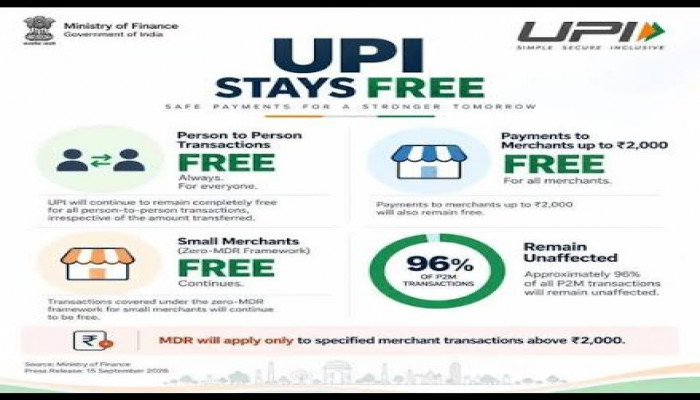
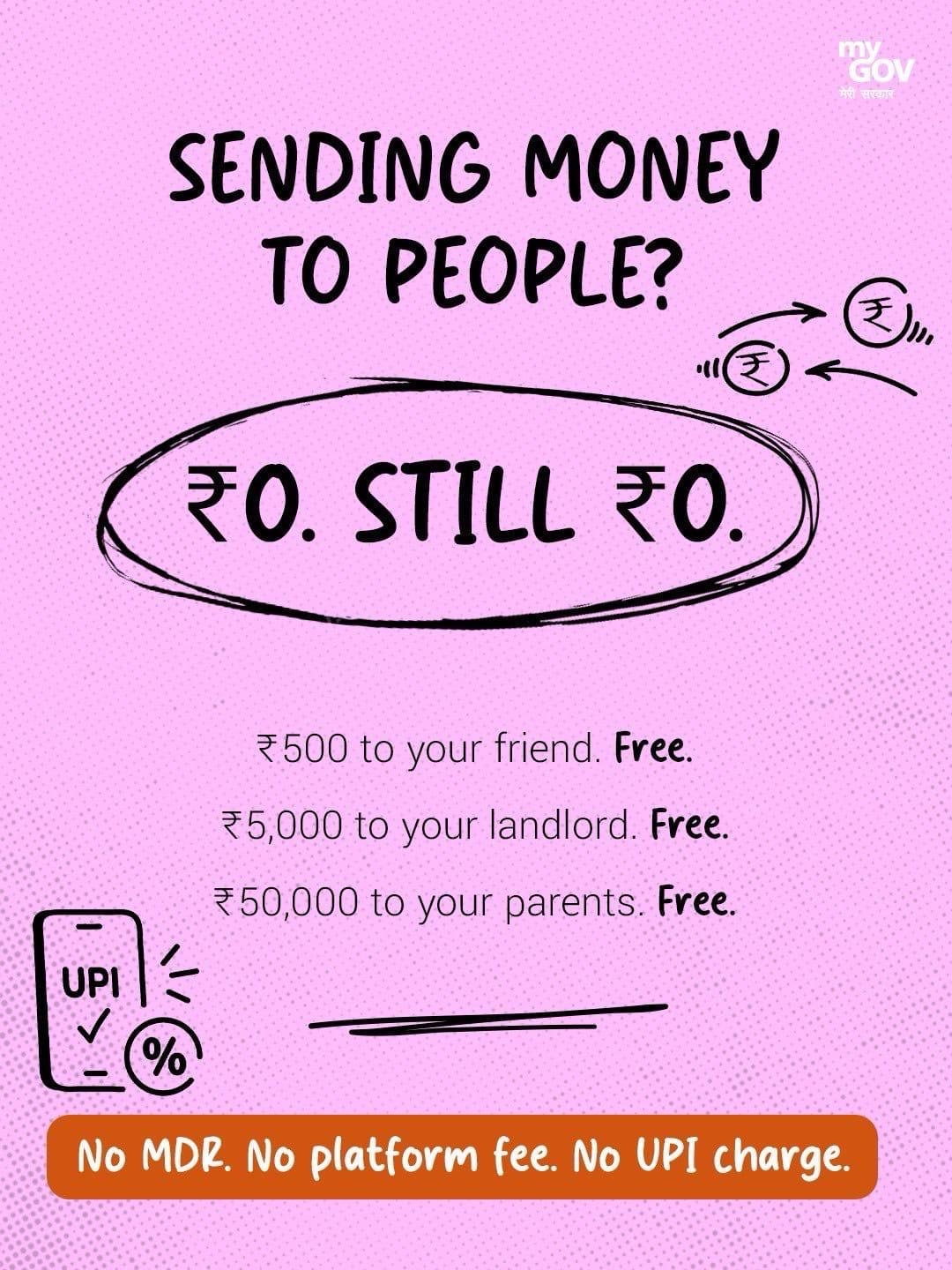
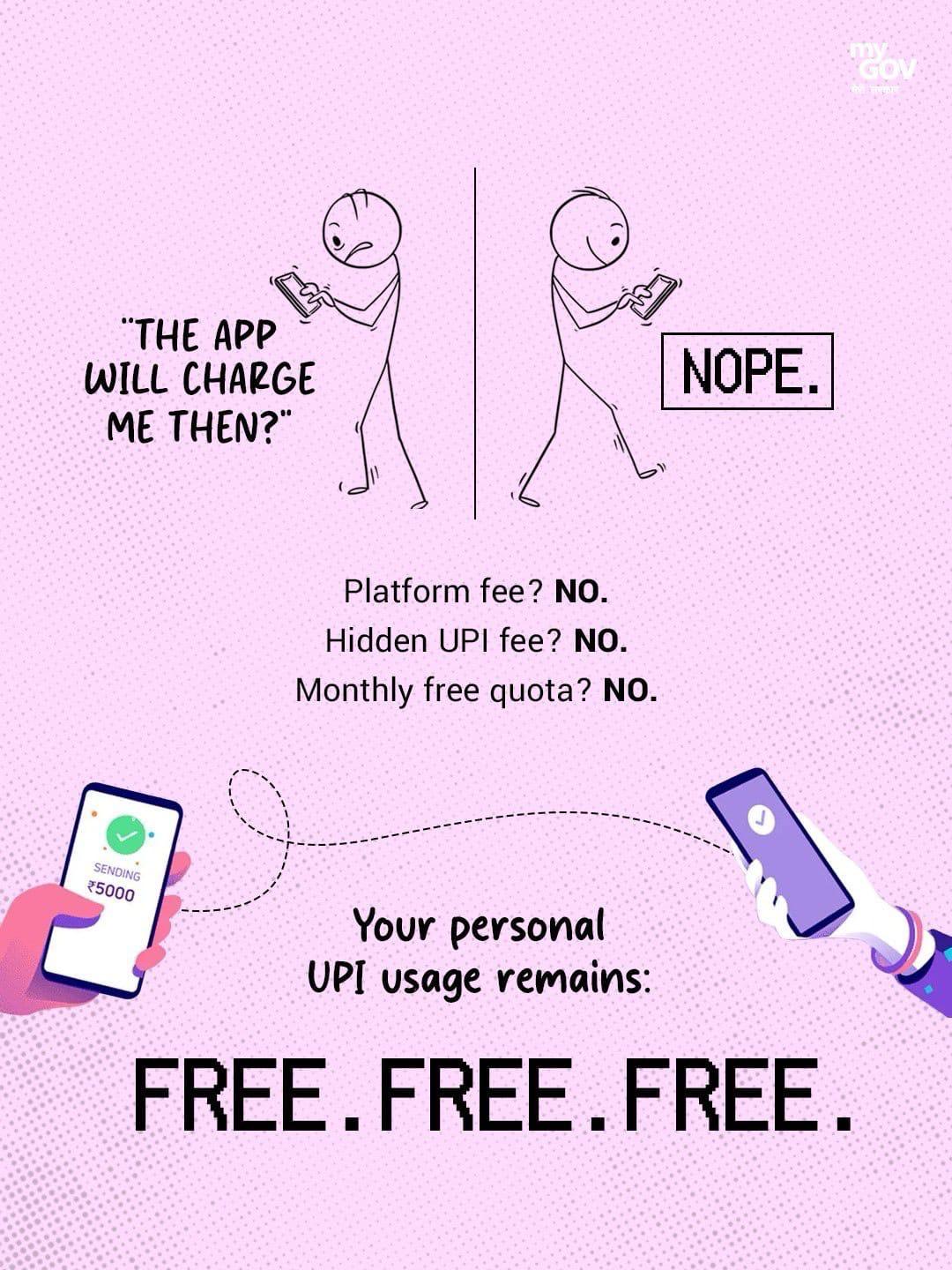
P2P transfers remain completely free, regardless of amount.
P2M transactions up to ₹2,000 remain free.
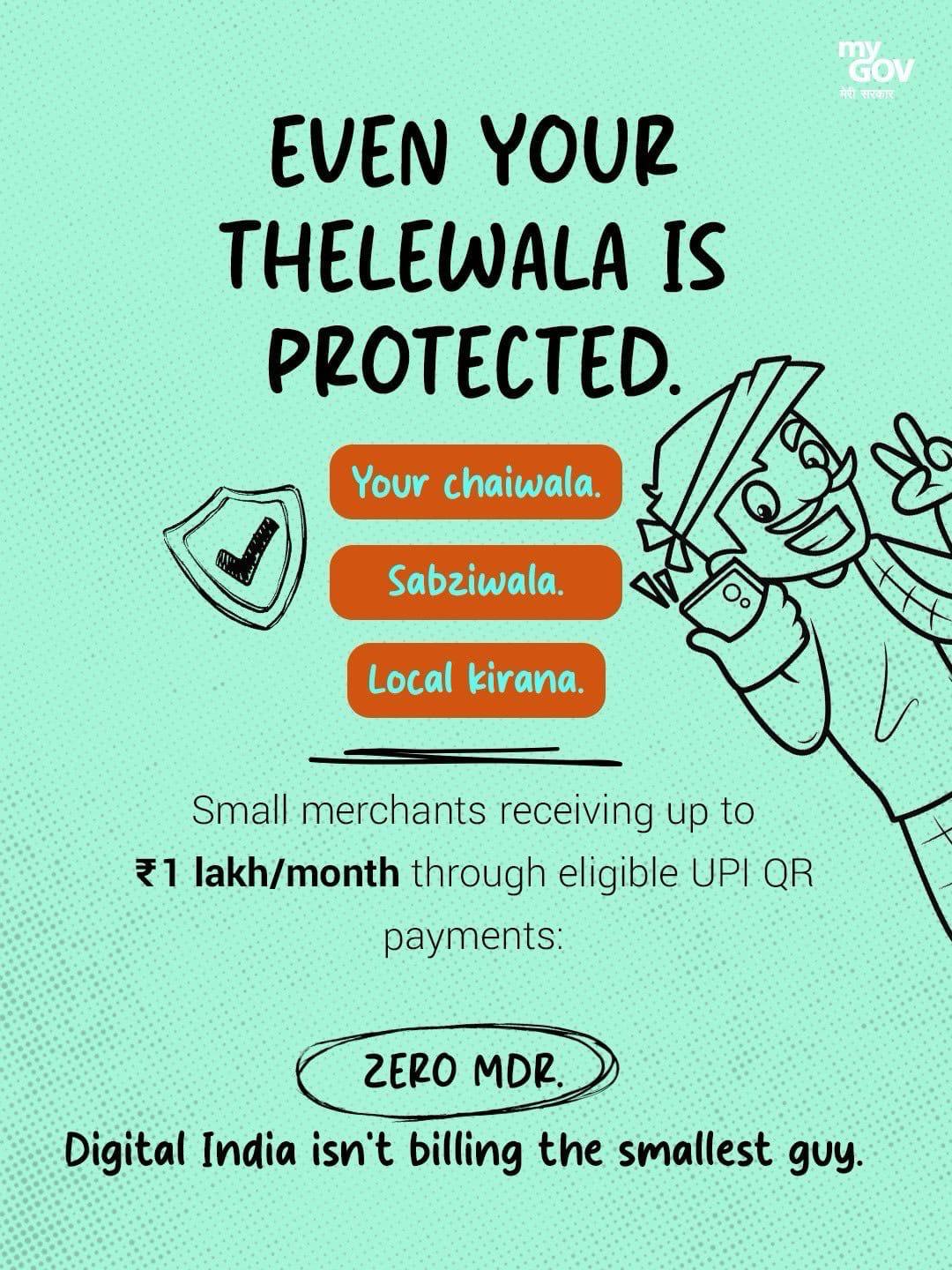
Small merchants receiving up to ₹1 lakh/month via eligible UPI QR (P2PM category) continue with zero MDR.
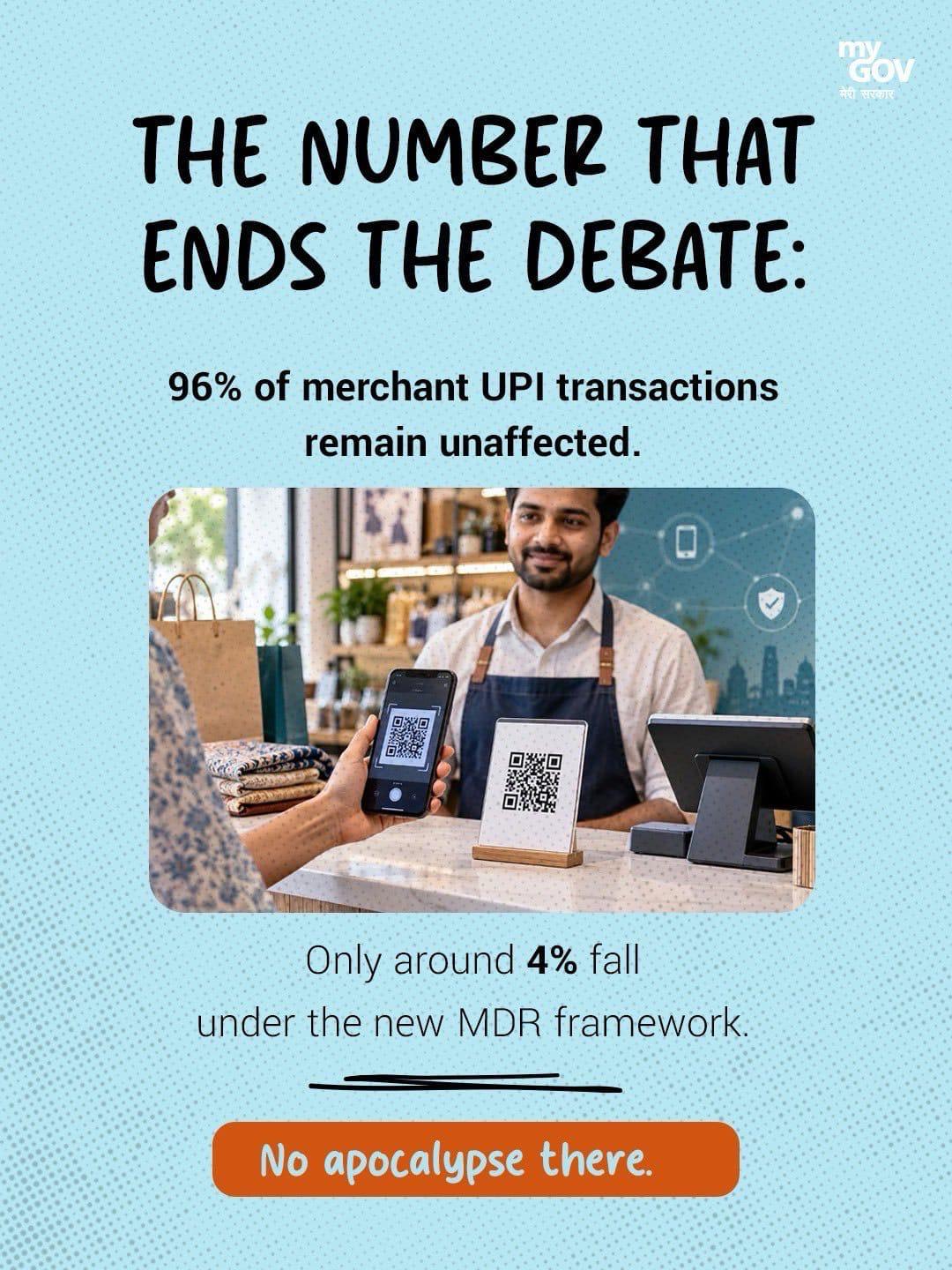
About 96% of merchant transactions (by volume) remain unaffected.
Eligible higher-value P2M transactions above ₹2,000 attract 0.4% MDR, capped at ₹300 for transactions of ₹75,000 and above.
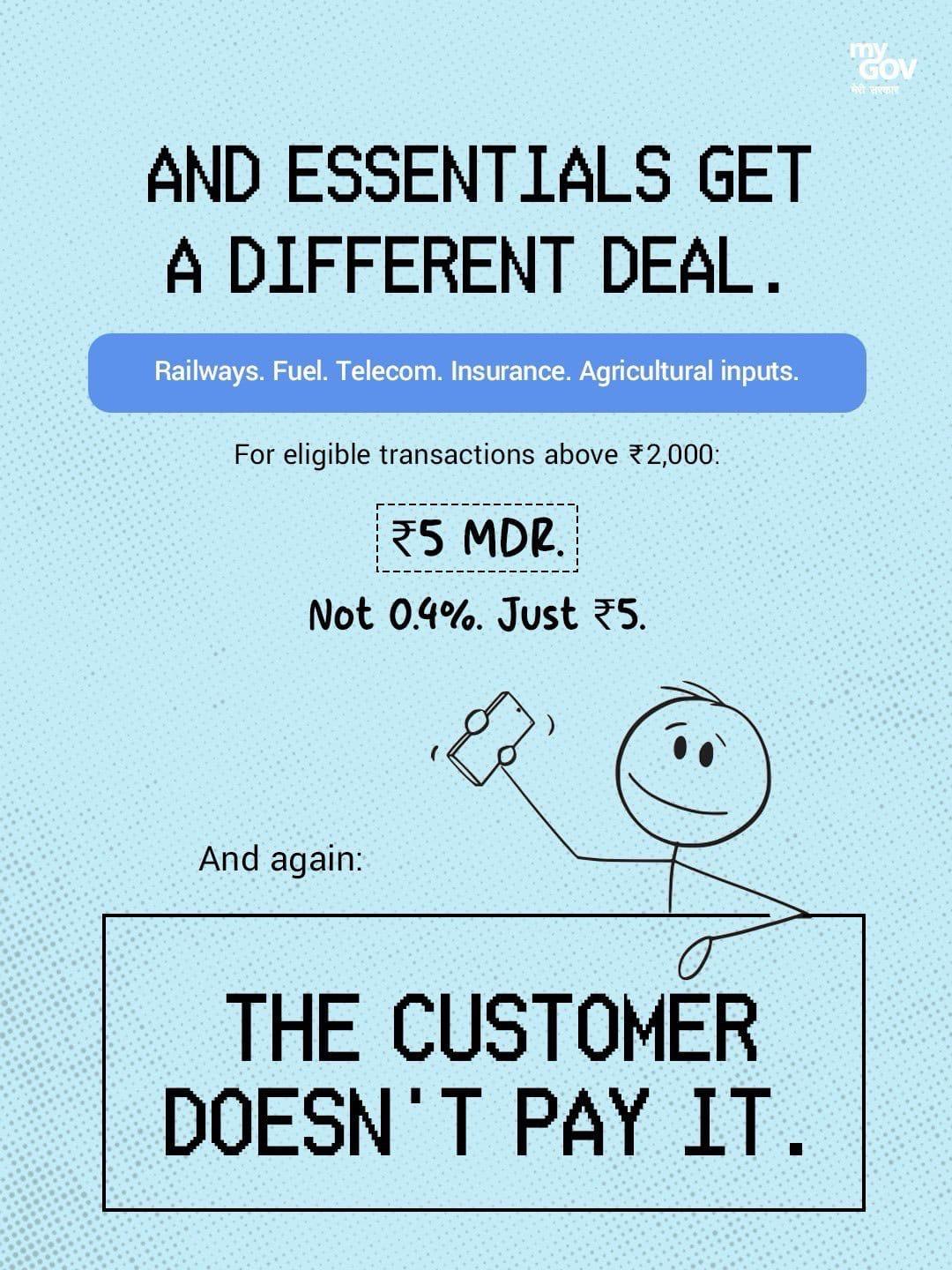
Certain essential/thin-margin sectors (railways, telecom, insurance, fuel, agricultural inputs, etc.) face a flat ₹5 MDR above ₹2,000.
Capital-market related payments attract a lower 0.02% (capped at ₹300).
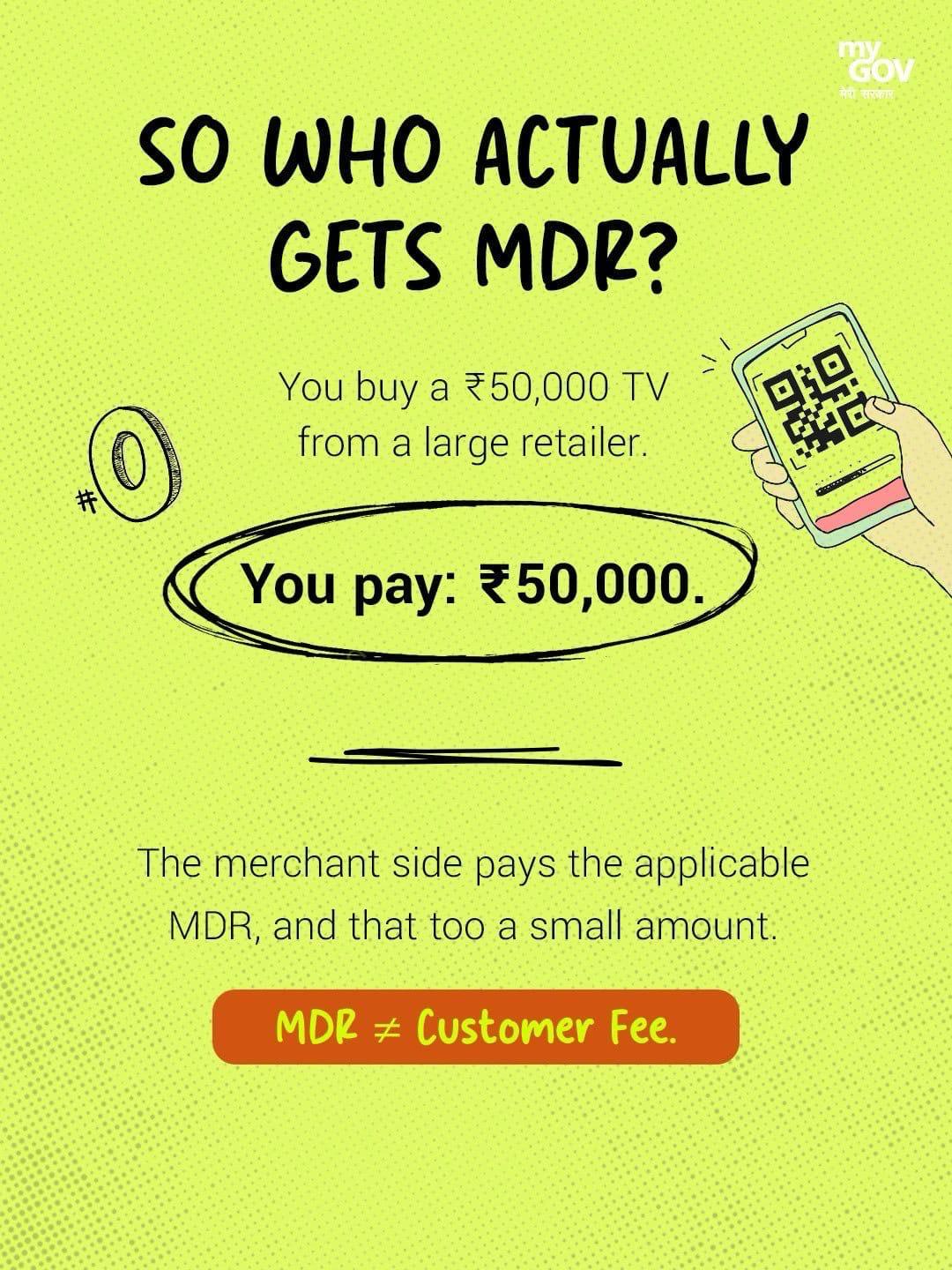
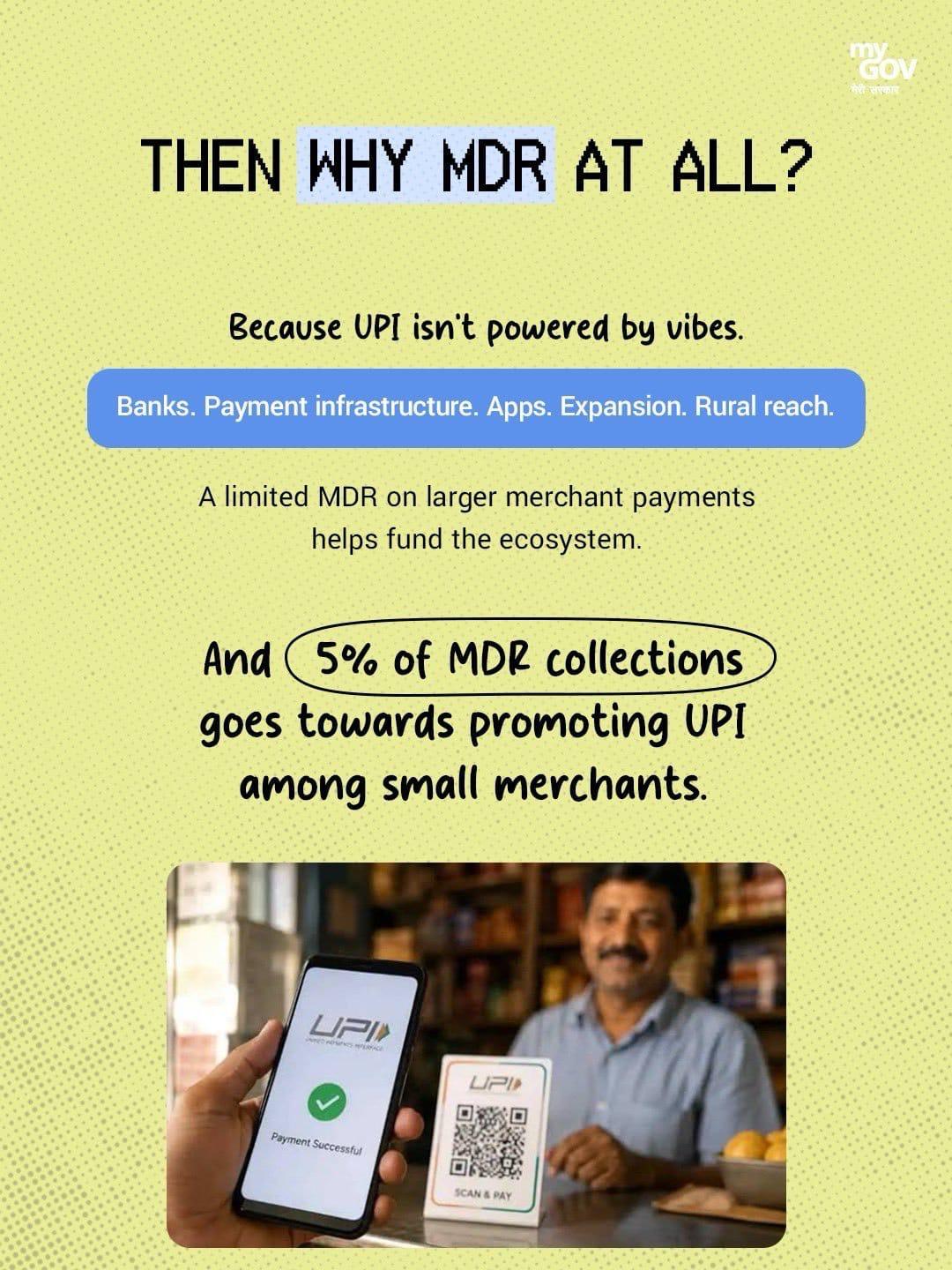
Customers are not charged; MDR is borne by the merchant side. A portion (equivalent to 5% of MDR collections) will support a fund for small-merchant UPI adoption. No platform or hidden fees on UPI apps.
The charge is shared among participants (issuing bank, acquiring bank, third-party app providers, etc.).
While merchants cannot formally pass it on, some costs may ultimately influence pricing.
Industry and government note that high-value merchant payments (a small share of volume but larger share of value) can sustain the system’s infrastructure, cybersecurity, fraud prevention, and innovation needs that subsidies alone no longer fully cover at current scale.
Pros and Cons of UPI Versus Cash
Pros of UPI
Instant, 24×7, interoperable transfers using mobile numbers, UPI IDs, or QR codes — no need for account details.
High convenience and lower friction for both individuals and merchants (especially small ones via QR).
Digital trail improves formalisation, reduces black money potential, and aids tax compliance.
Lower risk of theft/loss compared with carrying cash; strong authentication and encryption.
Scalability and inclusion (feature phones via *99#, rural penetration).
Enables seamless commerce, credit linkages, recurring payments, and more.
Cons / Challenges versus Cash
Requires smartphone/internet (or USSD alternative) and bank account linkage — digital divide issues remain for some.
Cyber fraud, phishing, and technical glitches (though systems have matured).
Dependency on electricity, networks, and power outages.
Cash retains anonymity, works offline, and serves as a store of value/precautionary holding.
Currency in circulation has continued to rise even as UPI soared (cash-to-GDP ratio has moderated), reflecting cash’s roles in savings, informal economy, rural areas, and large/precautionary holdings.
UPI has strongly displaced high-frequency low-value cash use but not eliminated cash demand.
Gains of UPI — Especially Indirect Benefits for Government and Economy
- UPI’s largest returns are systemic rather than fee-based
- Formalisation and tax buoyancy: Digital trails support higher Goods and Services Tax (GST) and income-tax collections by making transactions visible and reducing under-reporting.
- Reduction in cash intensity: Lower relative reliance on cash for routine payments eases logistics of note printing, distribution, storage, and soiling. RBI spends significant sums on currency management; UPI has helped moderate the growth rate relative to economic expansion.
- Time and cost savings: Instant settlements save time for individuals, businesses, and government (faster benefit transfers, bill collections). Banks save on cash-handling infrastructure and branch/ATM costs.
- Commerce and GDP boost: Frictionless payments expand market participation, support e-commerce, small businesses, and formal credit access, contributing to higher economic activity.
- Financial inclusion and efficiency: Massive onboarding of merchants and users; reduced paperwork through digital records.
- Macro stability and public goods: Treated as digital public infrastructure, it strengthens monetary and payments sovereignty.
These benefits justified years of zero-MDR policy and subsidies.
A government white paper detailing quantified savings (currency costs avoided, incremental tax collections, efficiency gains) versus operating costs and the new MDR design would strengthen public understanding and accountability.
NPCI’s Profit & Loss and Funding
NPCI operates as a not-for-profit and reports “surplus” rather than conventional profit. In FY 2025–26, consolidated revenue from operations rose about 22% to ₹4,240 crore (payment services 88%). Total income, including this revenue income reached ₹4,873 crore. Surplus (net) fell ~32% to around ₹989 crore, pressured by higher marketing/cashback spends, tax (including deferred tax), and other costs, even as pre-tax surplus grew modestly. Marketing alone has been a major expense item.
Earlier years showed rising revenues and healthy surpluses. Initial funding came primarily from promoter banks’ equity. Subsequent growth has been funded by internal accruals, membership/network fees, transaction-related charges from other products (IMPS, RuPay, etc.), and government incentives for zero-MDR periods. Capitalised systems remain relatively lean given the enormous volumes handled; per-transaction infrastructure costs are extremely low at scale. Cumulative investments over the years have been recovered and reinvested into resilience and new products rather than distributed to fund providers or stakeholders.
Global Expansion
UPI is already operational or accepted in multiple countries (reports cite 11, including UAE, Singapore, France, Bhutan, Sri Lanka, Nepal, Mauritius, Qatar, Cambodia, Greece, and Maldives), enabling Indian travellers to pay via existing apps and supporting diaspora links. NPCI International Payments Limited (NIPL) drives partnerships, bilateral linkages (e.g., UPI–PayNow with Singapore), and technology export.
India is actively offering UPI-like architecture or support to countries building real-time systems (examples include Namibia, Peru, Trinidad & Tobago, Jamaica, and discussions are ongoing elsewhere). This positions India as an exporter of digital public infrastructure.
India US collaboration in UPI
A pilot linking Zelle (the major US P2P network operated by Early Warning) with UPI is underway, involving players such as Bank of America, aimed at easier, lower-cost remittances — a major corridor given India’s large remittance inflows from the US.
Tech-Transfer Potential
The Government of India / NPCI can and already does pursue technology transfer, licensing, and partnership models that generate fees, geopolitical goodwill, and soft power. Success depends on adapting to local regulations, data residency, and commercial terms, but the open, interoperable design and proven scale make UPI a compelling offering.
Looking Ahead
UPI’s success rests on interoperability, zero-friction for users, strong regulation, and public-good orientation.
The new limited MDR on higher-value merchant payments aims to put the system on a more sustainable footing without burdening everyday users or small merchants.
Transparency via a detailed white paper on costs, benefits, and the MDR structure would help build consensus.
Meanwhile, continued global linkages and domestic innovation (credit on UPI, offline modes, etc.) can extend its impact.
UPI has already delivered extraordinary public value — faster payments, formalisation, inclusion, and efficiency. Sustaining that while ensuring long-term viability of the rails is the next major chapter in the course of UPI.
India and the World can very well take pride in UPI as a technological feat with the potential to serve billions of people’s trillions of transactions.





 Loading...please wait
Comments