




Four states sign major agreement ending long pending Narmada project dues dispute
- In Reports
- 01:23 PM, Jul 08, 2026
- Myind Staff
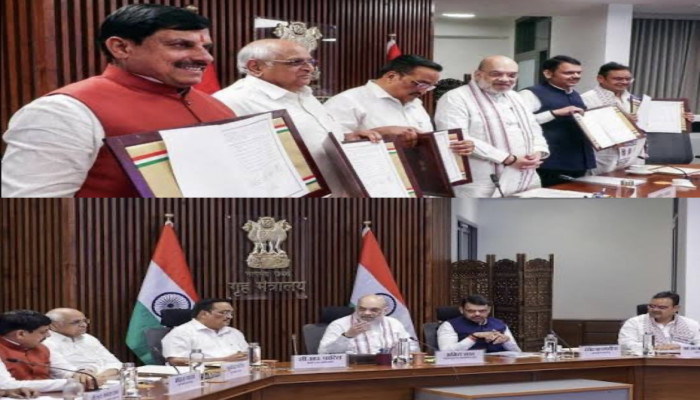
Maharashtra, Gujarat, Rajasthan and Madhya Pradesh have signed a major agreement to resolve long-pending payment disputes related to the Sardar Sarovar Project on the Narmada river. The agreement marks an important step in settling inter-state financial issues linked to one of India's biggest river projects. The four states signed the pact in New Delhi on Tuesday in the presence of Union Home Minister Amit Shah, Union Jal Shakti Minister CR Patil and the chief ministers of the four states.
The agreement addresses pending payment obligations among the four states under the Narmada Water Disputes Tribunal Award. The tribunal had laid down the framework for sharing the costs of the Sardar Sarovar Project among the beneficiary states. However, several payment-related issues remained unresolved for many years. The latest agreement settles these outstanding dues through a one-time arrangement. The decision aims to bring an end to financial disputes that have continued for decades.
According to a government statement, the agreement provides a practical solution to clear all pending payment obligations linked to the project. The settlement allows the states to resolve old financial matters through mutual understanding. It also removes a major hurdle in the implementation of the tribunal's award.
Speaking on the occasion, Amit Shah said the issue of pending payments under the Narmada Award had remained unresolved for several years. He said the beneficiary states had now settled the matter through mutual consensus. He described the agreement as an example of cooperative federalism, where the Centre and the states work together to solve inter-state issues through dialogue and cooperation.
Shah said the Sardar Sarovar Project has brought major benefits to Gujarat, Madhya Pradesh and Rajasthan. He noted that the project has improved access to irrigation water, drinking water and electricity in these states. The project has supported agriculture and strengthened water availability in many regions. It has also contributed to better living conditions for people who depend on these resources.
Referring to Rajasthan, Shah said the areas receiving Narmada water have experienced positive changes in agriculture. He added that farmers in these regions have gained better opportunities through improved irrigation facilities. He also said the value of land in these areas has increased after the supply of Narmada water. According to him, the project has created long-term economic and agricultural benefits for the state.
Shah also referred to other efforts made to settle water-related disputes among states. He mentioned the recent resolution of the Rajasthan-Haryana water dispute as another example of successful dialogue. He also highlighted the progress made on the Kishau Dam Project. He said these developments show that governments can resolve complex water issues through discussions and mutual agreement.
While addressing the gathering, Shah stressed that water resources serve the interests of people and farmers across the country. He said the benefits of water should reach citizens regardless of the state where the resources are used. He emphasised that cooperation among states remains essential for the fair and effective use of water resources.
The government statement said the agreement represents a significant milestone in resolving long-standing financial issues linked to the Narmada Water Disputes Tribunal Award. It also reflects the willingness of the Centre and the four states to settle complicated inter-state matters through consensus instead of prolonged disputes. The one-time settlement is expected to close a chapter that had remained unresolved for many years and strengthen cooperation among the participating states for future water resource management.



 Loading...please wait
Comments